Science fiction turns an imagined change into a human problem. Start with one technological or social rule, then ask who must live with its consequences.
A solitary player logs in to find her unattended avatar has built a thriving social life. A guild counselor helps her impersonate herself at its wedding, until her new friends ask for a rescue that requires showing up outside the game.
A gravity archivist discovers a vanished settlement's movements preserved inside an abandoned field generator. Reconstructing its final day could rescue a missing crew and reveal why the settlement was erased from the mission log.
A human cook inherits a mobile embassy serving species who cannot safely share a room. Her most delicate negotiation begins when a displaced fleet orders a meal the empire claims no longer exists.
A careers adviser discovers her own future has been leased to a company that has never employed her. Every opportunity she declines is quietly removed from someone else's life.
A lost-and-found clerk must return seven abandoned doubles to the people who ordered them. Each story asks what a replacement does when it no longer wants the job.
An adult night worker discovers that her sleeping hours are being rented to wealthy people who want more time to think. Recovering her dreams means confronting a city that calls unconscious labor a voluntary benefit.
A seismologist discovers Earth's tremors are the movements of an unhatched creature. A midwife joins the scientific team because the creature responds to her voice. Saving humanity may depend on persuading a cosmic parent that nobody living on the shell is a parasite.
Two adult rescue contractors buy a service pod too small for its advertised missions. Their first call comes from a giant habitat that has mistaken the pod for a repair tool and the crew for expendable parts.
A laboratory linguist finds that a new virus spreads through deliberate falsehoods rather than breath. A professional poker player becomes her most useful volunteer, until a perfectly truthful official statement triggers an outbreak and exposes the dangerous limits of their definition.
An adult teacher learns that her city's sponsors now own the future career choices of the children they support. Protecting a pupil's ordinary wish to change her mind exposes how gratitude has replaced permission.
A time-transit dispatcher finds tourists trapped behind a day that refuses to end. The rescue plan will work only if the company admits which journeys it has been selling without a safe return.
A municipal photographer discovers that a company has bought the right to photograph sunset. She organizes a spectacularly inconvenient sunrise instead.
A municipal engineer learns the city converts unsolicited advice into electricity. A district of newly quiet residents is accused of sabotaging the grid, and she is ordered to make them speak.
A decommissioned warship grows vegetables in its missile bays. When a refugee fleet arrives, its retired weapons officer must choose between feeding them and obeying a final command.
A detective arrives to investigate a robot's murder and finds the supposed victim cheerfully serving breakfast. A forensic mechanic discovers the crime scene is a rehearsal, constructed by a machine trying to learn which kind of death would finally make its disappearance matter.
A tenant challenges an unreasonable rent increase and receives a reply signed by the universe. A housing advocate helps her inspect the cosmic lease, whose fine print suggests humanity's greatest discoveries were merely improvements it forgot to request permission to make.
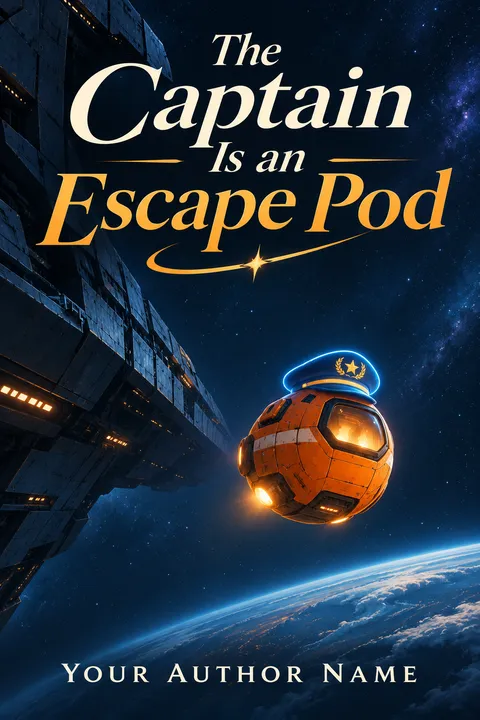
A salvage crew discovers that its new captain exists inside an escape pod that cannot leave the ship. The captain remembers an evacuation the rest of the crew denies.
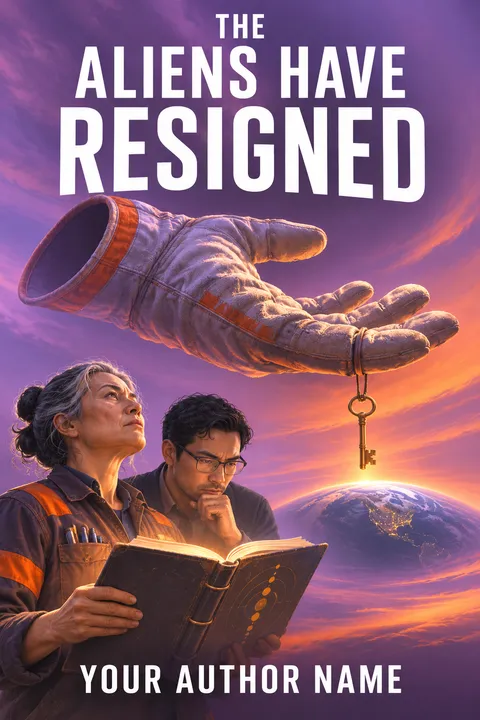
After quietly managing Earth for centuries, its alien caretakers hand in their notice. A human building superintendent inherits the maintenance instructions. A translator helps her discover which apparent laws of nature are optional services, and why the caretakers are afraid to explain their departure.
A habitat designer discovers the emergency pod carrying her crew is a juvenile living vessel. Feeding it will keep them alive and signal their location to the hunters who sold its family as equipment.
An astronomer translates a signal that apologizes for an event humanity cannot remember. An antiquities restorer finds evidence that the apology has arrived before, each time replacing the people who heard it with a kinder version of themselves.
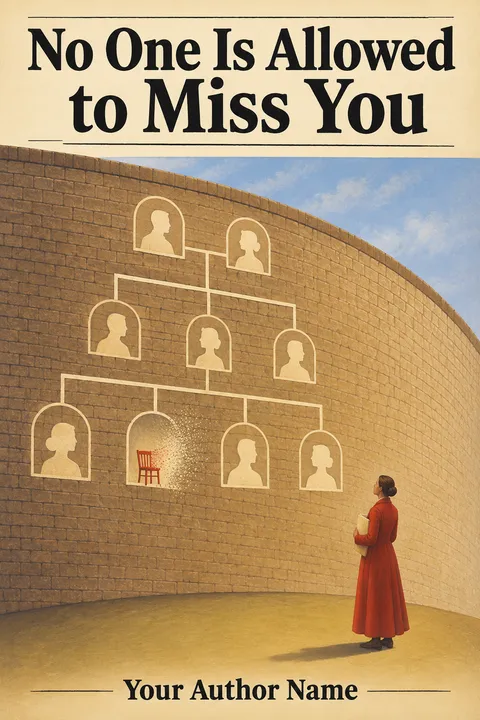
A municipal grief registrar removes unproductive attachments from citizens' records. When her own sister is declared unnecessary to remember, she must preserve a relationship without turning private love into public evidence.
An interstellar ambassador discovers every planet her government claims to represent has moved without leaving a forwarding address. The janitor knows where the first one went.
A public photographer discovers citizens' licensed smiles expire after one year. When a stranger laughs without renewing, she photographs an expression the government cannot categorize, then must decide whether making it famous would save him or give the authorities his face.
A restoration painter finds a shade that cannot be scanned by the city's color registry. Hiding it could protect a neighborhood whose homes are about to become legally invisible.
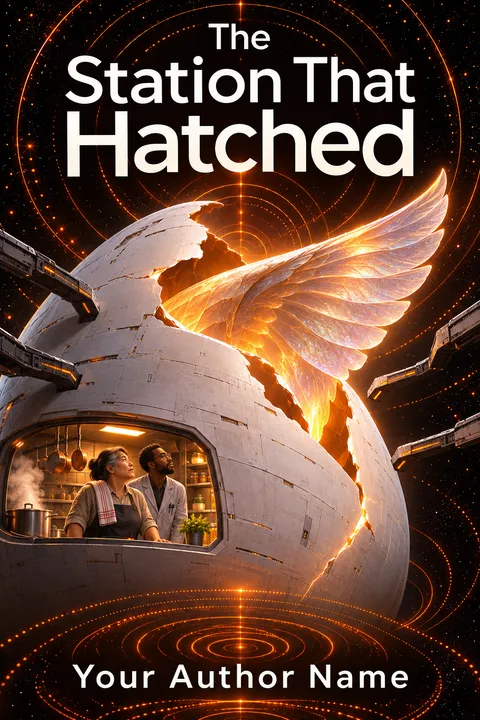
A station cook notices the walls growing warmer and the docking arms folding inward. The home of eight thousand people is an enormous egg, and the creature inside has waited politely for them to finish arguing about who owns the shell.
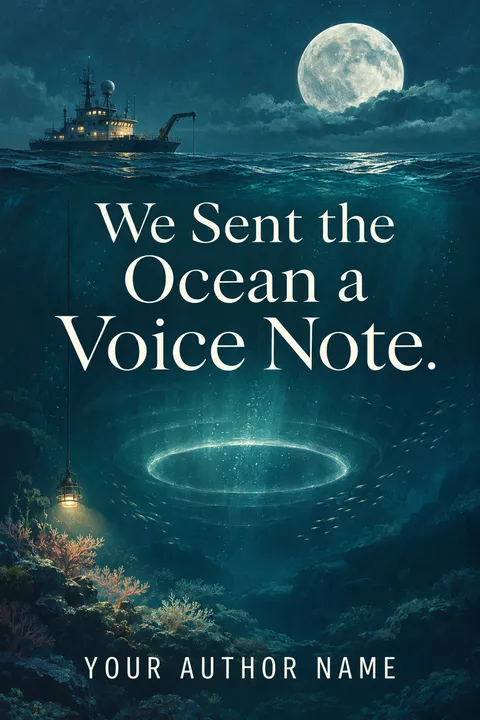
An undersea communications engineer receives a reply from an ocean her company classified as empty. Negotiating first contact means persuading her own crew that a place can refuse the research meant to explain it.
A factory quality inspector opens a jar of manufactured happiness and finds someone else's grief inside. Tracking the mislabeled batch leads her to a cook who believes the world's sadness has been stolen, and that people might want it back.
A veterinarian takes a night shift at a private zoo and discovers its sole visitor is studying the staff. A groundskeeper helps her determine whether the empty enclosures are waiting for animals or for the humans who believe they run the place.
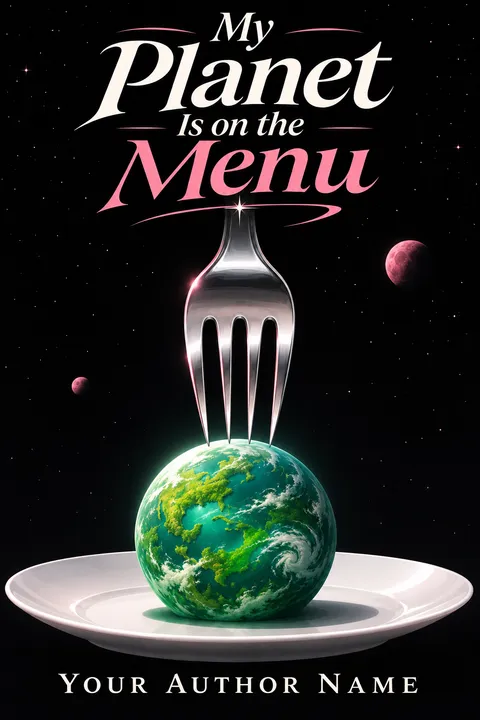
A planetary chef is asked to prepare a diplomatic meal and realizes her home world is listed as the main course. She must prove the empire's appetite is a translation error.
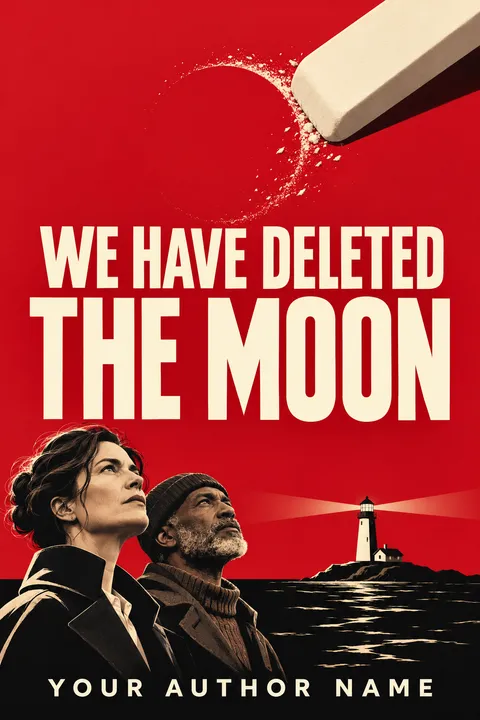
A municipal editor removes the moon from a public astronomy archive as a minor correction. It disappears from the sky. To restore it, she needs a lighthouse keeper who remembers a different moon and refuses to approve the city's preferred replacement.
A useful premise can be explained in a sentence: a suburb borders another Earth, a library's AI remembers a deleted book, or two planners receive conflicting views of tomorrow. Limit the first scene to the immediate practical difficulty rather than explaining the entire world. Readers can learn the larger system through a character trying to do a job. Decide who benefits from the invention, who maintains it, and who is missing from the assumptions behind it. These questions often produce stronger conflict than a device that simply malfunctions. An outline should test the rule in increasingly consequential situations while keeping its limits understandable. If the ending depends on a new capability, establish that possibility before it becomes the solution. The ideas below offer openings and outlines across first contact, artificial intelligence, and time-driven mysteries. Change the scale, institution, or relationship at the center to make the premise yours. For a warmer version, look at found-family stories; for a puzzle structure, compare the locked-room ideas.