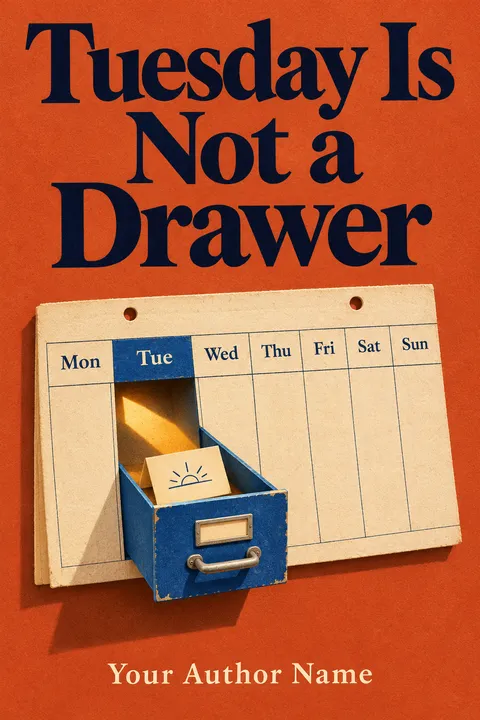
Tuesday Is Not a Drawer
Treat your calendar like a room you live in, and rescue one usable stretch of time from the jobs that keep getting shoved into it.
 ImagineYourBook
Treat your calendar like a room you live in, and rescue one usable stretch of time from the jobs that keep getting shoved into it.

Find the smallest version that still does the job you promised.

Make something small for its own use and choose deliberately whether it needs an audience.

Start a repair practice with the garment that would change your ordinary week if you could wear it again.

Build a nonfiction outline by making every chapter answer a question a reader will ask next.

Make the first hour in somebody else's home easy to navigate.

Hear and see a draft the way a reader will encounter it, then fix the errors you can actually verify.

Give uncertain belongings a temporary address so the question of what to keep stops spreading from room to room.

Make a useful introduction by saying what you are curious about and what you can offer.

See what a new yes would displace before choosing what to take on.

Describe what happened, what you expected and one concrete thing you need next.

Test a sign from where a first-time visitor has to make a decision.

Set up a skill swap where each person leaves able to do one thing they could not do before.

Attach enough context to a photograph that the next person knows why it was kept.

Start a neighborhood tool shelf where a borrowed ladder always has a way back home.

Build a reciprocal help circle around specific offers and the right to decline.

Create a small closing ritual that helps tomorrow start cleanly and gives tonight a place to begin.

Build a tiny portable studio around one project you can put away before dinner.

Write notes that tell an absent reader what changed, who owns the next move and when it is due.
No saved stories yet. Find your first.