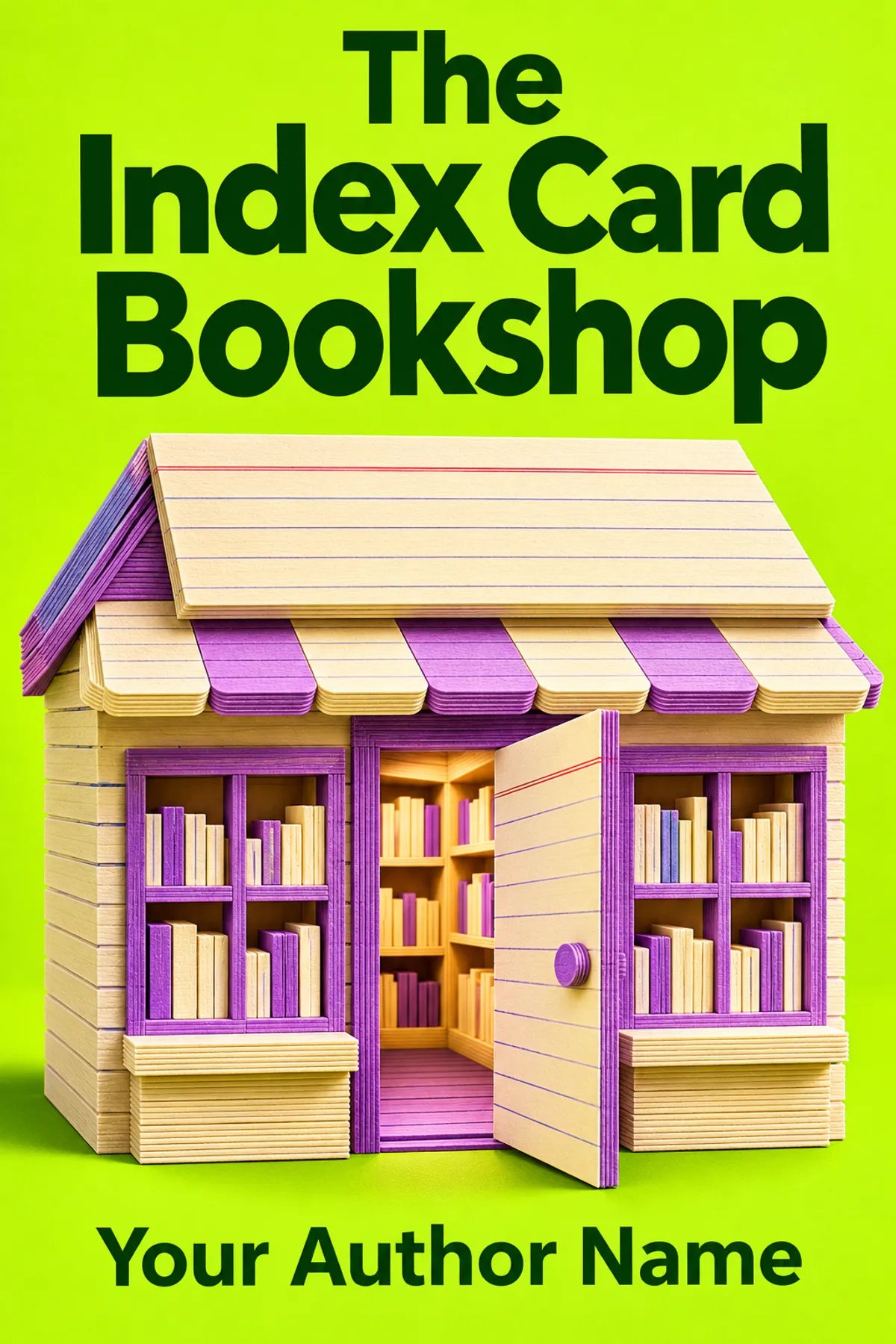
The Index Card Bookshop
Build a nonfiction outline by making every chapter answer a question a reader will ask next.
ImagineYourBook writes a fresh draft from this idea.
Introduction
The book had seventeen chapters. Six of them were trying to be the first.
Samir had written a list of everything he knew about caring for a bicycle. He planned to begin with tools, then types of bicycles, then the habits that kept a bike useful. When he spread the list across index cards, the three beginnings took up half the table. The chapter about what to check before going out sat near the end.
Lou came by to return a pump. She wanted to know what she should look at on the bike she had just borrowed. Samir pointed to the check before going out. Lou picked up the card. She did not need to know the names of all the tools before she could ask her question.
A chapter earns its place by doing a job. Write the job on the card instead of naming a broad subject. "Help a new rider recognize which checks to make before leaving" gives you a reader, a moment and a useful result. A card called tools might belong earlier if a person needs one before the first action. It might be a reference if people only need to look it up.
Try putting one question on the front of each card and one concrete result on the back. Lay out the cards in the order a reader might need them. If two cards answer the same question, see whether they belong together. If one card assumes the reader can do something they have not learned, move it or add the missing preparation. Put interesting material that serves a different promise off to the side. It can become another book.
Samir ended with nine cards and one reference page. He wrote a note to check the technical content with a qualified mechanic before publishing it. Lou read the first three cards and pointed to the second.
"That's the first thing I'd ask after I looked at the bike," she said.
Samir moved the card there. It was a smaller book and he could see how to begin it.
Chapter plan
Develop this idea
Use one manuscript and let the reader see chapter cards move. A useful outline begins with the practical outcome and puts each explanation where it becomes necessary. Include a card that is interesting but belongs elsewhere. Let readers check the order with someone new to the subject. End with a simple way to capture an extra idea without letting it disrupt the whole book.
- Open with seventeen cards and six introductions.
- Write the practical promise in one sentence.
- Name the situation that makes a reader open the book.
- Put one question and visible result on each card.
- Arrange prerequisites before advanced decisions.
- Separate core chapters from useful reference material.
- Combine cards that do the same job.
- Ask a willing reader where they would start.
- Write a one-page outline using chapter jobs.
- Test the structure on a second reader task.
Series possibilities
- A companion guide to writing a practical sample introduction once the outline works.