Generate Your LitRPG Book

Your idea, a complete book, and a cover of its own.

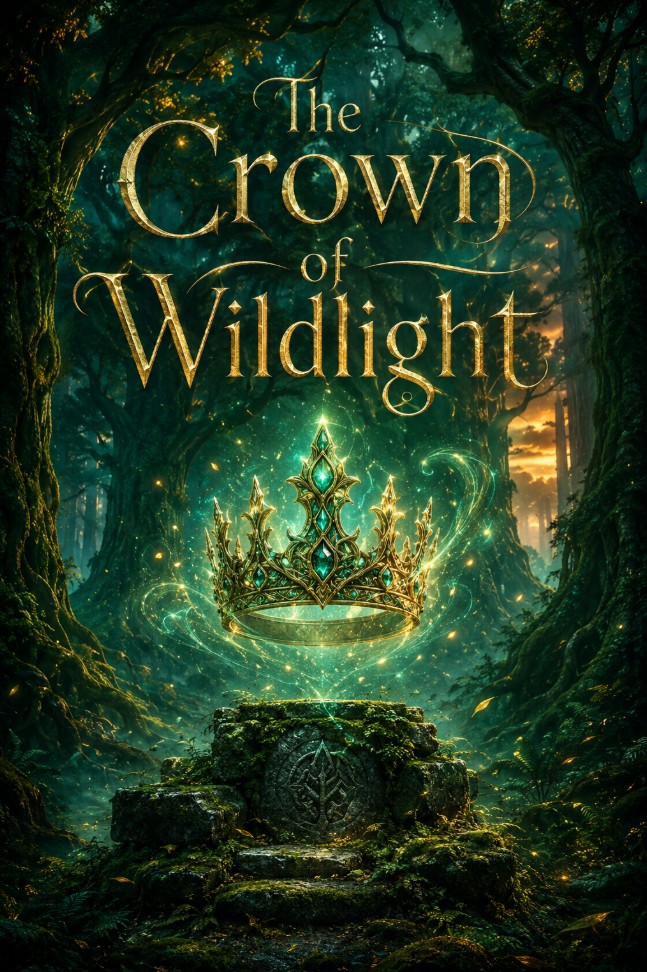
Example fantasy novel cover with a glowing crown suspended above an ancient forest.
Cover concept

First 10,000-word book: $0 for 7 days. Card required. Then $24.99/month unless canceled.

100% five-star reviews on Trustpilot Read reader stories

Make every gain feel earned

Design readable limits, useful choices and challenges that test growth instead of inflating numbers.

Mix your favorites. Tap again to remove.

Three adult adventurers survey a river beneath floating ancient ruins.
What makes the system readable?
How is progress earned?
Why does the next level matter?

Try a different beginning

Choose a premise. Your selected details stay with it.

The Repair Class

For a litrpg book: Create a LitRPG fantasy about a maintenance worker assigned a low-status Repairer class in a city built on a failing dungeon. Repairs consume materials and reveal structural information but cannot restore lost life. Use clear tradeoffs, creative applications of modest abilities and a team whose skills matter beyond combat statistics.

The Cartographer’s Build

For a litrpg book: Write a progression fantasy about a mapmaker whose abilities improve through testing routes rather than defeating enemies. Maps can record only personally verified paths. A changing border forces a team to choose between speed and reliable knowledge. Make advancement earned, limits consistent and status information useful to decisions.

The Last Support Slot

For a litrpg book: Develop a LitRPG story about a support specialist joining a rescue guild that values visible damage over prevention. The protagonist can redirect a limited amount of fatigue but must account for where it goes. Build growth through practice, team trust and consequential choices instead of unlimited hidden powers.

Plan a LitRPG book online

A LitRPG brief needs a progression system that creates choices, not just numbers that rise. Decide what earns advancement, what resources are limited and why the protagonist cannot select every advantage. Then connect the system to a human goal. A reader should be able to follow both the rules of progress and the consequences of the character’s decisions within them. The planning tools here are free to use. Your first 10,000-word book uses a $0 seven-day trial, with a card required, then $24.99/month unless canceled.

Give the world a texture

Choose visual inspiration for the setting.

Review your idea ↑

Make progression create tradeoffs

Turn a craft decision into a clearer brief.

  1. Choose a small core system

    Begin with a few abilities, resources or constraints that the reader can remember. Explain how they affect an immediate problem before adding more categories. A compact system makes changes legible and leaves room for strategy, while an opening full of unexplained statistics can delay the story without establishing meaningful possibilities.

  2. Make upgrades exclude something

    A progression choice becomes interesting when it carries an opportunity cost. Choosing one ability might delay another, consume a scarce resource or change a relationship with the group. Keep those consequences consistent so the protagonist cannot escape every difficult decision by receiving an unrelated reward at the next level.

  3. Track the system’s continuity

    Keep a simple record of abilities, resources and rules as the draft develops. The narration should not forget a useful skill or silently change an established cost. Progress can be satisfying when the protagonist learns to combine existing tools, so not every major success needs a new power or larger number.

Review your idea ↑

The support class

An example you can use as a starting point.

Role
A reluctant quartermaster
Resource
Shared supplies
Progression
Better coordination, not raw power
Write a LitRPG adventure about an adult newcomer assigned a quartermaster class in a settlement facing a difficult winter. Build a compact system around supplies, preparation and group coordination. Make upgrades involve meaningful tradeoffs, keep resources and abilities consistent, and let practical ingenuity matter alongside numerical progression. Give supporting characters independent goals and a clear arc for the first book.

Review your idea ↑

What makes a strong LitRPG Book

LitRPG rewards mastery — the system should be clear enough to strategize and the progression earned, not handed out.

Common Questions

Can I use this for a LitRPG book?

Yes. Start with the LitRPG prompt, add your audience, tone, and must-have details, then continue into the single-pass Create Book workflow.

How many words will my LitRPG book have?

This prompt starts the Small Book flow, which is designed for a first draft of up to about 10,000 words. You can adjust the length in Create Book when your plan and credits allow it.

Is the first book really free?

Yes, within the $0 seven-day trial. A card starts the trial and nothing is charged today. You get a reminder email before it ends, and you pay nothing if you cancel before day 8.

Do I need a finished outline for a LitRPG book?

No. One clear idea is enough to start. The draft gets stronger when you add audience, tone, must-have scenes or chapters, boundaries, and any facts you already know.

Can I turn this LitRPG book into a series?

Yes. Once you have a completed book in your account, Series Builder can use bounded continuity context from that book when you create the next volume. That helps keep characters, canon, tone, and open threads consistent, and it is useful for KDP authors who want repeat sales from readers moving through a series.

Can I change the prompt before generating?

Yes. Edit the prompt on this page or continue into Create Book and adjust title, genre, language, length, and advanced fields before you generate.

Will this create the book immediately on this page?

No. This page saves your prompt and sends you into the normal ImagineYourBook workflow after signup or login. Book generation remains a single-pass flow.

Can I use this for fiction, nonfiction, children's books, and business ebooks?

Yes. The same creator supports novels, romance, memoirs, biographies, children's stories, practical guides, lead magnets, educational books, and many other structured book drafts.

How much of the stat system should appear on the page?

Show enough for the reader to understand a decision, a cost or an earned improvement. Repeating a full character sheet after every small change can interrupt the narrative. Use consistent formatting and highlight the values that matter to the current scene.

Can LitRPG work without an overpowered protagonist?

Yes. Limited abilities can create strong tactical choices and make cooperation important. Define what the protagonist cannot do and how they compensate. Progress may come through judgment, relationships and combinations of existing skills as well as new abilities.
See example books

Browse all book generators

$0 for 7 days. Card required. Then $24.99/month unless canceled.

Start Book One

Already a member?