The Festival of Borrowed Light
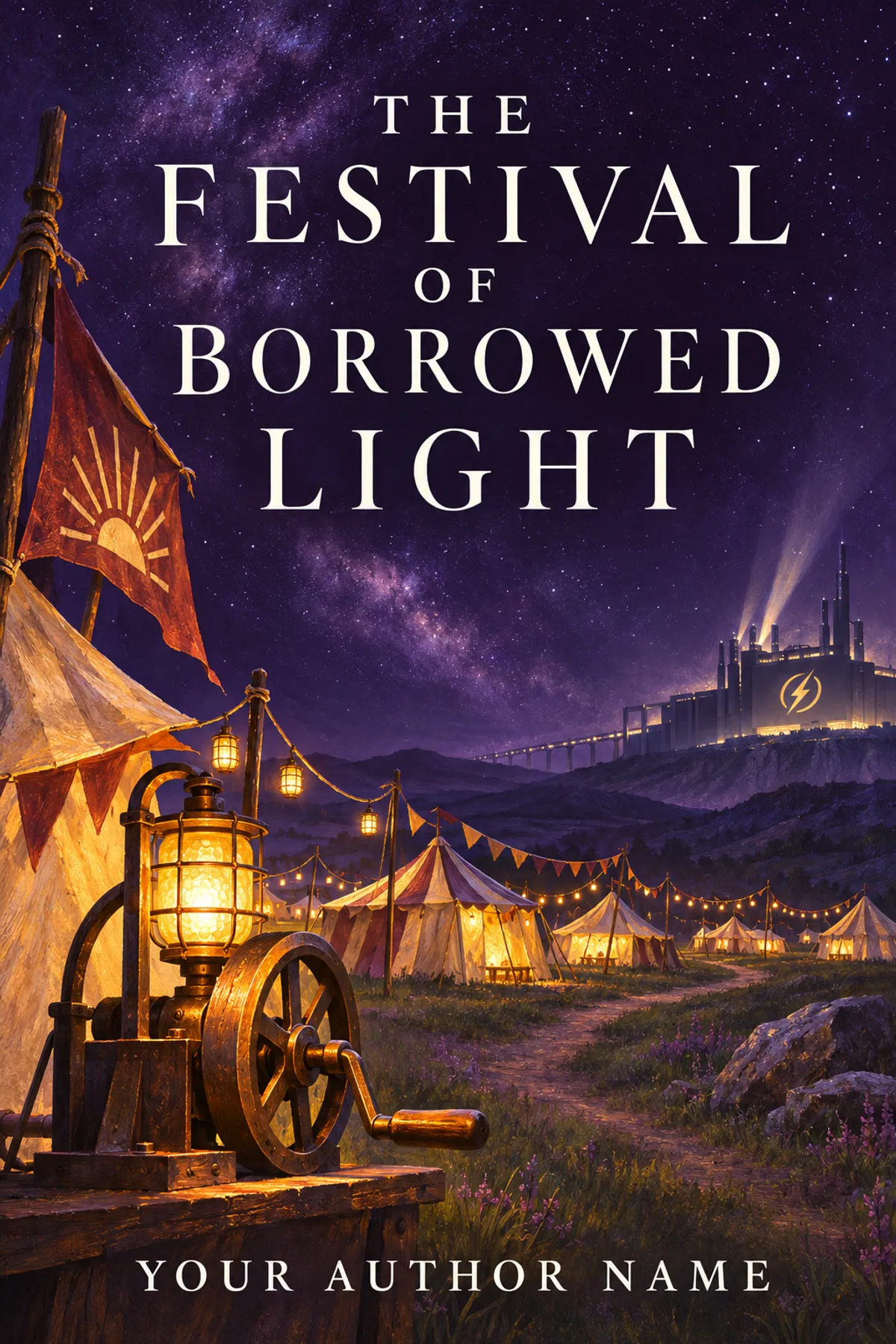
A community outside an energy monopoly stages a traveling festival powered by shared labor, only to discover the company's proposed sponsorship would make survival easier and independence impossible.
ImagineYourBook writes a fresh draft from this idea.
How it begins
The company offered to keep the lights on if Mara stopped asking who owned the switch.
The proposal did not use those words. It spoke of continuity, security and a partnership respectful of local traditions. The final page granted the sponsor exclusive control of all equipment acquired during the agreement.
Mara read it beneath a lantern powered by six people taking turns at a pedal rig. The system was inefficient, noisy and beloved by nobody who had to maintain it in rain.
Jonas arrived with a burned connector in his palm.
"We need the replacement before tomorrow."
She showed him the offer.
He read the equipment clause first. He always did.
Beyond the tent, neighbors were hanging translucent cloth between poles. The traveling festival had begun as one evening outside the company's rationed grid. Now it crossed seven settlements, carrying shared batteries, food stalls and the brief pleasure of a street where every lamp did not count against a household's allowance.
It also carried unpaid work, aching knees and a repair fund smaller than the list of things likely to fail.
"People are tired," Jonas said.
"I know."
"Knowing isn't the same as making it easier."
Mara looked at the sponsor's promised generators. Quiet. Reliable. Enough power for the clinic's refrigerator after the festival moved on. She could not dismiss the offer as a trick without admitting what the trick offered people who needed it.
A child outside switched on a paper lantern. It flickered, brightened and joined the uneven line above the road.
The company representative waited in a heated vehicle beyond the field. He had given Mara until morning, describing the deadline as flexibility.
She folded the proposal and walked toward the volunteers.
For months, she had asked them for one more shift, one more contribution, one more night of proving they could manage. Tonight she needed to ask what independence was allowed to cost them, and who had been paying most.
Outline and characters
Develop this idea
The sponsor's benefits must be real, especially for essential services, so refusal cannot rest on purity alone. Mara should confront unpaid labor within her own movement. Keep the fictional energy arrangements understandable without presenting a technical off-grid manual. The alternative needs reduced ambition, collective financing and compromise rather than miraculous abundance. A dimmer final festival can be emotionally stronger than a spectacular victory because it reflects a model people can continue without exhausting the same few workers.
- Mara receives a sponsorship offer that would transfer control of the festival's shared equipment.
- Jonas highlights urgent failures and the unequal burden of unpaid maintenance.
- Settlements disagree about accepting dependable power at the cost of autonomy.
- The company links festival sponsorship to exclusive household supply contracts.
- A clinic's refrigeration failure makes refusal materially dangerous rather than symbolic.
- Mara acknowledges that the festival's independence has relied on invisible labor.
- The communities separate essential-service needs from the festival and negotiate collective purchasing with alternative suppliers.
- They reduce the festival's scale and establish paid maintenance contributions.
- The sponsor's deadline passes without exclusive control, while a smaller cooperative system survives a difficult first season.
- The final night is dimmer but sustainable, with volunteers free to enjoy some of the light they helped create.
Characters
- Mara Kim, 35. Organizer of a traveling community light festival
- Jonas Alvarez, 51. Electrician maintaining shared off-grid equipment
Series possibilities
- The energy cooperative faces a new challenge when one settlement receives a private offer to leave the shared system.