Idea 01
Write a Villanelle Collection book: Create a collection of villanelles about departures and returns, letting repeated lines shift from certainty toward doubt.
Design refrains that change meaning and a collection whose repetitions deepen rather than merely repeat.
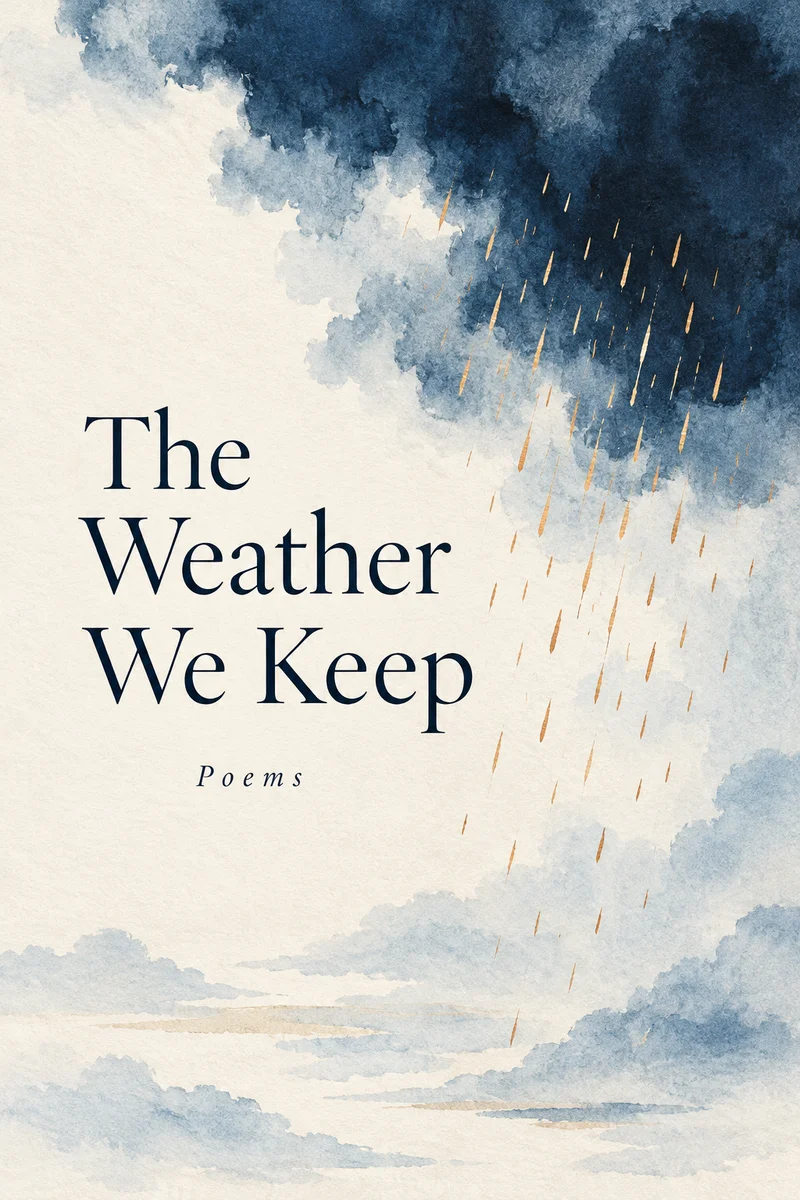
Choose concrete images, deliberate movement and a voice that earns its feeling without explaining every line.
Mix your favorites. Tap again to remove.
Choose a premise. Your selected details stay with it.
Write a Villanelle Collection book: Create a collection of villanelles about departures and returns, letting repeated lines shift from certainty toward doubt.
Write a Villanelle Collection book: Create villanelles around small domestic promises that become more complicated over years.
Write a Villanelle Collection book: Create a sequence of villanelles about a neighborhood's transformation, with refrains heard differently by each speaker.
Combine forms in a collection, or choose just one.
14 lines, often a turn in thought
The conventional English pattern groups three quatrains and a closing couplet.
Form definition ↗19 lines, two returning refrains
Five tercets lead to a final quatrain. The repeated lines can change meaning as they return.
Form definition ↗No fixed line count or meter
Shape the rhythm through breath, repetition, sound and deliberate line breaks.
Form definition ↗Choose visual inspiration for the setting.
Turn a craft decision into a clearer brief.
Begin with something a reader can see, hear or touch. An image can hold emotional meaning without explaining the feeling in advance. List a few precise observations before choosing the language that belongs in the poem.
A line break can delay a word, create a second reading or change the rhythm of a sentence. Choose a pattern deliberately, then read the poem aloud. A named form is a starting constraint, not proof that every line already works.
When arranging a book of poems, look for changes in distance, time and emotional pressure. Repeated images can connect the sequence, but each return should reveal something different. Avoid giving every poem the same final insight.
An example you can use as a starting point.
Create a Villanelle Collection book about The returning tide. Write original poems and follow the chosen form deliberately. Plan nineteen lines in five tercets and a final quatrain. Use two recurring lines and check their placement. Choose refrains flexible enough to gain a new implication.
The villanelle's returning lines can express obsession, uncertainty, or renewed resolve when the surrounding scenes alter their force.
Common traps: Do not force a rhyme or line break that weakens the meaning; Review the requested form and the sequence before sharing.
They can in a deliberate variation, but decide whether you want a traditional form or an adaptation. Check the pattern manually before presenting the poems as traditional villanelles.
Create your account, then start a $0 seven-day trial to write and download your first 10,000-word book. Card required; then $24.99/month unless canceled.
Yes. Edit the prompt or choose an example, then continue to the book creator to choose your settings. This page carries your idea through signup or login; you review the finished draft before sharing it.