Generate Your Phonics Books

Your idea, a complete book, and a cover of its own.

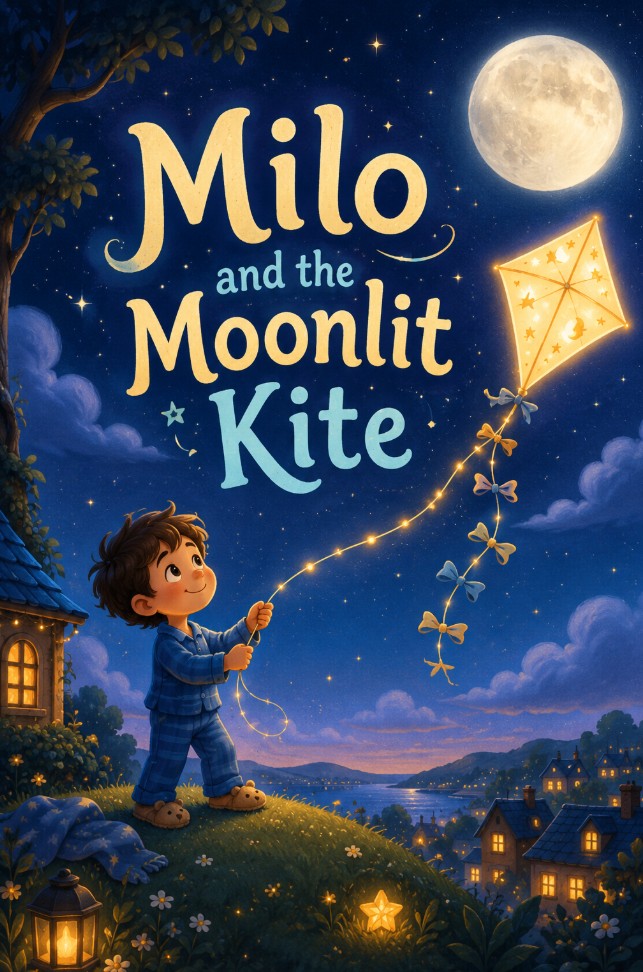
Example children's book cover with a child flying a glowing kite under a gentle night sky.
Cover concept

First 10,000-word book: $0 for 7 days. Card required. Then $24.99/month unless canceled.

100% five-star reviews on Trustpilot Read reader stories

Make the story fit its reader

Choose clear feelings, satisfying repetition and age-appropriate challenges with room for a child’s own choices.

Mix your favorites. Tap again to remove.

What helps this reader follow?
How does the child contribute?
What makes the ending satisfying?

Try a different beginning

Choose a premise. Your selected details stay with it.

The Pocket of Buttons

For a phonics books book: Create a story for ages 5–7 about a child helping sort a box of donated coats. A loose button keeps turning up in unexpected places. Use concrete language, a gentle repeating pattern and a clear goal. Let observation and asking an adult for help lead to a small, satisfying solution.

The Paper Bridge Club

For a phonics books book: Write a story for ages 8–10 about three classmates trying to build a paper bridge for a library display. Their first designs fail for different reasons. Give each child a useful observation, realistic frustration and a chance to revise the plan. Keep the challenge safe and the resolution collaborative without a moralizing speech.

A Song for the Slow Walk

For a phonics books book: Develop a story for ages 4–6 about a young fox who wants to hurry to a picnic while a grandparent walks slowly. Use a clear repeating phrase, concrete discoveries along the path and a warm moment of connection. Let the child make a small choice without dismissing the frustration.

Plan a phonics story online

A phonics story should match the sound-letter correspondences a learner has already been taught. Age or a label such as easy reader is not enough to establish decodability. Supply the actual progression, permitted words and reading situation, then build a small story within those limits. A generated draft needs a word-by-word check before it is used for independent reading practice. The planning tools here are free to use. Your first 10,000-word book uses a $0 seven-day trial, with a card required, then $24.99/month unless canceled.

Give the world a texture

Choose visual inspiration for the setting.

Review your idea ↑

Start with the learner’s known code

Turn a craft decision into a clearer brief.

  1. Supply the actual word constraints

    List the sound-letter correspondences the learner knows and any explicitly taught exception words. Different teaching sequences introduce these at different points, so a generic reading level cannot replace the list. Keep the allowed material visible while editing and flag words that depend on knowledge not yet introduced to this learner.

  2. Keep a genuine small story

    A restricted vocabulary still needs a recognizable goal and a consequence. Choose a simple action that can develop across a few scenes without forcing unnatural sentences. Repetition can help the reader practice, but each return should advance the action or clarify a relationship rather than filling space with disconnected word lists.

  3. Audit every word

    Read the draft against the intended teaching progression, including names, headings and captions. A single apparently simple word can depend on an untaught correspondence. Keep shared read-aloud material separate from independent decoding text, and ask a qualified educator to review the result before presenting it as a matched instructional resource.

Review your idea ↑

A small reading adventure

An example you can use as a starting point.

Goal
Find a missing pet
Constraint
A supplied taught-word list
Review
Word-by-word decodability check
Plan a very short story about a child looking for a missing pet, using only the sound-letter correspondences and exception words I supply. Keep the goal clear and the stakes reassuring. If a word is outside the permitted list, flag it rather than silently treating it as decodable. Separate any adult guidance from the reading text and reserve the draft for educator review before use.

Review your idea ↑

What makes a strong Phonics Books

A great children's book respects the young reader — one clear feeling or lesson, warm and age-right, with a little delight on every page.

Common Questions

Can I use this for a Phonics Books book?

Yes. Start with the Phonics Books prompt, add your audience, tone, and must-have details, then continue into the single-pass Create Book workflow.

How many words will my Phonics Books book have?

This prompt starts the Small Book flow, which is designed for a first draft of up to about 10,000 words. You can adjust the length in Create Book when your plan and credits allow it.

Is the first book really free?

Yes, within the $0 seven-day trial. A card starts the trial and nothing is charged today. You get a reminder email before it ends, and you pay nothing if you cancel before day 8.

Do I need a finished outline for a Phonics Books book?

No. One clear idea is enough to start. The draft gets stronger when you add audience, tone, must-have scenes or chapters, boundaries, and any facts you already know.

Can I turn this Phonics Books book into a series?

Yes. Once you have a completed book in your account, Series Builder can use bounded continuity context from that book when you create the next volume. That helps keep characters, canon, tone, and open threads consistent, and it is useful for KDP authors who want repeat sales from readers moving through a series.

Can I change the prompt before generating?

Yes. Edit the prompt on this page or continue into Create Book and adjust title, genre, language, length, and advanced fields before you generate.

Will this create the book immediately on this page?

No. This page saves your prompt and sends you into the normal ImagineYourBook workflow after signup or login. Book generation remains a single-pass flow.

Can I use this for fiction, nonfiction, children's books, and business ebooks?

Yes. The same creator supports novels, romance, memoirs, biographies, children's stories, practical guides, lead magnets, educational books, and many other structured book drafts.

Is a short word always easy to decode?

No. A word can be short but contain a sound-letter relationship the learner has not been taught. Match the text to the actual phonics progression and approved exception words, not simply to word length or a general age label.

Can the generator certify that a book is fully decodable?

No. It can follow a supplied brief, but the text still needs a word-by-word check against the learner’s taught code. Have an educator review it before using it as matched independent-reading material. Shared read-aloud books serve a different purpose.
See example books

Browse all book generators

$0 for 7 days. Card required. Then $24.99/month unless canceled.

Start Book One

Already a member?