Happiness Comes in Jars
A factory quality inspector opens a jar of manufactured happiness and finds someone else's grief inside. Tracking the mislabeled batch leads her to a cook who believes the world's sadness has been stolen, and that people might want it back.
ImagineYourBook writes a fresh draft from this idea.
How it begins
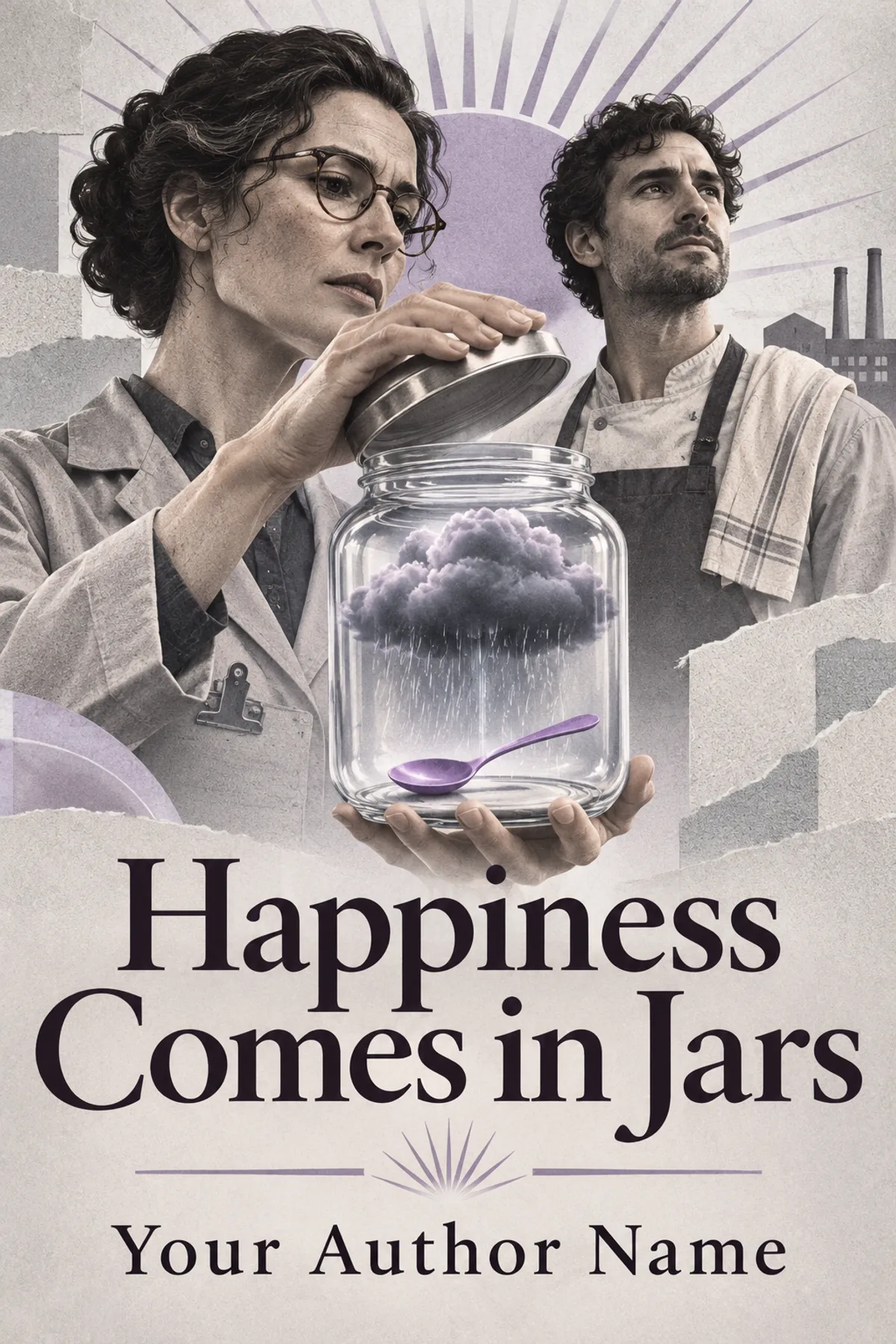
Ada Fen opened jar 8,441 expecting mild contentment and began to cry for a woman she had never met.
The grief was exact. A coat hanging where no one would wear it. A chipped blue bowl. The terrible small silence after an ordinary question found no one left to answer. Ada put down her tasting spoon and checked the label. AFTERNOON HAPPINESS, LOW INTENSITY, FAMILY PACK.
She had inspected emotional preserves for nineteen years. Incorrect labels happened. Fear occasionally reached the courage line. Nostalgia crystallized if stored near resentment. Grief did not belong anywhere in the factory. The company promised to remove it from the supply chain entirely.
Ada rinsed her mouth. The bowl remained in her mind.
Her supervisor arrived with a disposal form. 'Contamination?'
'Possibly.'
'Possibly is expensive.'
She signed for a secondary sample and slipped one jar into her lunch bag. This was a dismissible offense. Ada knew because she had helped write the form.
At the soup kitchen two streets from her flat, Luca Marr accepted the jar without tasting it.
'Where did you get this?'
'Work.'
He turned it toward the window. In the pale light, Ada saw a little weather moving beneath the glass.
Luca took a blue bowl from the shelf. Its rim had been repaired with a narrow line of gold. The chip matched the one she remembered.
'Who was she?' Ada asked.
'My wife.'
She sat down too quickly. Luca placed the bowl between them, empty and ordinary.
'They told you removing sadness would make you happier,' she said.
'They did.'
'Did it?'
He looked at the jar. 'I stopped knowing why this mattered.'
Outside, the factory's afternoon jingle announced a fresh delivery of joy. Ada had heard it every working day for nineteen years. For the first time, she wondered what had been taken out before the music began.
Your idea. Your book.
Keep the spark. Change anything.
Create my bookCreated with ImagineYourBook. Free to use as inspiration.
Outline and characters
Develop this idea
Treat emotional treatment as a choice with potential benefits as well as institutional abuses. Ada's discovery should concern informed consent, provenance and concealed extraction. Luca's loss gives one particular perspective, not a universal instruction to preserve every painful feeling. Factory processes can create a strong investigative trail. Avoid suggesting grief is proof of love. The resolution returns control and accurate labeling, while Ada confronts the compromises she accepted to keep a useful, comfortable job.
- Ada tastes grief in a happiness sample.
- Luca identifies objects contained in the emotion.
- Factory records show an undocumented extraction stream.
- Customers disagree over whether they want feelings returned.
- Ada discovers her own role in misleading labels.
- A product recall threatens to destroy personal provenance.
- Luca tests a voluntary partial restoration.
- Workers preserve the batch records together.
- The public gains informed control over treatment choices.
- Ada designs labels that admit emotional complexity.
Characters
- Ada Fen, 47. Emotional-preserve quality inspector
- Luca Marr, 39. Soup-kitchen cook
Series possibilities
- Ada audits other emotional products whose promised simplicity conceals a human cost.