The Last Unlicensed Color
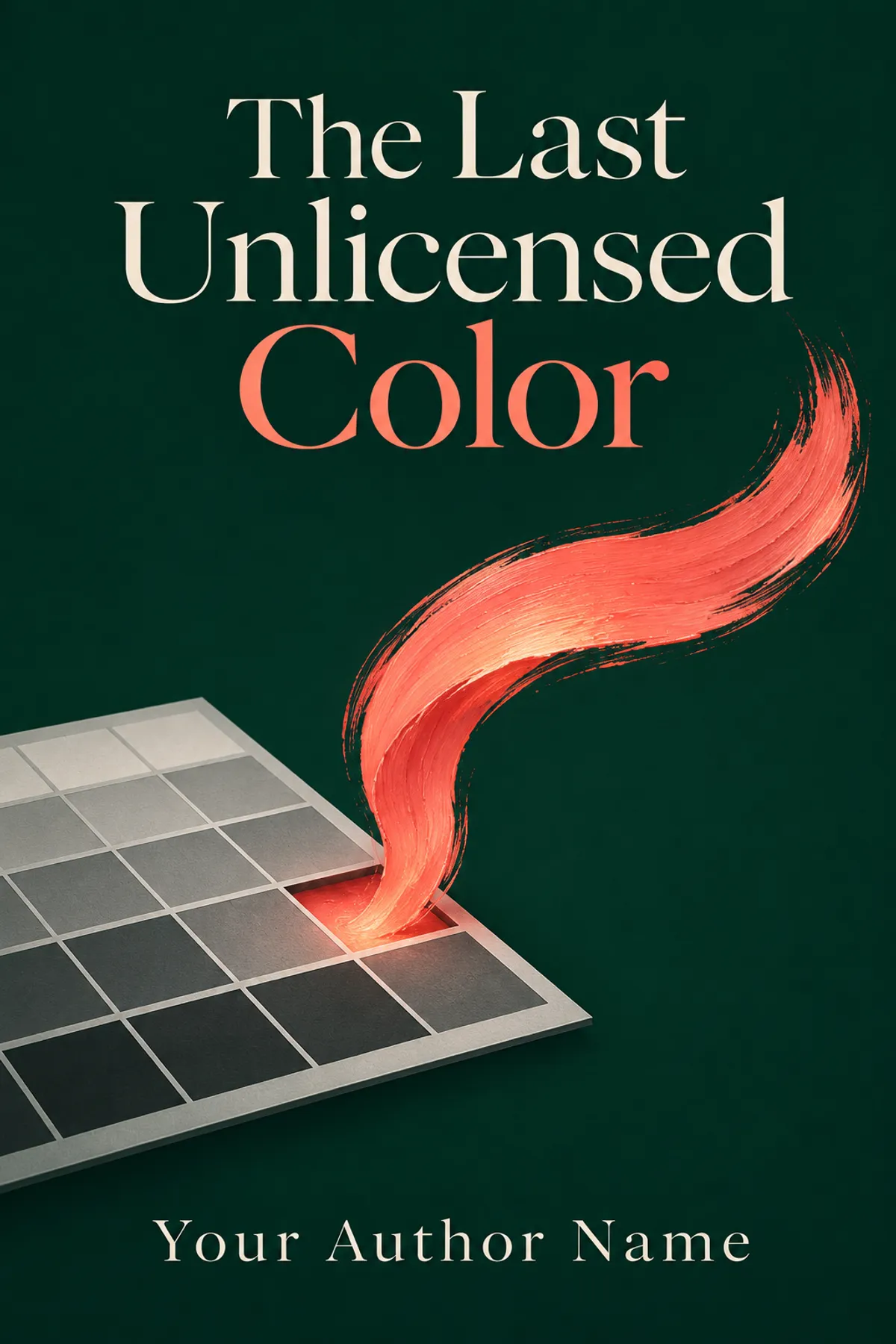
A restoration painter finds a shade that cannot be scanned by the city's color registry. Hiding it could protect a neighborhood whose homes are about to become legally invisible.
ImagineYourBook writes a fresh draft from this idea.
How it begins
Tara mixed the illegal color by accident.
She was trying to match the hallway of an apartment building whose owner had purchased the cheapest licensed shade of green. The wall had faded unevenly. Her mixture caught the afternoon light and became something warmer, almost coral, but not quite.
The inspection scanner passed over it.
NO SURFACE DETECTED.
She tried again.
The wall remained under her hand. The scanner insisted there was nothing there.
From the landing, Oren Bell watched with a bucket at his feet.
“Does it usually do that?”
“Only on empty space.”
He put the bucket down.
The building had received its final color notice yesterday. Its palette license would expire at midnight on Friday. After that, maintenance requests would be rejected, addresses removed from delivery maps, and occupancy classified as unverifiable.
Tara had come to repaint the hall before the inspection. She had assumed the residents wanted to comply.
Oren shut the stairwell door.
“Can you make more?”
She looked at the small smear on her palette.
“Probably.”
“Can it hide a whole building?”
“What do you mean, hide?”
He handed her the notice.
Under the official seal, a company had offered to acquire the property at a price based on its approaching lack of legal visibility.
Tara had restored churches, kitchens, and a mural the council later covered with a billboard. She understood what happened when a color became fashionable.
She had not considered what happened when it became impossible.
Above them, a resident called down to ask whether the lift would work after Friday.
Oren did not answer.
Tara switched off the scanner.
“If we make them unable to see you,” she said, “how will you call for help?”
Oren looked at the wall she had painted.
For the first time since she arrived, he seemed less excited than tired.
“That's what we need to decide.”
Your idea. Your book.
Keep the spark. Change anything.
Create my bookCreated with ImagineYourBook. Free to use as inspiration.
Outline and characters
Develop this idea
Define exactly what scanners can recognize and which legal consequences follow an absent reading. The color should create a tactical opportunity rather than magically protect every resident. Show why invisibility can be dangerous when people need deliveries, emergency access, or proof of residence. Tara's craft gives her a useful tool; neighbors should decide together how and whether to use it on their homes.
- Tara mixes a color absent from the registry.
- A scanner ignores the painted wall.
- Oren reveals an impending district erasure.
- Officials demand the original pigment sample.
- Residents disagree about concealment as protection.
- Tara uncovers the registry's property incentives.
- A public mural forces incompatible readings.
- The city attempts to withdraw services.
- Residents build evidence beyond machine recognition.
- The color becomes a shared unowned language.
Characters
- Tara Sen, 35. Restoration painter
- Oren Bell, 62. Neighborhood maintenance organizer
Series possibilities
- Artists challenge other administrative systems that confuse official measurement with existence.