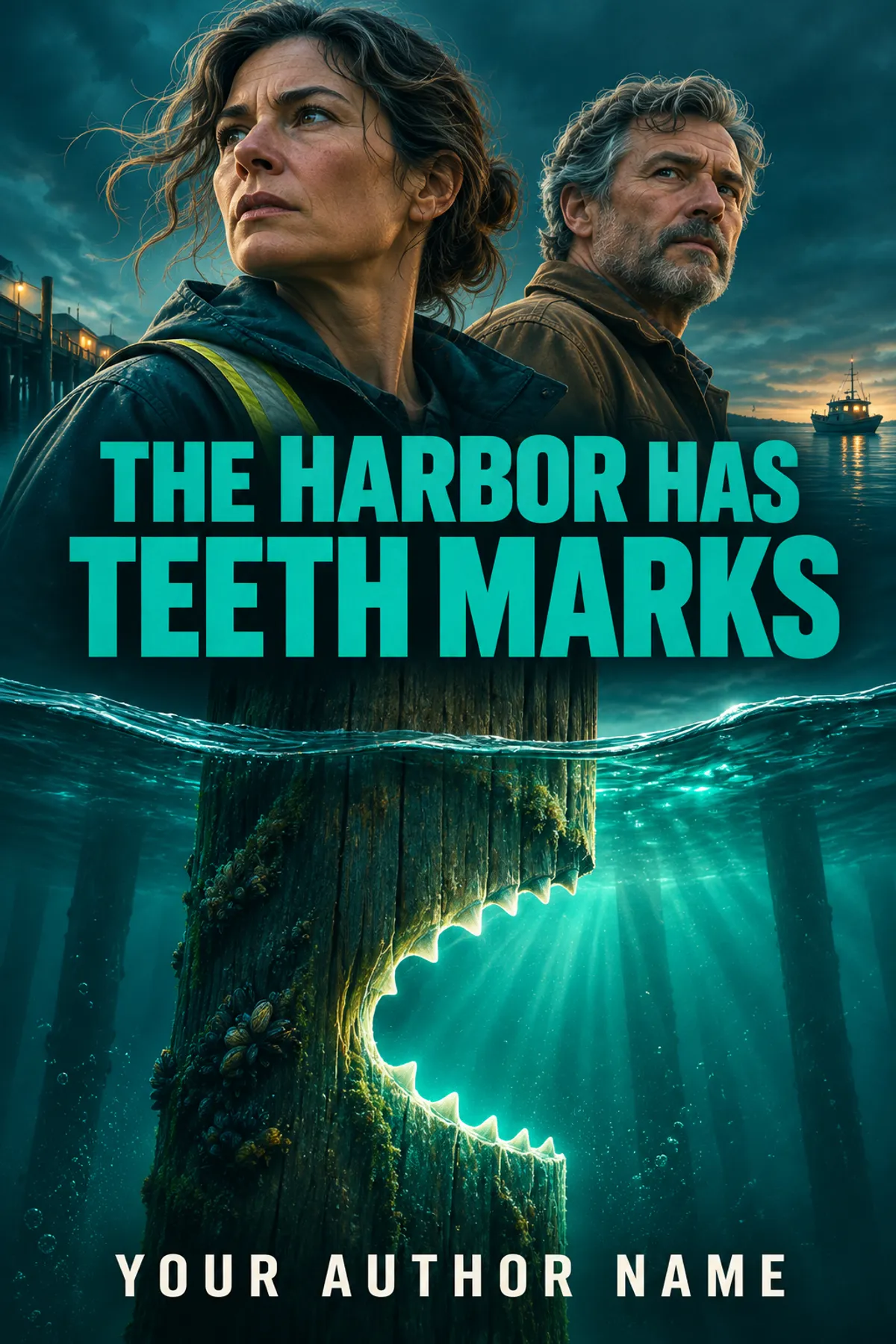
The Harbor Has Teeth Marks
A harbor inspector finds identical bite-shaped gaps in every wooden pier, although no animal could have made them. A marine carpenter notices the missing pieces form a map of developments built over an old tidal channel, and the next high water seems determined to reopen it.
ImagineYourBook writes a fresh draft from this idea.
How it begins
The first bite was too neat to belong to an animal.
Nora Flint crouched beside the pier post and measured the missing wood. A perfect semicircle, pale inside, cut through timber older than her father.
The tide moved beneath her without offering an explanation.
Caleb Shore arrived carrying a replacement plank. He stopped when he saw the notch.
'Not a saw,' he said.
'I noticed.'
'Not rot.'
'I hoped for rot.'
He set down the plank and touched the edge with one gloved finger. The grain continued across the absence as though the missing piece remained present somewhere wood could not reach.
Nora took a photograph. Behind them, a crane lifted another section of the old seawall. The new harbor apartments would advertise uninterrupted water views. The working boats had been promised uninterrupted access, which was not the same thing.
Caleb unfolded a damp sheet from his pocket.
'Two more posts. Same shape.'
They walked the pier together. Each gap faced inland. Each sat at exactly the same height, though the ground behind the harbor rose unevenly toward town.
Nora marked them on her inspection map. A line appeared between the points. It followed neither the modern shoreline nor the old quay.
Caleb looked over her shoulder.
'My grandmother called that the water road.'
'A channel?'
'Before they filled it.'
A soft crack came from the next post. They both stepped back. No mouth rose from the water. No creature struck. A pale crescent of timber simply ceased to be there.
Farther inland, beyond the seawall, a car alarm began sounding in the apartments' new underground garage.
Nora closed the pier gate and called the harbor office. She reported a structural hazard, asked for an immediate access closure and did not say teeth.
The tide had already found its way beneath the first locked door. It seemed to remember a route the town had paid to forget.
Your idea. Your book.
Keep the spark. Change anything.
Create my bookCreated with ImagineYourBook. Free to use as inspiration.
Outline and characters
Develop this idea
Research tidal channels, pier inspection and evacuation procedure for convincing material stakes. The impossible damage should obey a spatial rule readers can follow. Avoid implying that nature morally selects guilty residents; people living in the development may have had no part in its construction. Nora and Caleb's expertise helps manage consequences without fully explaining the force. End with adaptation and loss, not a single heroic repair that makes the coast harmless forever.
- Nora finds precise missing crescents in harbor timbers.
- Caleb maps them along a filled historic tidal channel.
- Damage advances inland without any visible creature.
- Developers dismiss the pattern as routine marine wear.
- Old works records reveal the channel was closed without completing safeguards.
- The harbor's movements react to barriers rather than individual guilt.
- Nora prioritizes evacuation over proving the supernatural cause.
- Caleb identifies a controlled reopening that could reduce pressure.
- Qualified crews reopen the water route while residents choose safe relocation.
- The harbor stabilizes with a changed shoreline and no promise of permanent obedience.
Characters
- Nora Flint, 47. Harbor inspector
- Caleb Shore, 53. Marine carpenter
Series possibilities
- Standalone coastal horror novels explore landscapes whose remembered routes resist profitable human boundaries.