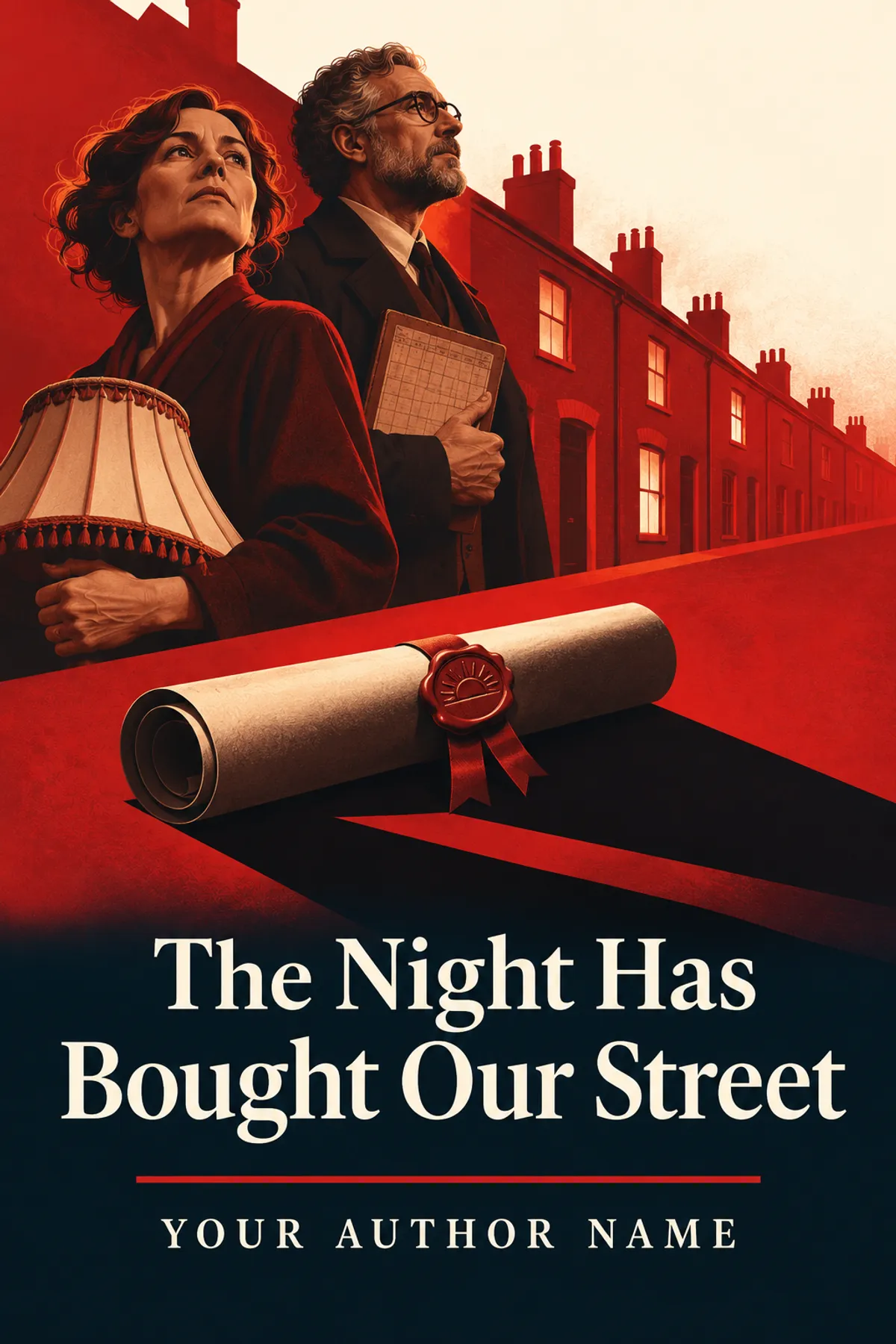
The Night Has Bought Our Street
Residents of a red-brick street receive an offer from the night to buy their daylight hours. A lampshade maker and a former shift planner investigate neighbors who seem delighted with the bargain, until the missing mornings begin erasing the things nobody thought to include in the price.
ImagineYourBook writes a fresh draft from this idea.
How it begins
Dora Crane's offer arrived at sunset, printed on paper darker than ink.
The night wished to purchase her mornings.
It offered a sum large enough to repair the shop roof, replace the van and let her stop pretending retirement was a joke for other people.
Dora held the letter beneath a lamp she had made herself. The black page swallowed the light without becoming easier to read.
Across the street, Isaac Bell stood in his doorway holding an identical envelope.
'How many hours?' she called.
'Until noon.'
'Mine says eleven.'
'You've always negotiated better.'
They met beneath the streetlight. A neighbor passed smiling, her own letter folded in her hand. She had accepted, she said. She was never at her best before lunch anyway.
The next morning, Dora woke at eleven.
She had signed nothing.
At the end of the street, the neighbor's windows remained black. Her flowerpots held pale stems where bright geraniums had bloomed yesterday. The milk delivery stood on the step with no date on the bottles.
Isaac knocked at Dora's shop door.
'How many mornings have you lost?'
'One.'
'Are you certain?'
He showed her his old shift planner. Tuesday had become a blank column. So had the Tuesday before it.
Dora checked the order book. Three customers were due to collect lampshades she had not finished. Their names had faded from the page.
The night had offered to buy daylight. It appeared to have begun removing the small things that gave daylight a reason to exist.
At the window, her darkest lampshade turned slowly on its stand though no breeze entered the shop.
Isaac read the letter again.
'It says the street may accept collectively.'
Dora looked toward the neighbor's black window. Someone had sold a morning. Somehow, everyone else had been included in the price. She switched on every lamp in the shop and began counting what remained.
Your idea. Your book.
Keep the spark. Change anything.
Create my bookCreated with ImagineYourBook. Free to use as inspiration.
Outline and characters
Develop this idea
Define the collective covenant early so the night cannot simply invent authority over unsigned residents. The bargain should appeal to legitimate exhaustion and financial need, not stupidity. Research the ordinary economics of Dora's shop to make the payment tempting. Isaac's planner gives a measurable record of loss. Returning money must carry consequences, and the final restoration should not erase the neighbors' disagreement or guarantee that every sold moment comes back.
- Residents receive offers to sell their morning daylight.
- One accepted offer begins affecting the whole street.
- Dora and Isaac document missing routines and faded relationships.
- Payments arrive while people forget what the money was meant to repair.
- The agreement exploits an old collective street covenant.
- Neighbors disagree over keeping funds versus restoring lost hours.
- Dora discovers artificial light preserves records but cannot replace lived time.
- Residents revoke the collective authority used without meaningful consent.
- They return the unspent price and accept the real costs of their choices.
- Morning returns imperfectly, leaving one house that still wakes after sunset.
Characters
- Dora Crane, 51. Lampshade maker
- Isaac Bell, 58. Former shift planner
Series possibilities
- Standalone Gothic bargains explore ordinary assets people underestimate until somebody offers to pay for their absence.