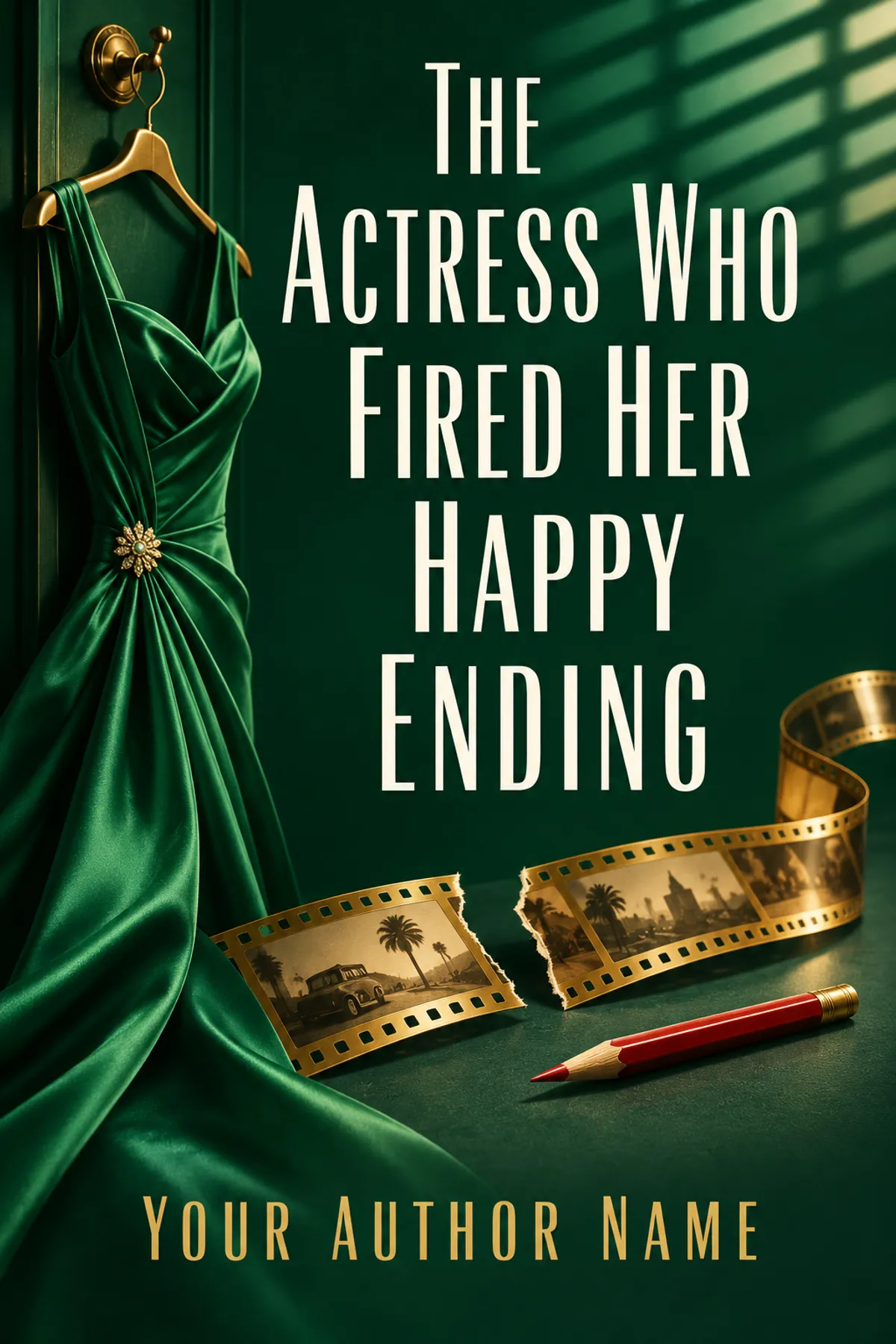
The Actress Who Fired Her Happy Ending
In 1965, an aging film star refuses the flattering final scene written for her comeback. The editor asked to rescue the production discovers how many ordinary lives have been trimmed to preserve her legend.
ImagineYourBook writes a fresh draft from this idea.
How it begins
Mara Cole refused to die beautifully on a Tuesday.
A wardrobe assistant held the character's carefully distressed shawl, waiting to learn whether suffering would still require a costume change.
The director lowered his megaphone. "It's the ending."
"Then we have located the problem."
Around the set, people studied cables, windows, and the fascinating grain of a wooden floor. The scene required Mara to forgive the man who had ruined her character's life, smile at the sunrise, and expire with enough dignity to sell the comeback.
She had asked where the character's sister went.
Nobody had answered.
In the editing room, Jo Rowe heard about the dispute before lunch. By two, the producer was standing beside her bench with a cigarette and the phrase difficult women already waiting behind his teeth.
"Find something usable," he said.
Jo looked at the cans of film stacked against the wall. It was 1965. She had spent twenty years finding usable things inside performances other people received the credit for understanding.
"Usable for what?"
"The picture."
"That's a beginning."
After he left, she threaded the unused take from the previous afternoon. On the small screen, Mara turned away from the leading man and looked toward the edge of the frame.
Someone outside it was speaking.
Jo stopped the machine and ran the moment again.
The voice belonged to the actor playing the sister, whose scenes had been cut before the publicity photographs were printed.
Mara answered her. Not the scripted answer. Something quieter, angrier, and alive.
A knock sounded at the editing-room door.
Mara stood there holding two sandwiches in waxed paper.
"They said you're fixing me."
Jo looked from the star to the frozen image.
"I haven't decided what needs fixing yet."
Mara came inside and shut the door.
For the first time that day, nobody asked either woman to make the ending easier to like.
Your idea. Your book.
Keep the spark. Change anything.
Create my bookCreated with ImagineYourBook. Free to use as inspiration.
Outline and characters
Develop this idea
Research film editing equipment, contracts, and gendered career expectations in the chosen 1965 industry. Mara and Jo are both experienced adults; avoid the stock pairing of a wise older star and a blank young admirer. The disputed ending should erase a specific person's contribution, giving the conflict more weight than artistic vanity. Let the final film remain imperfect and commercial pressures real, so the women's choices carry a believable cost.
- Mara refuses her comeback's flattering last scene
- Jo is assigned to rescue the edit
- Unused footage reveals erased collaborators
- The producer offers a convenient compromise
- Mara confronts her part in sustaining the legend
- Jo risks a secure credit to preserve the truth
- They propose an ending without false absolution
- A private screening divides the company
- The film changes without claiming unanimous approval
- Both women choose work beyond the old bargain
Characters
- Mara Cole, 44. Established film actress
- Jo Rowe, 51. Film editor
Series possibilities
- Standalone historical novels follow working women negotiating the stories that industries build around their talent.