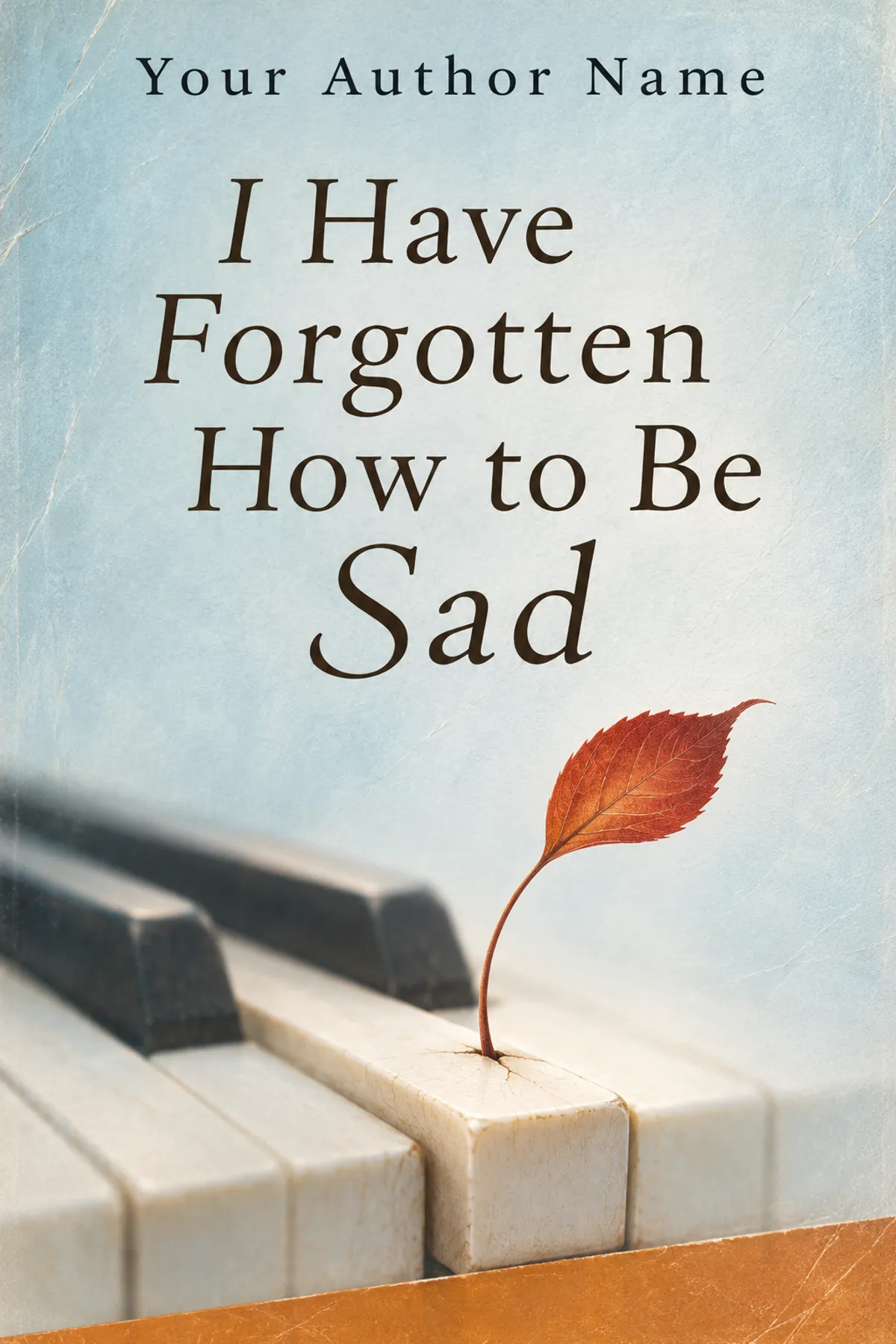
I Have Forgotten How to Be Sad
A grief researcher undergoes a treatment that removes her ability to feel sadness, then cannot understand why her happiest memories seem incomplete. A piano tuner helps her recover the emotional notes missing from her life, without promising that pain must always have a purpose.
ImagineYourBook writes a fresh draft from this idea.
How it begins
Anya Fen listened to the old recording and knew it should make her sad. The knowledge remained as precise and useless as a weather report from another planet.
Her mother's voice filled the kitchen. Anya was seven in the recording, laughing because someone had dropped flour on the dog. Her mother laughed too, then said something too quietly for the microphone to catch.
Before the treatment, Anya could not listen past that moment. Now she heard every second and felt the smooth satisfaction of a problem solved. It frightened her more than the crying had.
Gabriel Pell arrived to tune the piano. He found her sitting beside the recorder with her shoes still on.
'I can come back.'
'No. Please make something sound wrong.'
He considered the request, then played a chord missing its middle note. The room seemed to lean toward the gap.
Anya had researched grief for fifteen years. She understood the speculative treatment's stated effects, signed its consent forms and volunteered because she believed relief mattered. She still believed that. The missing feeling had also taken away something no form had described.
Gabriel opened the piano. A photograph fell from behind the music rest. Her mother, young, holding Anya with the awkward seriousness of a person who had not yet learned what sort of parent she would be.
'You don't have to feel anything particular,' he said.
'I know.'
'Knowing isn't always permission.'
He adjusted a string. The missing note returned, not dramatic, just enough to let the chord become itself. Anya looked at the photograph and tried to identify what her calmness had failed to include.
On the recorder, her mother's quiet sentence played again. This time Gabriel heard it.
'What did she say?' Anya asked.
He stopped with one hand above the keys.
'She asked whether you wanted her to keep the mistake in.'
Your idea. Your book.
Keep the spark. Change anything.
Create my bookCreated with ImagineYourBook. Free to use as inspiration.
Outline and characters
Develop this idea
Keep the emotional treatment explicitly speculative and avoid presenting a general claim about real mental-health care. Anya's relief is valuable even as she identifies an unanticipated cost. Gabriel supports inquiry without becoming a cure or insisting pain proves love. The central task is recovering choice and emotional range, not restoring maximum suffering. Use music and recorded moments as specific evidence. The ending may involve a limited adjustment she chooses, with ongoing support and uncertainty rather than a total reversal.
- Anya notices a family recording feels incomplete.
- Gabriel demonstrates a chord missing one note.
- She reviews what the treatment consent omitted.
- Former volunteers describe varied outcomes.
- A joyful memory exposes an unexpected emotional gap.
- Anya resists pressure to denounce all relief.
- She designs a reversible adjustment with independent oversight.
- Gabriel shares a loss he does not ask her to imitate.
- Anya chooses which capacities to reopen.
- She keeps the recording's mistake without prescribing her response.
Characters
- Anya Fen, 45. Grief researcher
- Gabriel Pell, 49. Piano tuner
Series possibilities
- Anya studies other emotional technologies whose useful promises exceed what their designers understood.