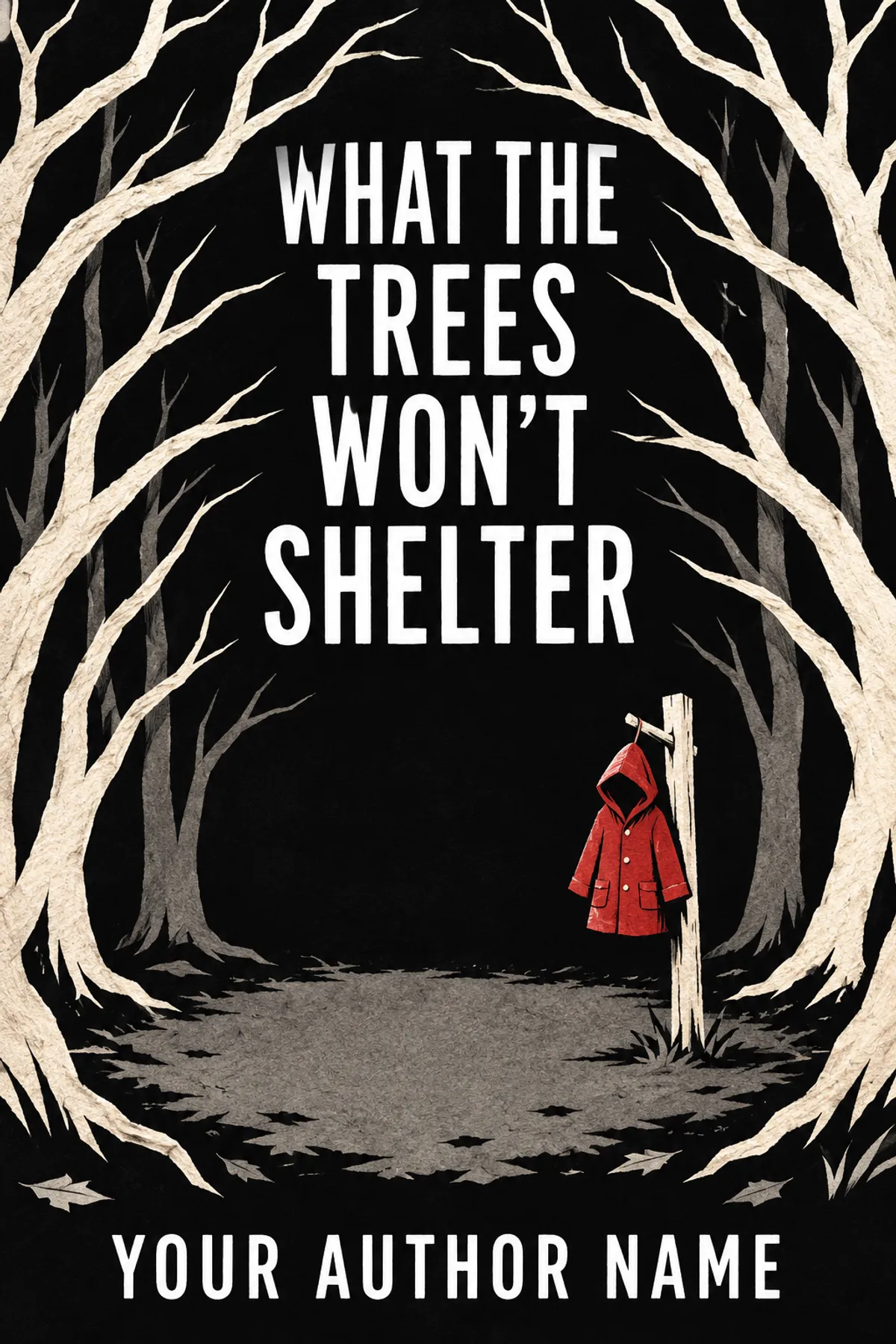
What the Trees Won't Shelter
A storm-evacuation coordinator finds a forest refusing cover to particular residents, then learns its judgment is based on something they have not yet done.
ImagineYourBook writes a fresh draft from this idea.
How it begins
The trees let the first bus through and closed around the second.
Maya watched the access road disappear beneath branches that had not been there a moment earlier. The driver braked. Behind the windshield, forty people sat with evacuation bags on their laps.
The storm was twenty minutes away.
Philip tried the path on foot. The branches parted for him, revealing the shelter's green roof, then knitted shut behind his shoulders.
"One at a time," he called.
Maya sent the passengers down carefully. An elderly man passed. A woman carrying a sleeping dog passed. A teacher stepped forward, and the branches lowered until the needles brushed his face.
He backed away.
"What did I do?"
Nobody answered.
The wind lifted dust from the road. Maya moved the waiting passengers behind the bus and continued the count. Seven were refused. They had no obvious connection, no shared address or occupation. One was Philip's brother.
The forester stared at him through the branches.
"You haven't been near the cutting site."
"I haven't been near any site."
Maya heard something strike the bus roof. A cone, green and hard. Inside its scales lay a strip of pale bark marked with an image: Philip's brother holding a burning torch beside the shelter.
Another cone fell. The teacher stood over an open emergency cabinet, taking more than he could carry.
The forest was not showing what they had done. Maya knew that because the cabinet had been installed that morning and remained locked under her own seal.
It was showing what they might do after being admitted.
Thunder moved across the ridge. The accepted passengers watched from safety while the seven stood in the road, becoming frightened enough to resemble the people in the bark.
Maya put herself between them and the trees.
"You don't get to make this true by leaving them outside," she said.
Outline and characters
Develop this idea
The forest's visions should be possible futures shaped by present conditions, not unquestionable moral truth. Maya's ethical refusal must require practical work to shelter people, not only a speech. Give the rejected group different responses, including anger, shame and cooperation. The storm supplies an independent physical danger. The ending should challenge reliance on the forest even after the barrier opens, because a refuge that judges people before their choices remains unsafe.
- The forest admits some evacuees and blocks seven others as a storm approaches.
- Images in fallen cones depict harmful acts that have not occurred.
- Maya recognizes that exclusion itself is creating the fear shown in the predictions.
- Philip reveals older stories of the forest choosing who deserved shelter.
- The accepted evacuees resist sharing supplies with people the trees have marked dangerous.
- Maya establishes a second refuge and refuses to treat the images as proof of guilt.
- One predicted act nearly occurs when a rejected man tries to force access for his family.
- The group interrupts the conditions behind the prediction through shared supplies and direct assistance.
- The forest's barrier fractures when a clearly depicted harmful choice is freely refused.
- Everyone survives the storm, but Maya marks the woodland shelter as unreliable and plans future refuge beyond its judgment.
Characters
- Maya Reed, 40. Storm-evacuation coordinator
- Philip Shaw, 53. Forester responsible for emergency woodland shelters
Series possibilities
- A standalone companion explores another landscape whose predictions become dangerous when people obey them.