
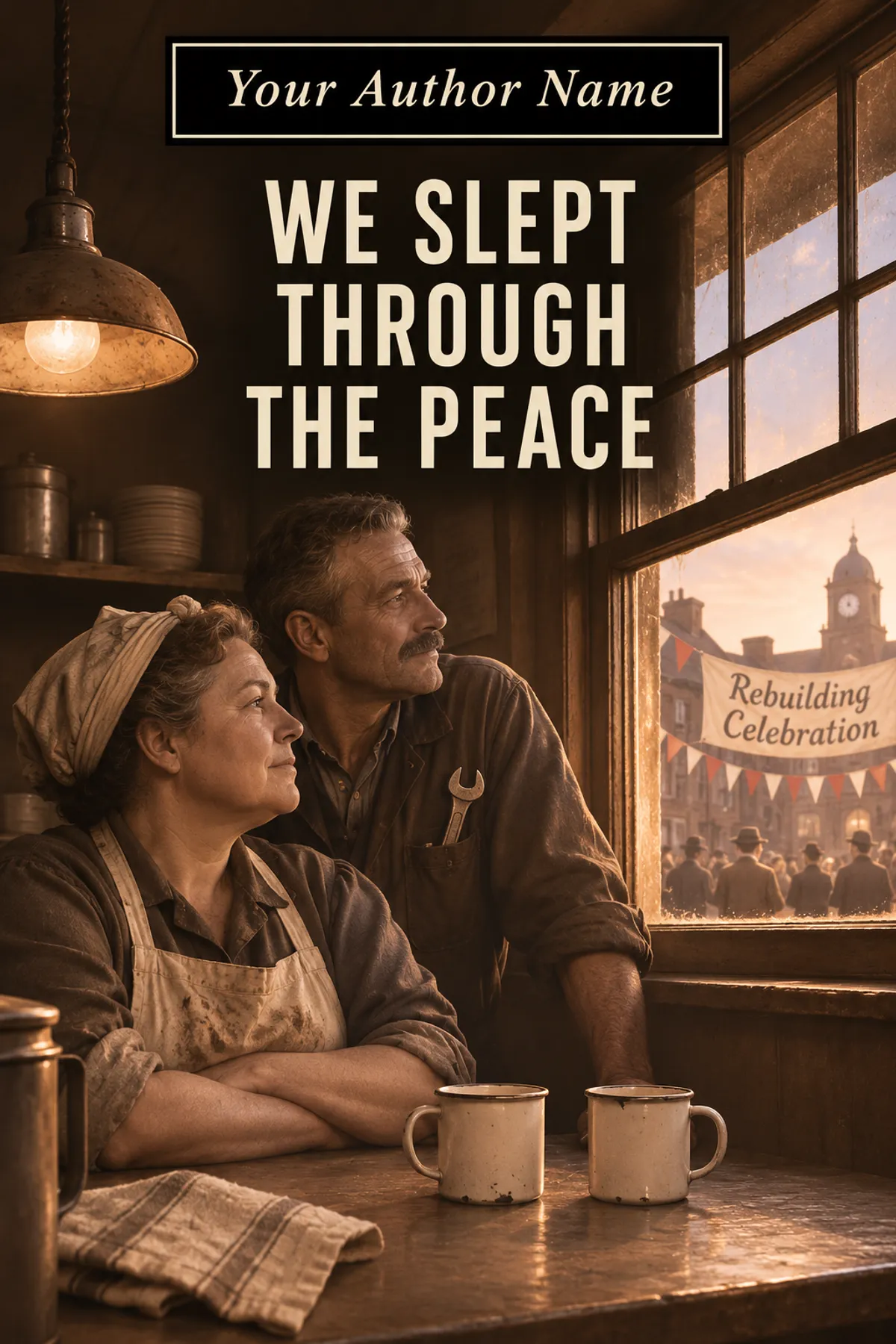
We Slept Through the Peace
Night workers in an invented town in 1947 wake to find their shift omitted from the official celebration of rebuilding. A canteen cook and a repairman organize a daylight gathering, discovering how many people have mistaken being essential for being seen.
ImagineYourBook writes a fresh draft from this idea.
How it begins
Florence slept through the unveiling because she had cooked eight hundred breakfasts for the people attending it.
When she woke, the newspaper was already on the stairs. A photograph showed the new clock above the railway works, its hands fixed at noon. Beneath it, the mayor congratulated every hand that had rebuilt the town.
Florence read the list of hands.
No canteen. No cleaners. No night repair crew.
She put the kettle on and tried to decide whether anger was reasonable before tea.
At fifty, she had developed a suspiciously useful talent for being reasonable. It had kept her employed through shortages, cold kitchens, and the year everybody required a hot meal but nobody could explain how the fuel bill would be paid.
A knock came at her door. Walter Bell stood outside holding the ceremony program. He was fifty-two, a railway repairman, and still had a pale line across his forehead where his work cap had been.
'It says the works were silent at dawn,' he said.
'They were not.'
'I know. I was underneath them.'
Florence let him in. He placed the program beside her newspaper. Someone had written THANK YOU TO OUR DAYTIME VOLUNTEERS in very large letters.
'Perhaps they assumed we were invited,' she said.
'We were. For eleven in the morning.'
They considered the invitation. It had arrived with the payroll notices at the beginning of their shift, precisely when attendance would have required either leaving essential work or doing without sleep.
Florence poured two cups.
'We could ask them to do it again.'
Walter looked appalled.
'The speeches?'
'No. A meal.'
She found a clean sheet of wrapping paper. At the top she wrote: FOR EVERYONE WHO WAS THERE WHILE EVERYONE ELSE WAS ASLEEP.
Then she paused. If she cooked, served, and cleared up this celebration too, they would have achieved nothing except another long shift.
Florence drew a line through the word meal.
'First,' she said, 'we are going to need a very different committee.'
Your idea. Your book.
Keep the spark. Change anything.
Create my bookCreated with ImagineYourBook. Free to use as inspiration.
Outline and characters
Develop this idea
Avoid making recognition a substitute for material change. Florence and Walter can want a celebration while also asking who cooks, who is paid, and who gets to sleep. Their period setting needs ordinary constraints more than a parade of famous events. Let the night workers disagree without undermining their dignity. Humor should come from committee habits and exhausted competence, with a conclusion that changes an actual working arrangement.
- Florence and Walter discover that the rebuilding celebration omitted the night shift.
- Their proposed gathering initially reproduces the same unpaid work it means to honor.
- They recruit organizers willing to work around sleep schedules rather than expecting gratitude.
- The official committee offers leftover banners but refuses shared credit for the rebuilding.
- Workers disagree about whether recognition matters more than reliable pay and safer hours.
- Florence's attempt to manage everything strains the coalition and her own health.
- Walter admits he used invisibility to avoid difficult conversations at home.
- They negotiate a public event with paid preparation and clear responsibilities.
- A rail emergency tests whether the town will share necessary work or simply applaud it.
- The gathering happens on terms that leave the night workers rested enough to enjoy it.
Characters
- Florence Stone, 50. Night canteen cook
- Walter Bell, 52. Railway repairman
Series possibilities
- A postwar town ensemble can follow other overlooked trades as rebuilding changes what the community values.