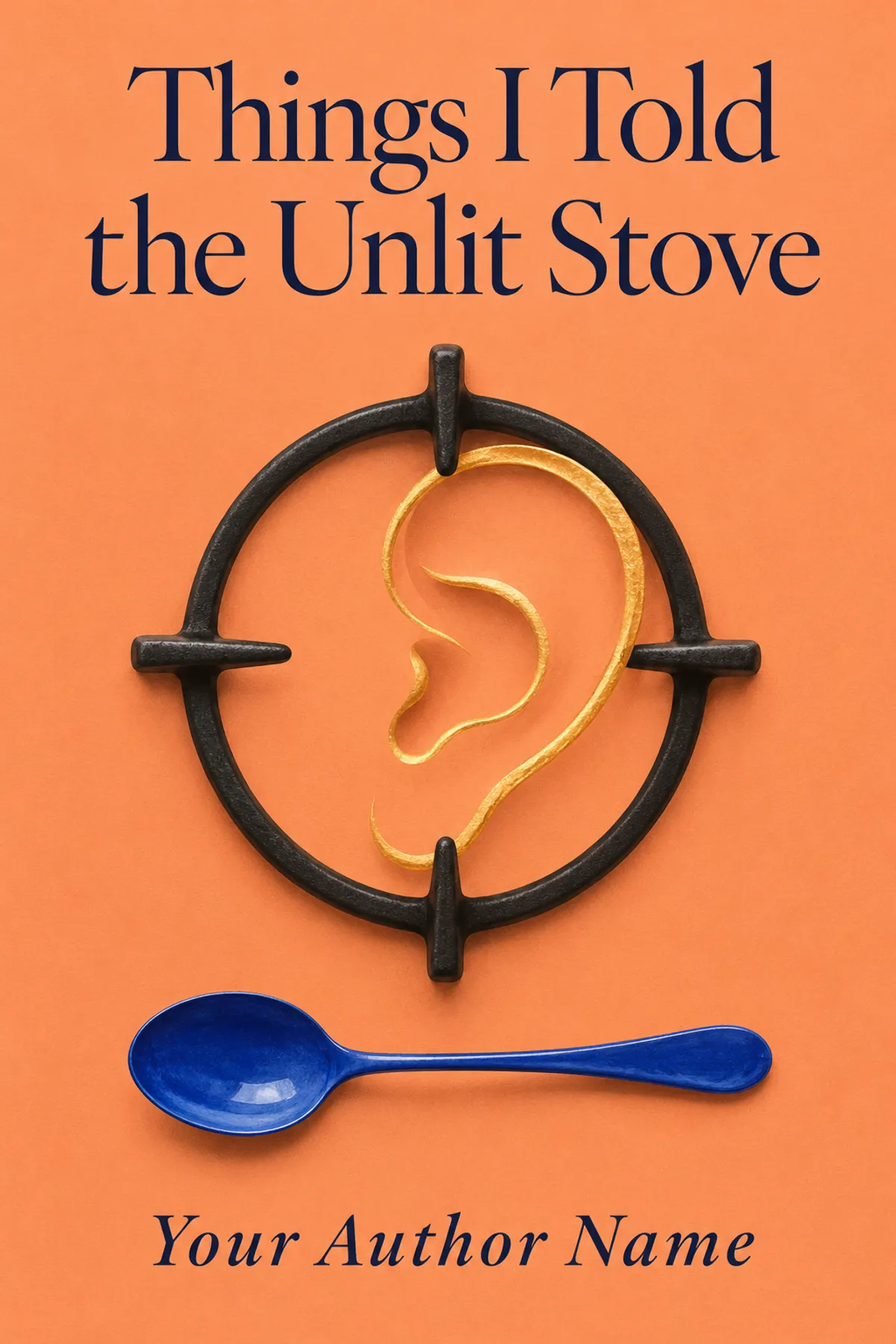
Things I Told the Unlit Stove
A chef who has lost her sense of smell writes poems to an unlit stove while learning how memory, appetite and care survive an altered body.
ImagineYourBook writes a fresh draft from this idea.
How it begins
BEFORE
I used to know when an onion was ready from the doorway.
The kitchen lifted its small flag of sweetness.
Now I stand close and watch the edges.
The stove says nothing.
It has always been good at waiting for a person to turn something on.
INSTRUCTIONS
Everyone has a suggestion.
Lemon. Coffee. A stronger lemon.
I thank them with the face I once used for customers who wanted their soup both hotter and less hot.
Under the sink, the cleaning cloth keeps its own counsel.
I envy the simple dignity of a thing that does not need to report improvement.
ONION
I cut it slowly.
The layers fall into the bowl like letters removed from a word I still know how to say.
My eyes water.
There is comfort in a familiar response the body has not asked permission to keep.
I am allowed to miss the rest.
VISITOR
Jo brings bread and does not ask whether I can smell it.
She asks where the plates are.
This is how a room becomes bearable: someone needs an ordinary answer.
We eat beside the unlit stove.
The crust makes a brave, ridiculous noise.
For a moment I laugh before I decide whether laughter is appropriate.
LATER
Water begins its argument with heat.
The pan clicks.
A spoon touches the side of a bowl three times.
There are ways to recognize a kitchen without asking it to become the kitchen you lost.
I tell the stove this.
I tell it I am tired of being an example.
Then I turn the smallest ring to the smallest flame.
Jo is coming back with tomatoes.
I have not decided what we are making.
It is a relief, having one thing that does not yet need a name.
I leave one plate beside the other, not because hunger has become simple, but because company need not wait for it to be.
Your idea. Your book.
Keep the spark. Change anything.
Create my bookCreated with ImagineYourBook. Free to use as inspiration.
Outline and characters
Develop this idea
A sensory-poetry collection can acknowledge loss without turning every poem into a recovery milestone. Use the chef's knowledge of sound, texture and timing while allowing the missing sense to remain missing. The stove gives the speaker someone to address when people offer too many answers. For your own version, choose a changed practice you can describe concretely and respectfully. Let humor come from ordinary irritation, and make room for pleasure that does not have to prove anything.
- Opening poems address an unlit stove as a patient listener
- Recipes become records of sensations the speaker cannot access
- A sequence confronts anger about being told to stay grateful
- Domestic objects preserve practical knowledge beyond smell
- A neighbor arrives without asking for progress
- The speaker burns one old recipe and keeps another
- Touch and sound enter the poems without replacing what was lost
- An imperfect meal becomes a shared act rather than proof of recovery
- The stove is lit for company rather than professional judgment
- The final poem leaves room for a changed but unfinished appetite
Characters
- Lena Firth, 44. Chef writing to the stove after losing her sense of smell
- Jo Moss, 51. Neighbor whose quiet visits interrupt the speaker's isolation
Series possibilities
- A second poetry sequence follows food brought by visitors and the stories they leave in the containers.