
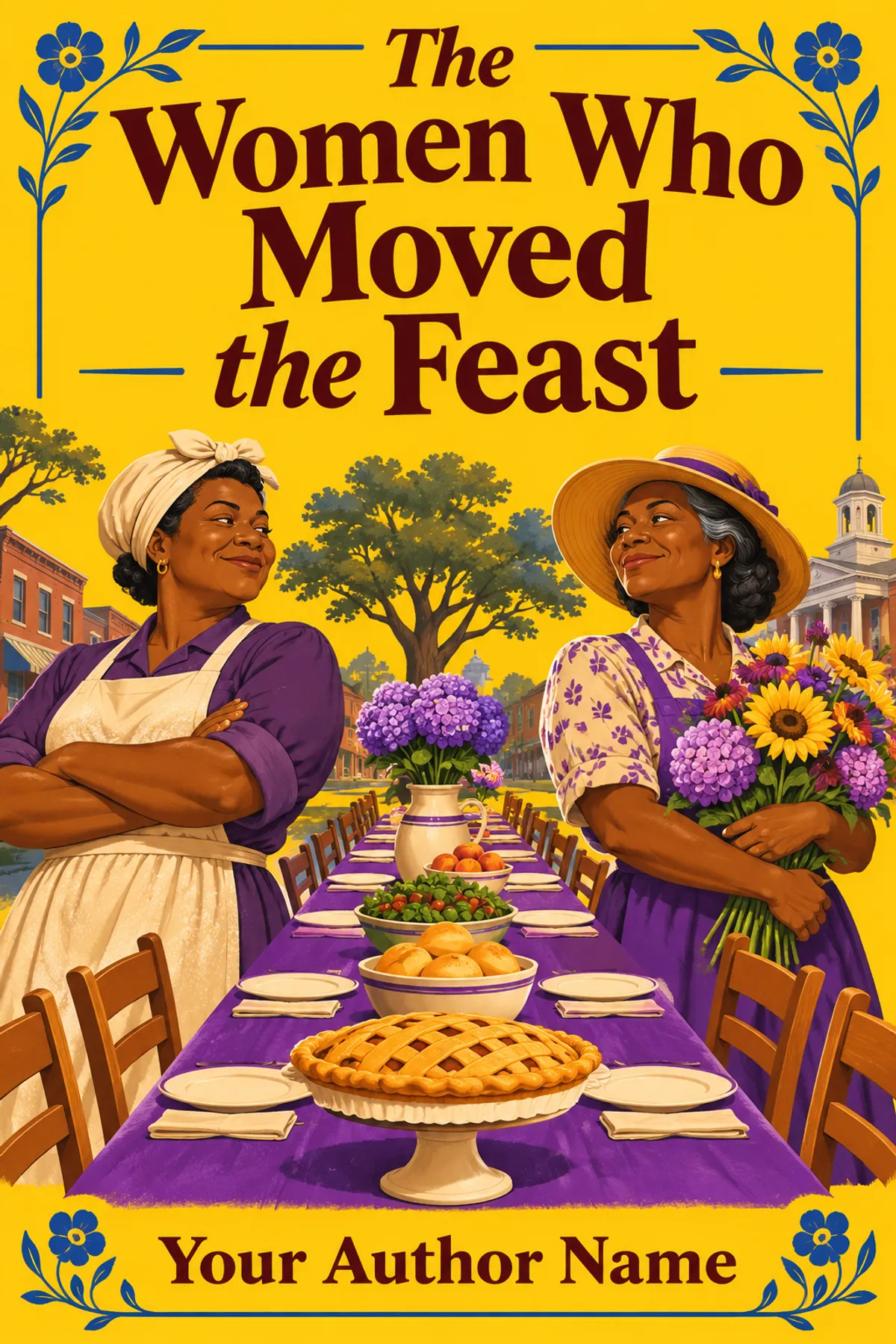
The Women Who Moved the Feast
In 1946, women who cook a town's annual feast move their tables outside after being excluded from the speeches. A baker and a flower grower discover that changing who sits where can be more disruptive than canceling dinner, especially when hungry officials start negotiating.
ImagineYourBook writes a fresh draft from this idea.
How it begins
Ruth Daniels moved the first table before anyone could tell her it was too heavy.
Estelle Green took the other end. Between them they carried it through the hall's double doors and set it on the grass beneath the chestnut tree.
Inside, the chairman continued practicing his speech. He had reached the part about a united town.
'He'll notice when the plates go,' Estelle said.
'Then we'd better move those next.'
For eleven years the harvest feast had required forty pies, six enormous pots of potatoes and women who did not mind eating after everyone else. Ruth had supplied the pies. Estelle had supplied flowers and, increasingly, onions, because somebody always forgot that decorations could not feed people.
That morning the seating plan had arrived. The official guests sat in the hall. The cooks were assigned a smaller table in the passage, beside the door through which everyone would carry dirty dishes.
Ruth had asked whether the passage table could join the others. The secretary said the arrangement honored tradition.
Now tradition stood under a tree with one uneven leg. Estelle wedged a folded program beneath it.
The butcher's wife came out holding a stack of plates. She looked at the table, then at Ruth.
'Are we allowed?'
'It's ours,' Ruth said. 'My brother built it.'
A second woman appeared with bread. Then a third carried a jug of flowers she had arranged before dawn. The table began to look less like a protest than a meal somebody might enjoy.
From the doorway, the chairman called for Ruth.
'The guests will be hungry.'
She put the first pie in the center of the table. Steam rose through the cut in its lid.
'So are we.'
Estelle drew up two chairs. For once, they sat down while the food was still hot.
Your idea. Your book.
Keep the spark. Change anything.
Create my bookCreated with ImagineYourBook. Free to use as inspiration.
Outline and characters
Develop this idea
Research food availability, civic celebration and local gender expectations for the invented 1946 town. Avoid treating all women as one opinion or all men as unwilling to change. The shared meal should contain pleasure, rivalry and expertise as well as politics. Ownership of tables and ingredients supplies practical leverage. The resolution becomes stronger when it changes next year's workload and budget instead of merely adding names to a thank-you speech.
- Ruth and Estelle move their tables after receiving segregated service seating.
- Other cooks decide individually whether to join the outdoor meal.
- Officials describe the move as an unfortunate misunderstanding.
- Food ownership and unpaid preparation costs become public questions.
- Rain threatens the improvised feast and exposes practical disagreements.
- Some women want acknowledgment while others need payment or rest.
- The committee offers symbolic seats without changing future work.
- Ruth and Estelle negotiate a shared budget and rotating responsibilities.
- The feast reunites around an agreed seating and service plan.
- The next year's preparations begin with paid commitments and voluntary choices.
Characters
- Ruth Daniels, 49. Baker
- Estelle Green, 54. Flower grower
Series possibilities
- Standalone historical community novels explore the ordinary labor behind rituals that people call timeless.