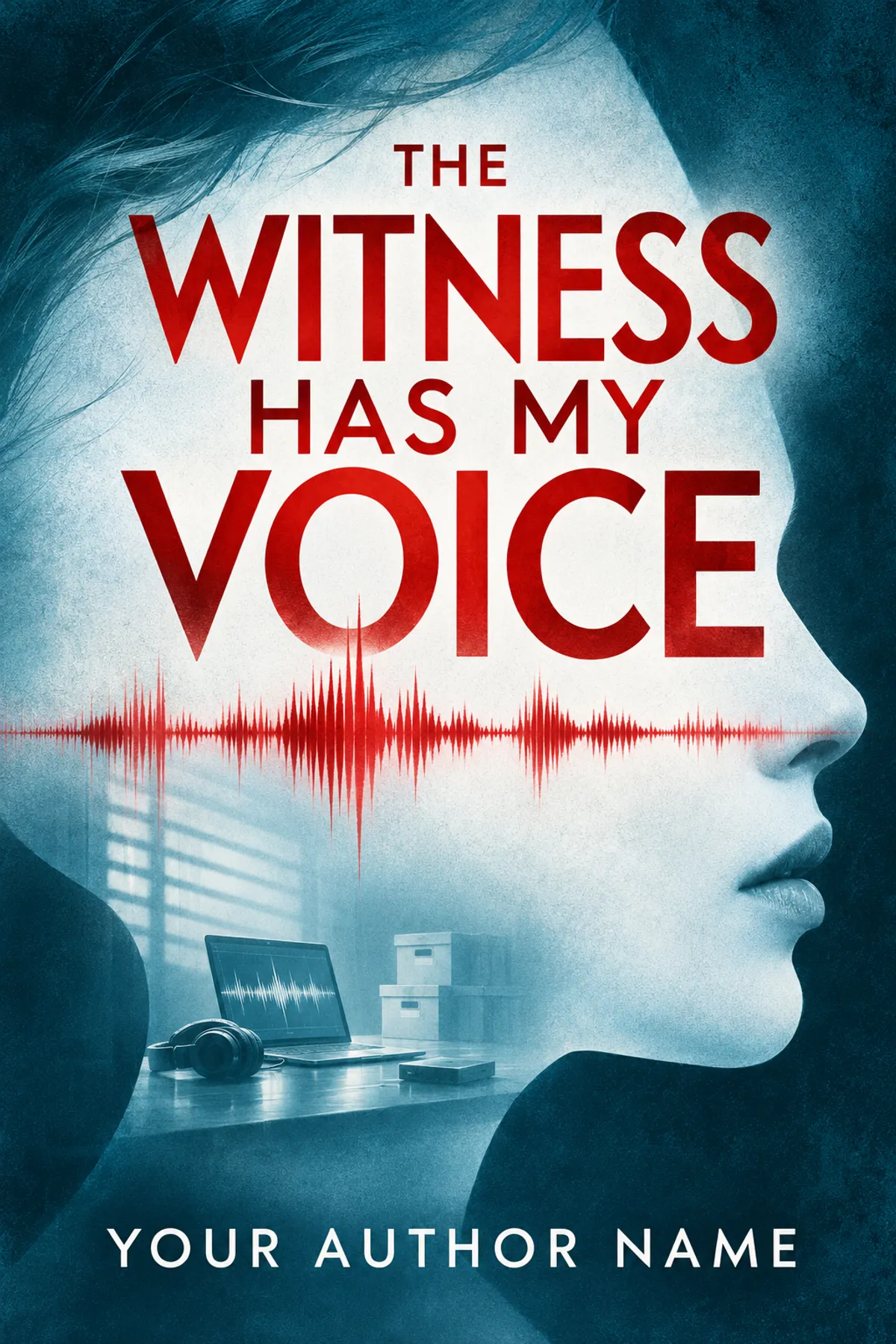
The Witness Has My Voice
A forensic speech analyst hears herself describing a crime she has not committed. Her investigation reveals that someone has been rehearsing witnesses using the private recordings she thought were safely archived.
ImagineYourBook writes a fresh draft from this idea.
How it begins
The witness cleared her throat exactly the way Leah did.
That was the first thing.
Not the pitch, which could be imitated. Not the clipped ending of the word station. The small double cough before speaking was a habit Leah had been trying to lose for twenty years.
She stopped the file and checked its label.
WITNESS THREE. INITIAL ACCOUNT. RESTRICTED.
Her colleague had left it in the shared assessment queue that morning. A routine request: compare two statements, flag obvious edits, estimate whether further examination was justified.
Leah put on her headphones.
"I saw him leave through the side entrance," said her own voice.
She removed them again.
At the next desk, Martin was opening a packet of biscuits.
"Everything all right?"
"Who submitted this?"
He leaned across without looking at the screen.
"The station. Which file?"
She told him.
His hand stopped inside the packet.
"That one's been through twice."
"Through whom?"
"I don't know. External people first."
Leah saved an untouched working copy and wrote down the time. Then she closed the assessment window.
In the recording, traffic passed behind the speaker. A bus engine. Two footsteps. A door with a loose metal plate.
Beneath those sounds, almost too quiet to notice, someone tapped a spoon three times against a cup.
Leah knew that sound too.
Her father had done it before every recorded letter he sent while working abroad.
The letters were in a box in her bedroom.
They had never been part of a case.
Martin placed the biscuits on her desk.
"What did you hear?"
Leah looked through the glass wall at the corridor, where people carried folders, complained about the printer, and believed their voices belonged to them.
"I need this file removed from my queue," she said. "And I need someone independent to watch me explain why."
Your idea. Your book.
Keep the spark. Change anything.
Create my bookCreated with ImagineYourBook. Free to use as inspiration.
Outline and characters
Develop this idea
Distinguish voice resemblance, synthetic editing, and the truth of a statement; none proves the others. Leah should preserve evidence and disclose her conflict rather than secretly altering an official case. Use accessible acoustic details that readers can follow without technical lectures. The antagonist's access to private recordings needs a concrete chain of permissions, purchases, and breaches that the ending can demonstrate.
- Leah receives a witness recording spoken in her own voice
- She preserves the original and reports the conflict
- Acoustic details point to an old training archive
- Owen helps trace recordings licensed without speakers' consent
- A second witness repeats a phrase from Leah's private dictation
- Her employer pressures her to endorse a convenient explanation
- Leah discovers rehearsed testimony built from both real voices and edited scripts
- She loses access to her laboratory and works through documented external channels
- Independent source files and room acoustics expose the organizer
- The case is reopened with the witnesses' actual accounts preserved
Characters
- Leah Ren, 39. Forensic speech analyst
- Owen Calder, 46. Independent audio archivist
Series possibilities
- Owen receives an unedited tape whose room sound belongs to a building demolished before it was supposedly recorded.