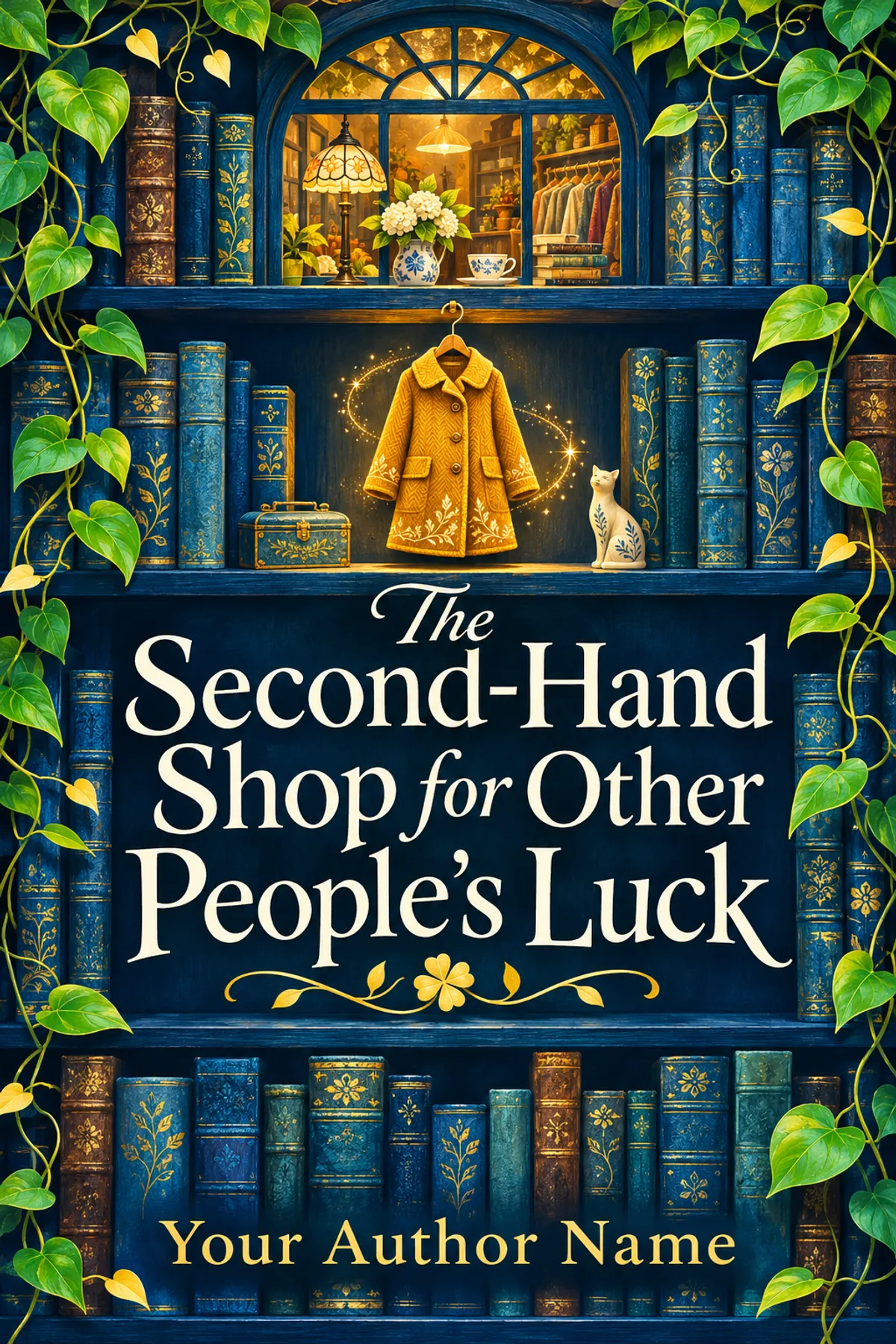
The Second-Hand Shop for Other People's Luck
A charity-shop sorter recognizes good fortune attached to ordinary donated objects. Selling a lucky coat seems harmless until its former owner returns with the life she lost when she gave it away.
ImagineYourBook writes a fresh draft from this idea.
How it begins
The coat found a ten-pound note before Rosa found its pocket.
It slipped from the lining when she lifted the hanger.
"Again?" said the volunteer at the till.
Rosa looked at her.
"What do you mean, again?"
"The blue cardigan yesterday. Bus ticket in the sleeve. Still valid."
"People forget things."
"They do. Usually tissues."
Rosa checked the coat for damage.
Good wool. One repaired button. A narrow green seam where somebody had mended the lining by hand.
A customer tried it on at lunchtime.
Within a minute, her phone rang with news that the flat she wanted was available.
She bought the coat without asking for a discount.
By closing time, Rosa had forgotten the coincidence.
Then Mina Venn came in carrying the empty donation bag.
"I need it back."
"The coat?"
Mina nodded.
"I'm sorry. It sold."
Outside, rain gathered in the shop awning and spilled onto the pavement in sudden heavy drops.
Mina stood just beyond the dry patch.
"Do you know who bought it?"
"We don't give out customers' details."
"Of course."
She looked ashamed, which made Rosa wish the answer could be kinder without becoming different.
"Was something left inside?"
Mina laughed once.
"My good week, apparently."
Rosa waited.
The woman took out her phone. A canceled appointment. A lost contract. A message from someone who had decided not to come home.
All dated after the donation.
Rosa looked at the rack of coats.
She had sorted hundreds of bags. Wedding gifts, work clothes, the careful remains of lives people could no longer store.
She had never been asked to return a future.
Mina folded the empty bag.
"I thought if I gave it away, I'd stop needing things to go right."
Rosa pulled a chair from behind the counter.
"Let's start," she said, "with somewhere dry to sit."
Your idea. Your book.
Keep the spark. Change anything.
Create my bookCreated with ImagineYourBook. Free to use as inspiration.
Outline and characters
Develop this idea
Keep luck ambiguous enough to leave room for human attention, privilege, and choice. Rosa should not become a merchant of guaranteed happiness. Mina's loss can be real without proving that another person's gain must always cause it. The charity-shop setting offers different economic stakes for customers, so the eventual sharing arrangement should acknowledge who can afford to gamble and who cannot.
- Rosa notices useful coincidences following certain donated objects
- She sells a coat that brings its buyer remarkable luck
- Mina returns claiming her life has unraveled since donating it
- Rosa tests whether the objects transfer luck or merely attention
- The shop becomes crowded with people seeking guaranteed outcomes
- A wealthy donor offers to purchase every fortunate object
- Mina reveals the decision she hoped the coat would make for her
- Rosa refuses to price people's futures as merchandise
- Customers choose how to share objects without promises or ownership of the consequences
- The shop returns to ordinary trade with a more honest understanding of chance
Characters
- Rosa Bell, 55. Charity-shop sorter
- Mina Venn, 49. Former owner of a donated coat
Series possibilities
- A donated pair of shoes seems to bring good luck only when its wearer takes an unfamiliar route.