The Portrait Keeps Looking Away
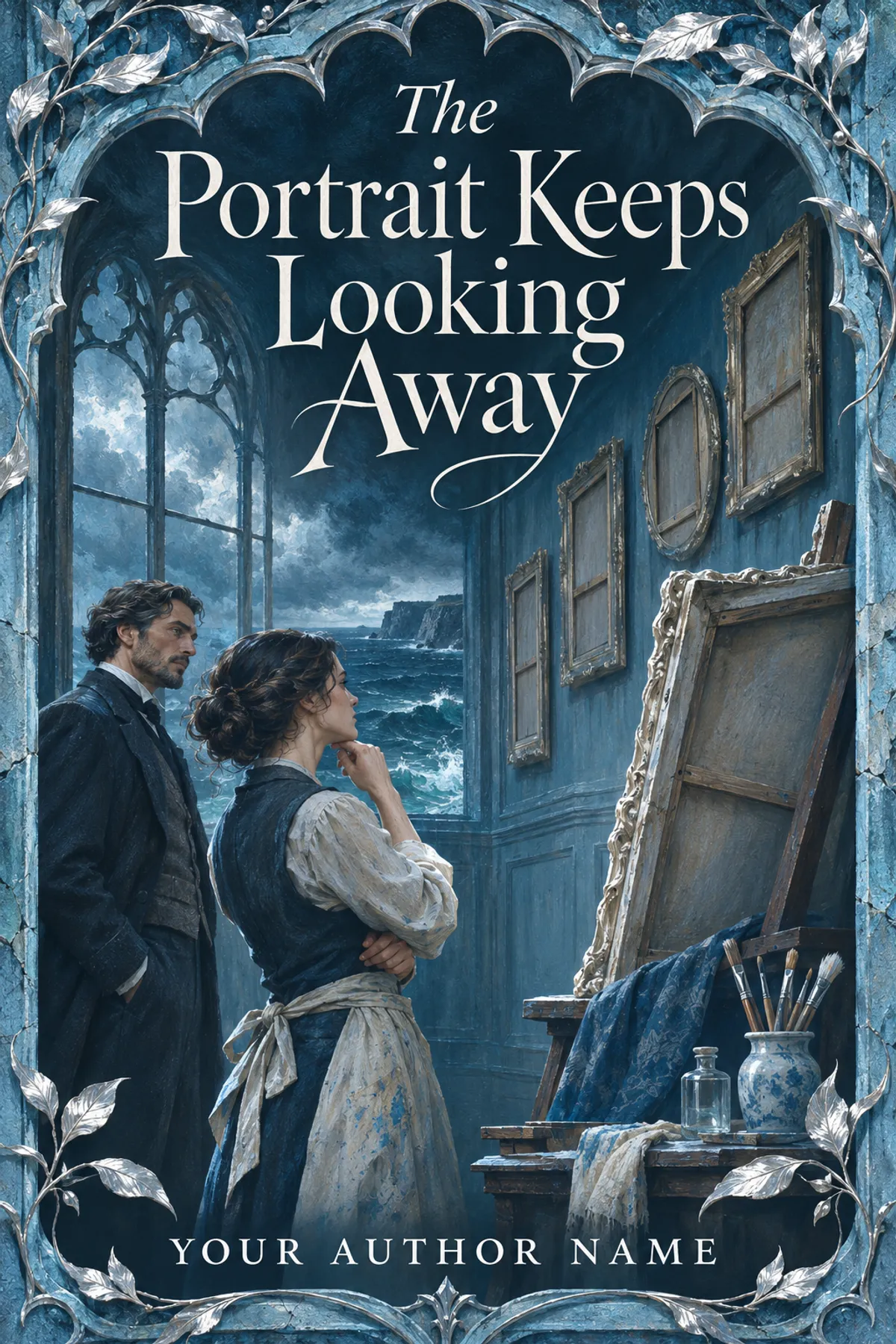
A portrait restorer arrives at a family exhibition to find every painted face turning toward the wall. Uncovering what the pictures refuse to witness means questioning the flattering history she was paid to preserve, including her own grandmother's small part in it.
ImagineYourBook writes a fresh draft from this idea.
How it begins
The admiral had turned his face to the wall.
Alice Warren noticed before she removed her gloves. Yesterday, his painted eyes had followed visitors across the gallery with the complacency of a man accustomed to approving the room.
Today she could see only one ear.
"A trick of the light," said the exhibition patron.
Alice moved the lamp.
The ear remained.
She had spent three weeks cleaning smoke from the portrait. She knew the shape of the admiral's nose, the repaired tear beside his collar, and the small blue stroke someone had added to make his gaze appear kinder. None of those details could explain his current preference for plaster.
Frederick Vale arrived with the condition register.
He looked at the canvas, then at Alice.
"Was that in yesterday's report?"
"I try to mention significant changes."
Beyond the gallery windows, the sea was gray and restless. Workers were carrying exhibition cases across the terrace, preparing a celebration of the family's public service. Alice's grandmother had once sewn curtains in this house. Her name appeared nowhere in the catalogue.
The patron adjusted his cuffs.
"Perhaps it should be removed until after the opening."
Before Alice answered, a small portrait above the fireplace gave a faint scrape.
Its subject, a woman holding a dog, had lowered her eyes.
Frederick closed the register slowly.
"I think," he said, "we should keep observing."
The patron left with the expression of someone who had expected art to be more cooperative.
Alice stepped closer to the admiral. On the dark wall behind his painted shoulder, a shape had emerged beneath the old varnish: a doorway, a basket, a woman bent over a length of cloth.
She recognized the woman's hands before the face.
Her grandmother had used the same twisted finger to hold a needle steady.
Behind Alice, another portrait began turning away.
For the first time, the gallery seemed less like a collection than a room full of people deciding who would speak first.
Your idea. Your book.
Keep the spark. Change anything.
Create my bookCreated with ImagineYourBook. Free to use as inspiration.
Outline and characters
Develop this idea
Decide whether the portraits hold memories or sentient presences, and keep their behavior consistent. Alice's restoration knowledge should provide material clues without turning conservation into a magical interrogation method. Research exhibition practice and available materials in 1911. Living witnesses need control over their stories; a painting cannot give consent for them. Let the Gothic resolution revise the exhibition's account rather than present one recovered secret as an exhaustive history of the family.
- Alice finds a restored portrait facing the wall
- Frederick verifies that nobody moved the frame
- Other paintings begin averting their eyes
- A family account explains only the flattering details
- Alice recognizes her grandmother in an overlooked sketch
- A proposed varnish treatment would silence the pictures
- The registrar admits how the exhibition excluded inconvenient donors
- They find living testimony to contextualize the images
- The exhibition opens with unresolved history made visible
- The portraits choose where to look without becoming a spectacle
Characters
- Alice Warren, 36. Portrait restorer
- Frederick Vale, 43. Museum registrar
Series possibilities
- Restorers and registrars uncover the obligations hidden inside beautiful collections that powerful families call their history.