The Men Who Carried a Door
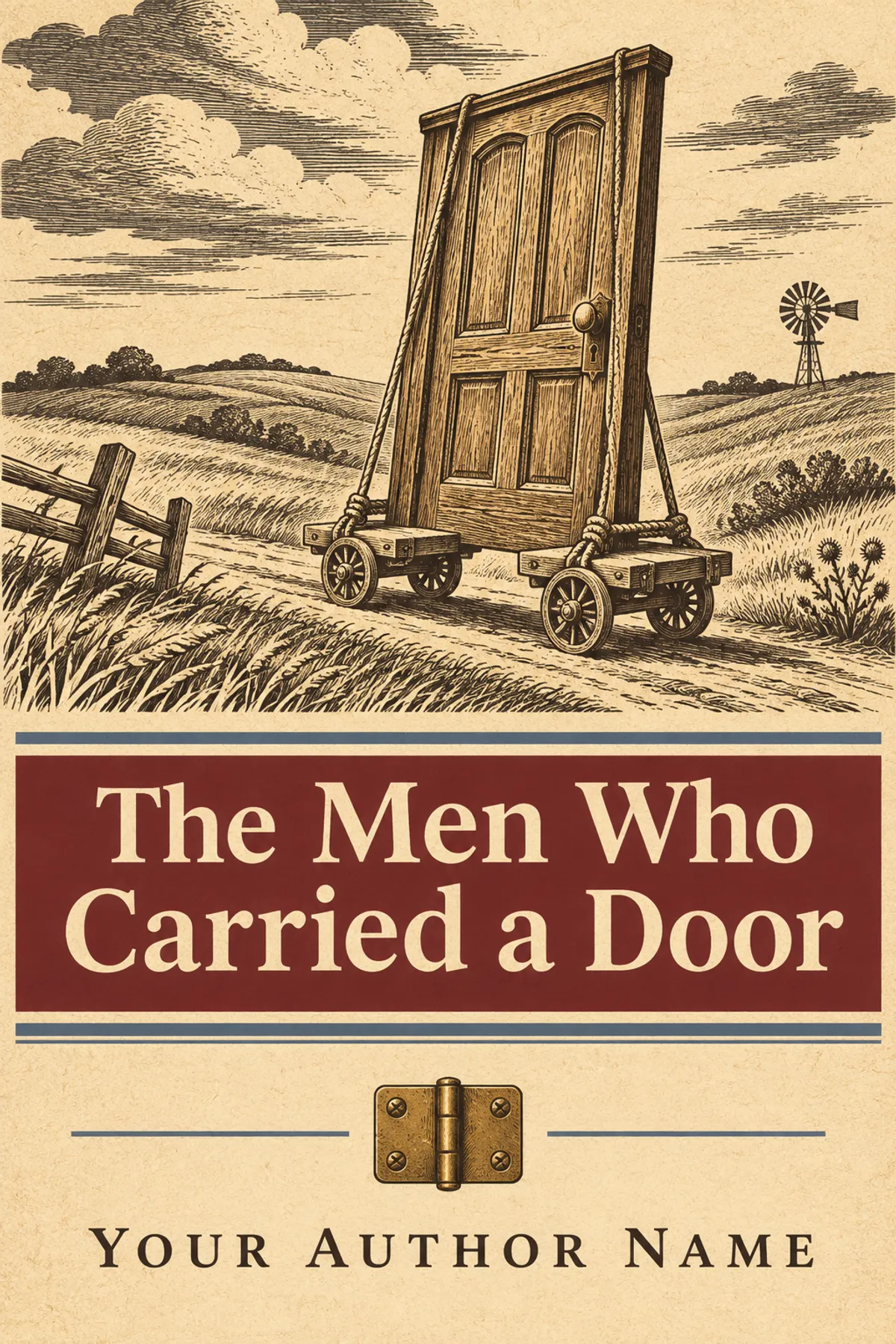
Two unemployed carpenters in 1933 accept payment to carry a beautiful door across a county without a house to attach it to. Each stop reveals another claim on the timber, turning a ridiculous job into an argument about ownership, work, and promises made by absent men.
ImagineYourBook writes a fresh draft from this idea.
How it begins
The door was worth more than the house it had come from.
George Pike knew because he had repaired the house, and nobody had paid him.
It stood in the yard on two wooden trestles, a fine oak thing with a brass knocker shaped like a pear. The owner offered five shillings to carry it to the next town.
'On a cart?' George asked.
'However you like.'
'Where in the next town?'
'A gentleman will meet you.'
George looked at Amos Gray. Amos had worked with him since February, which was long enough to recognize a bad answer and not long enough to refuse five shillings.
'We need the address,' Amos said.
The owner gave them a folded card and half the money. He held the other half between finger and thumb, demonstrating how little distance there was between employment and a favor.
They borrowed a handcart from a woman who wanted it back before market. The door overhung both sides. George wrapped the knocker in his spare shirt to stop it striking the wood.
For the first mile, people greeted them as if carrying a door were ordinary work, which it was. At the bridge, a tollkeeper demanded to know whether they were transporting building materials or household furniture.
'A door,' Amos said.
'That is not a category.'
George paid the cheaper toll.
Beyond the bridge, they stopped beneath a hedge. Amos unfolded the card. It contained no address, only the words RETURN WHAT WAS TAKEN.
He handed it to George. Neither spoke for a moment.
Then a woman came down the lane carrying an empty basket. She stopped when she saw the brass pear.
'Where did you get that?'
George put his hand on the door. Oak held the day's warmth better than a promise.
'We were hired to deliver it,' he said.
The woman set down her basket. 'Then someone has finally decided to admit there was a house.'
Your idea. Your book.
Keep the spark. Change anything.
Create my bookCreated with ImagineYourBook. Free to use as inspiration.
Outline and characters
Develop this idea
Research wages, salvage ownership and transport costs for the chosen 1933 location so five shillings has meaningful weight. Keep the men distinct in skill and appetite for risk. The door should have a traceable material history, not reveal a new secret at every stop. Resolve ownership through evidence and negotiation, while leaving the larger loss of the demolished home emotionally significant rather than tidily repaired by symbolism.
- George and Amos accept an apparently simple door-delivery job.
- The destination card reveals an unresolved claim rather than an address.
- A former resident identifies the brass knocker from a demolished home.
- A landowner claims the door was purchased legally as salvage.
- Their unpaid earlier work connects George to the disputed demolition.
- Amos considers selling the valuable timber to recover wages.
- A surviving invoice proves the house's contents were excluded from sale.
- The carpenters refuse to surrender the door without an agreed recipient.
- Claimants negotiate its return as material evidence rather than a trophy.
- George and Amos secure payment while helping build a useful shared entrance.
Characters
- George Pike, 52. Unemployed carpenter
- Amos Gray, 45. Unemployed carpenter
Series possibilities
- The carpenters take other improbable delivery and repair jobs across the invented county's changing economy.