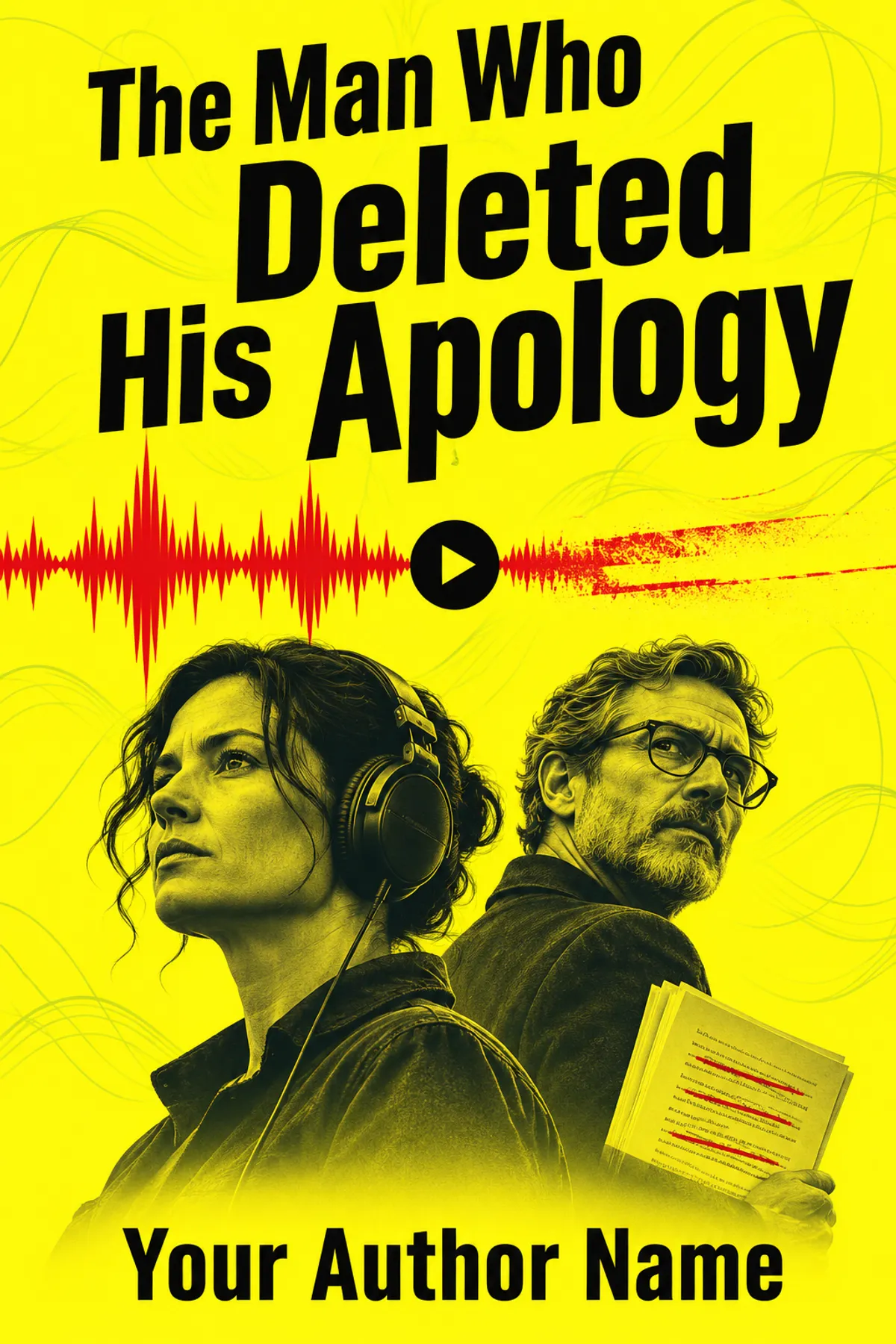
The Man Who Deleted His Apology
An audio archivist is hired to restore a public apology that was never broadcast. A former speechwriter recognizes edits that make the speaker sound guilty of a different wrong, and the pair must decide who benefits when a confession becomes more useful than the truth.
ImagineYourBook writes a fresh draft from this idea.
How it begins
Ingrid Vale heard the apology exactly as the audience was meant to hear it: tired, sincere and almost beyond repair.
Then she separated the left channel.
The sentence changed.
She stopped the recording and looked through the studio glass. Anton Reed waited in the corridor with his coat over his arm. He had written the original speech twenty years earlier. He claimed never to have heard it delivered.
Now Ingrid believed him.
On the clean channel, the speaker said, I take responsibility for the decision. On the damaged one, a breath and a clipped consonant made it sound like, I take responsibility for the deception.
Both versions could persuade a listener who expected the other.
She opened the door.
'What was he apologizing for?'
Anton looked at the speakers.
'A decision.'
'That isn't enough.'
'It was enough for the people who paid me.'
Ingrid had restored interviews, family tapes and one operatic performance recorded behind a pillar. She knew the danger of making a damaged voice sound cleaner than its evidence deserved. This damage seemed to have intentions.
The client had requested an emotionally legible version for a commemorative documentary. No release form accompanied the recording. The client had promised to send it later.
Anton sat beside the console.
'You can fix it?'
'I can show you what's there. Those aren't always the same thing.'
At the end of the tape, after thirty seconds of apparent silence, a second voice whispered a number.
Anton stood so abruptly that the chair struck the wall.
'You need to stop.'
Ingrid saved a protected working copy and removed her headphones. The whispered number was not a date or a code. It was the count of people the original apology had carefully avoided naming.
She had spent all morning improving the sound. She now needed to know who had hired her to improve the lie.
Your idea. Your book.
Keep the spark. Change anything.
Create my bookCreated with ImagineYourBook. Free to use as inspiration.
Outline and characters
Develop this idea
Consult audio-restoration practice so channel separation and edit detection remain technically plausible. An altered word must be demonstrated through material evidence, not a miraculous enhancement. Anton's guilt should involve concrete choices with consequences. Do not treat a confession, authentic or otherwise, as a substitute for corroboration. The people harmed need agency over participation, and Ingrid's final product should make uncertainty audible instead of selling an impossibly perfect recovered truth.
- Ingrid detects edits changing the meaning of a recorded apology.
- Anton identifies wording he wrote and omissions he accepted.
- The documentary client pressures them to deliver a persuasive clean version.
- Channel differences reveal multiple generations of deliberate editing.
- A whispered count points toward people excluded from the public account.
- Anton admits he helped frame the original harm as a lesser mistake.
- A rival claimant wants the altered confession published as convenient proof.
- Ingrid documents uncertainty and seeks independent corroboration.
- The authentic sequence exposes both the edit and the original evasion.
- Survivors choose their participation while Ingrid releases a transparent restoration record.
Characters
- Ingrid Vale, 39. Audio archivist
- Anton Reed, 50. Former speechwriter
Series possibilities
- Ingrid's restoration work uncovers other recordings whose apparent clarity conceals choices about what listeners are allowed to hear.