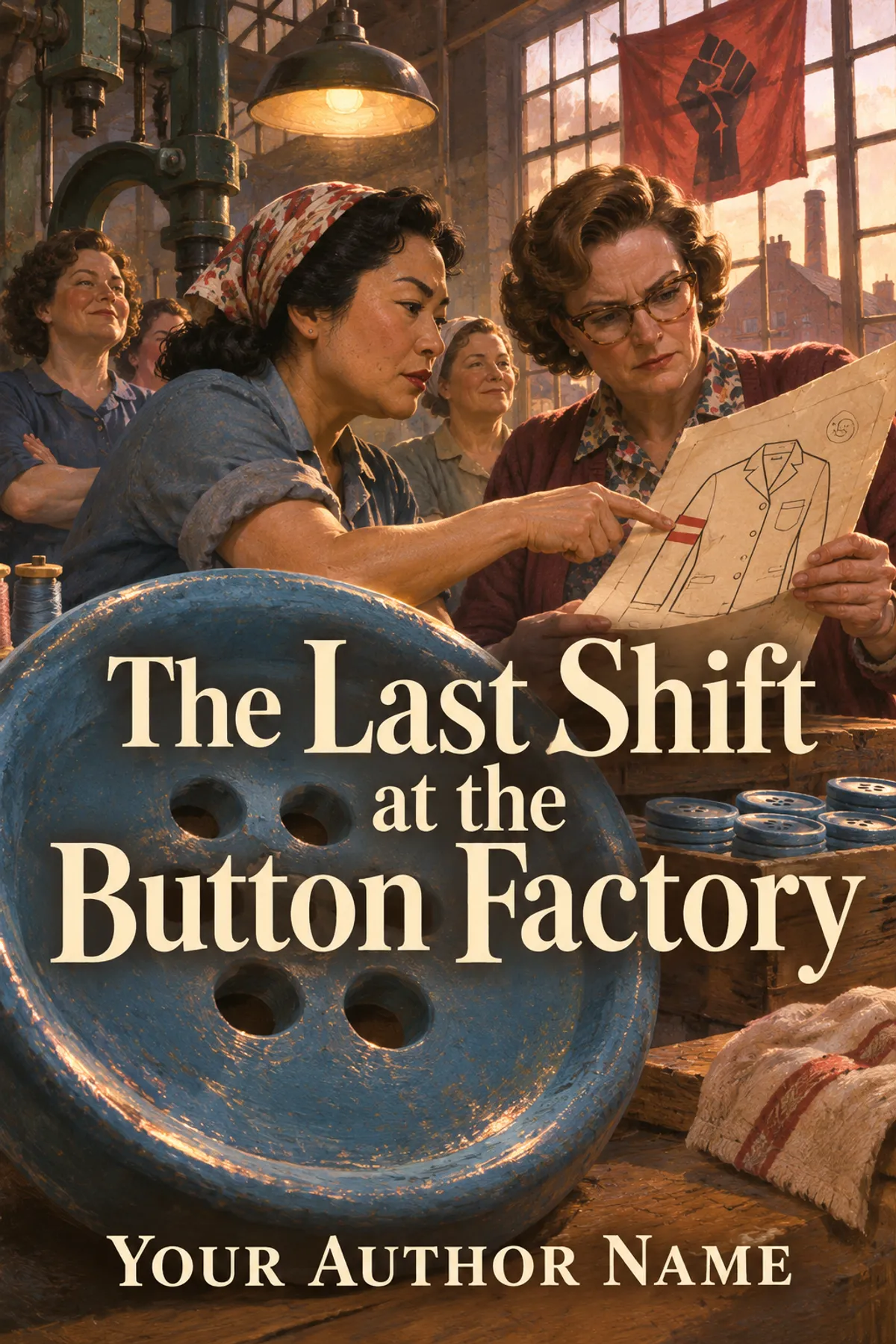
The Last Shift at the Button Factory
Women facing the closure of a fictional 1960s button factory discover their final order is destined for uniforms marking a strike they have secretly supported.
ImagineYourBook writes a fresh draft from this idea.
How it begins
The last order was for buttons nobody wanted to sew on.
June held one beneath the inspection lamp. Black, four holes, a raised crest around the edge. She had made buttons for school coats, hotel jackets and cheap dresses that would outlive their fastenings. These were destined for uniforms she recognized from the newspaper.
Across the yard, men in those uniforms had escorted replacement workers through a picket line.
The women at June's factory had been sending money to the strike fund for six weeks.
Sylvia came down from dispatch carrying the destination sheet folded into her sleeve.
"They changed the customer code."
June watched the press descend. A tray filled with small black circles, each one perfect.
"Does everyone know?"
"Not yet."
Friday would be their last shift. The closing payment depended, management had reminded them, on completing the outstanding orders. Some women had jobs lined up. Most had applications, debts and a number to call that never seemed to have vacancies.
June switched off her machine. The sudden gap in its rhythm traveled farther than a shout.
At the next station, Nora looked up.
"Broken?"
"No."
That answer made the room quiet in stages.
The supervisor emerged from his office, already frowning. He had worked there longer than June and would lose his position too. She had no wish to make him the whole enemy simply because he was the nearest man wearing a tie.
She placed the button and the dispatch sheet on his desk.
"We need to discuss this order."
He read the destination, then looked toward the silent machines.
"You know what stopping could cost."
June thought of the envelopes she had carried to the strike committee, each containing coins the women could have used at home.
"Yes," she said. "That's why everyone needs to decide, not just the people who can afford to be brave."
Outline and characters
Develop this idea
Solidarity should involve negotiation among people with unequal financial room to act. Avoid making the boldest refusal automatically the most ethical choice for everyone. The supervisor can share some precarity without erasing his authority. Research labor law, severance practices and manufacturing conditions for the eventual jurisdiction; the fictional town allows development without asserting a real strike history. End with a concrete negotiated outcome and continuing uncertainty about employment, preserving the cost of collective action.
- June and Sylvia identify the final order as uniform buttons for replacement-worker escorts.
- Completion is tied to closing payments the workers urgently need.
- The women debate refusing, finishing or finding another form of pressure.
- Sylvia's private contact with the strike committee creates mistrust among colleagues.
- Management insists the customer change is commercially routine and refuses individual exemptions.
- June challenges the group to include workers who cannot risk losing pay.
- They verify the payment terms and seek solidarity from the customer-facing workforce.
- A coordinated public disclosure and negotiated work stoppage force the order's reassignment without hiding its purpose.
- The women secure a documented settlement, though some promised work afterward does not materialize.
- On the final shift, they divide tools, addresses and responsibilities for helping one another beyond the factory gates.
Characters
- June Carter, 44. Button-factory machine operator
- Sylvia Reed, 28. Dispatch clerk and union volunteer
Series possibilities
- A companion novel follows several former workers building new lives after the factory's closure.