The Last House with a Proper Window
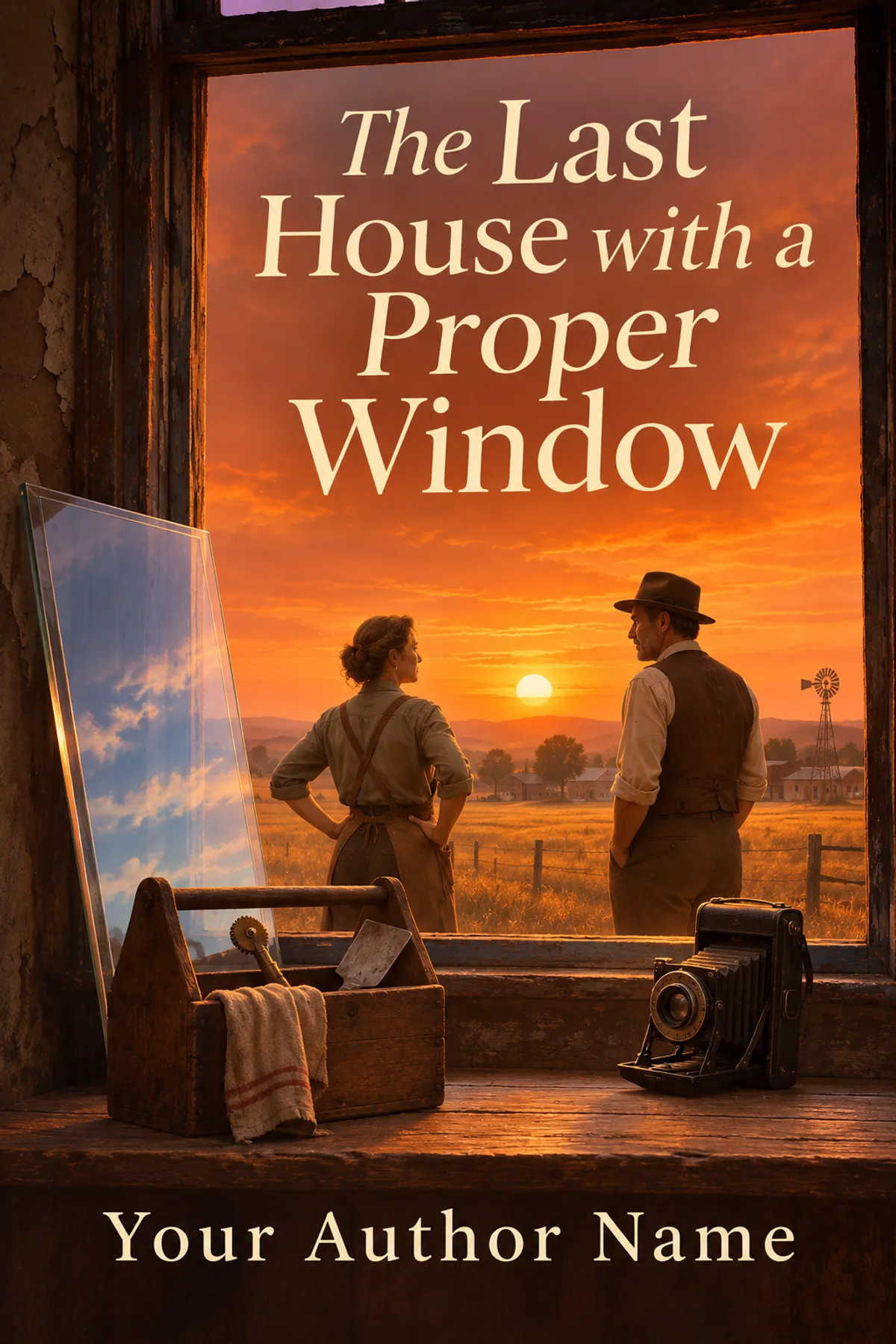
In a fictional rural town in 1948, a glazier returns to replace windows broken during years of upheaval. The one household refusing new glass belongs to an adult photographer whose view of recovery challenges everything the town wants to look past.
ImagineYourBook writes a fresh draft from this idea.
How it begins
George Vale had refused a new window three times before Ellen Reed arrived carrying the fourth.
The pane stood in a padded frame beside her cart, reflecting a bright sky the morning had not yet produced.
"I'm not here to persuade you," she said when he opened the door.
"They've improved their introduction."
"I'm here to measure. You can refuse an accurate estimate afterward."
He looked at the cart, then at her hands. She had a nick beside one thumbnail and the square white mark where a wedding ring had protected her skin during years of outdoor work.
He stepped aside.
The room beyond was colder than the street. A sheet of clear material covered half the opening; the rest had been boarded. Beside it stood a camera, a chair, and a table carrying several photographs facedown.
Ellen set down her case.
It was 1948. Across the district, windows were being restored in whatever order money, influence, and available glass permitted. The town committee wanted every main-road house finished before the anniversary celebration.
George's house occupied a particularly visible bend.
"May I move the chair?" she asked.
"It's where she sat."
Ellen waited.
She had learned that the next sentence often mattered more than the first.
George touched the back of the chair but did not move it.
"Not my wife," he said. "That's what everyone decides. A woman who came here to find someone. She waited nine weeks."
Outside, a lorry passed with the committee's new banner rolled along its side.
A brighter town, together.
Ellen measured the opening, then the distance from the chair to the table.
One photograph had turned in the draft. It showed the same room filled with people whose names she did not know, looking toward a door outside the frame.
She put down her pencil.
"Before we discuss the glass," she said, "tell me what happened to the people who were waiting."
Your idea. Your book.
Keep the spark. Change anything.
Create my bookCreated with ImagineYourBook. Free to use as inspiration.
Outline and characters
Develop this idea
Research the chosen fictional town's 1948 building materials, repair economy, and postwar conditions before expanding the novel. Ellen's glazier work should provide concrete discoveries without becoming a metaphor in every paragraph. George needs a reason for refusing glass beyond generalized grief. Let other residents contest both his images and the civic version of recovery. A thoughtful ending can restore a useful window while preserving evidence that comfort must not require forgetting.
- Ellen arrives to replace George's missing window
- He refuses the offered picture of recovery
- Her measurements expose a changed room
- A photograph contradicts the town's celebration plans
- Ellen confronts what she accepted as progress
- George admits preserving damage can also become avoidance
- They ask displaced neighbors how to mark the room
- A sponsor demands a flattering reconstruction
- Ellen installs glass without concealing the recorded history
- The window opens onto a future neither can claim complete
Characters
- Ellen Reed, 43. Glazier
- George Vale, 50. Photographer
Series possibilities
- Historical novels explore the work of rebuilding ordinary places without erasing the people excluded from the official account.