
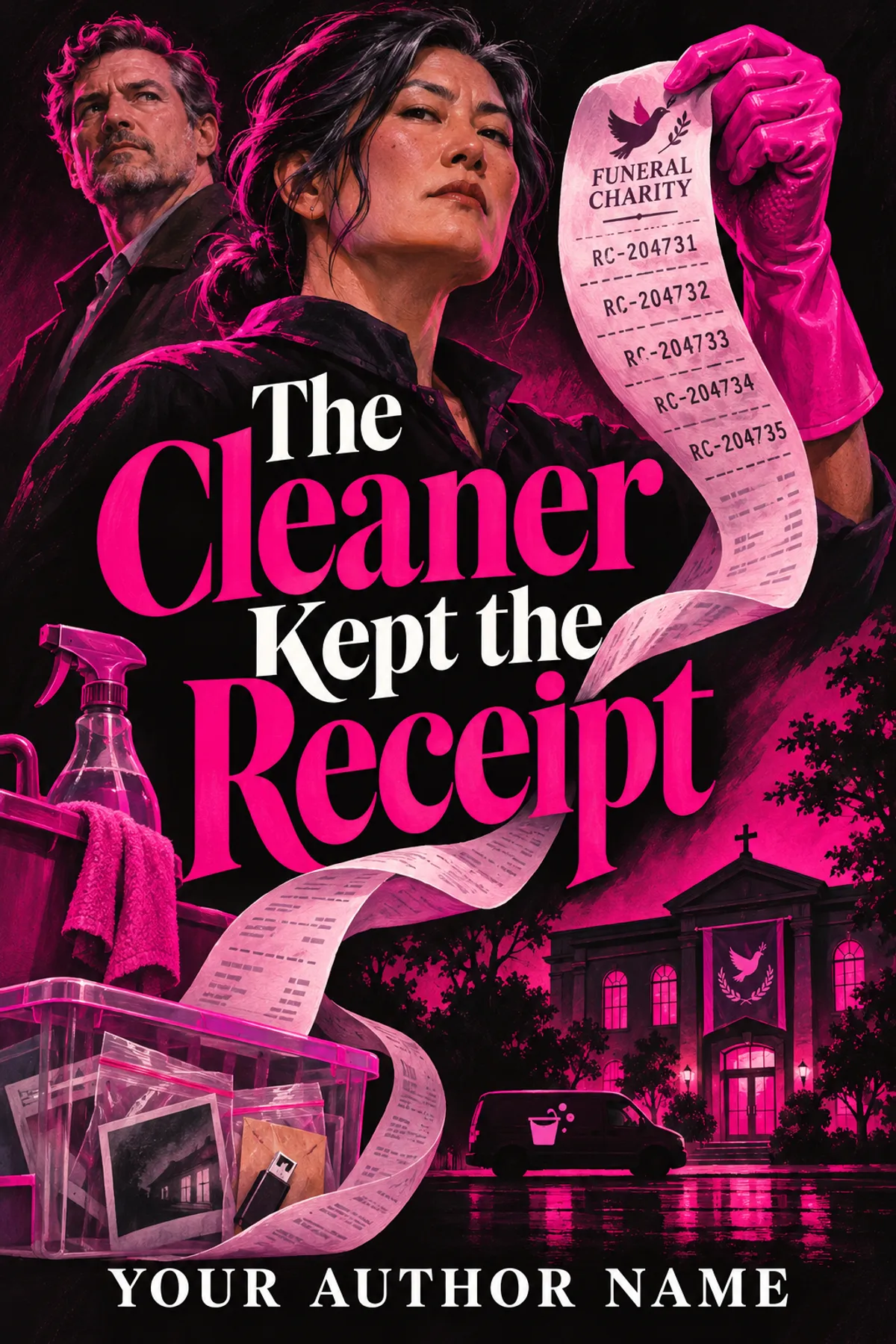
The Cleaner Kept the Receipt
A crime-scene cleaning business owner notices that supposedly unrelated jobs were paid with sequential receipts from a funeral charity, and begins preserving the evidence others discard.
ImagineYourBook writes a fresh draft from this idea.
How it begins
Rosa kept every receipt because people remembered kindness more reliably than they remembered paying for it.
The pink copy went to the client. The white copy went into her folder. The amount, the date and the name of whoever had authorized the work were entered before she drove away.
It was a system. Systems had kept her business alive through years of difficult rooms and worse cash flow.
On Thursday, the system showed her something she did not want to see.
Three jobs. Three unrelated addresses. Three payments from the same funeral charity, carrying consecutive authorization numbers.
She spread the receipts across the passenger seat. The first client had said the charity was helping an elderly neighbor's family. The second had described an emergency grant. The third had insisted the payment should be recorded under a name that did not appear on the work order.
Rosa had corrected it. The man had been unusually annoyed.
Now she looked at the charity's logo, a pair of hands surrounding a small house.
Her phone rang. Martin Webb. She had cleaned his sister's flat the previous year, and he still called occasionally to ask whether she needed help with her accounts.
"You used to work for Haven House," she said before he could offer the usual greeting.
The pause lasted long enough to become an answer.
"Why?"
"I've got three payment references that look wrong."
"Don't send them to the office."
Rosa sat upright.
"Martin."
"Keep your originals. Make a separate copy. And tell me whether any of the addresses are on Mill Street."
She looked through the windscreen at the row of houses she had just left. One upstairs window stood open. A curtain moved in the draft.
"Two of them."
Martin exhaled slowly.
Rosa closed the folder. She had spent years being trusted to remove what other people could not bear to look at.
For once, she was going to keep something.
Outline and characters
Develop this idea
Rosa's expertise lies in observation, records and respectful work, not amateur forensic powers. Keep the cleaning scenes non-graphic and protect the dignity of bereaved households. The receipt pattern should open a question that requires corroboration from several sources. Martin's delayed action needs an emotional and practical cost. Give families control over what they share. The resolution should expose a specific property scheme through ordinary evidence, showing why overlooked workers can notice connections others miss.
- Rosa notices consecutive charity payment references across unrelated cleaning jobs.
- Martin warns her that the references belong to a discontinued grant series.
- They preserve business records and compare publicly available property information.
- Families describe being pressured to surrender possessions and tenancy claims after bereavements.
- Martin admits he resigned after questioning payments but failed to report his concerns.
- A charity officer tries to buy Rosa's silence through a large cleaning contract.
- Her refusal prompts a complaint intended to damage her business reputation.
- Rosa assembles a clear documentary timeline with affected families' consent.
- Investigators connect the grants to a property-acquisition scheme exploiting bereaved residents.
- Rosa strengthens her company's record practices while Martin finally gives his full account.
Characters
- Rosa Grant, 46. Owner of a specialist cleaning business
- Martin Webb, 58. Former funeral-charity bookkeeper
Series possibilities
- Rosa's next disputed invoice links an abandoned workshop to a missing compensation fund.