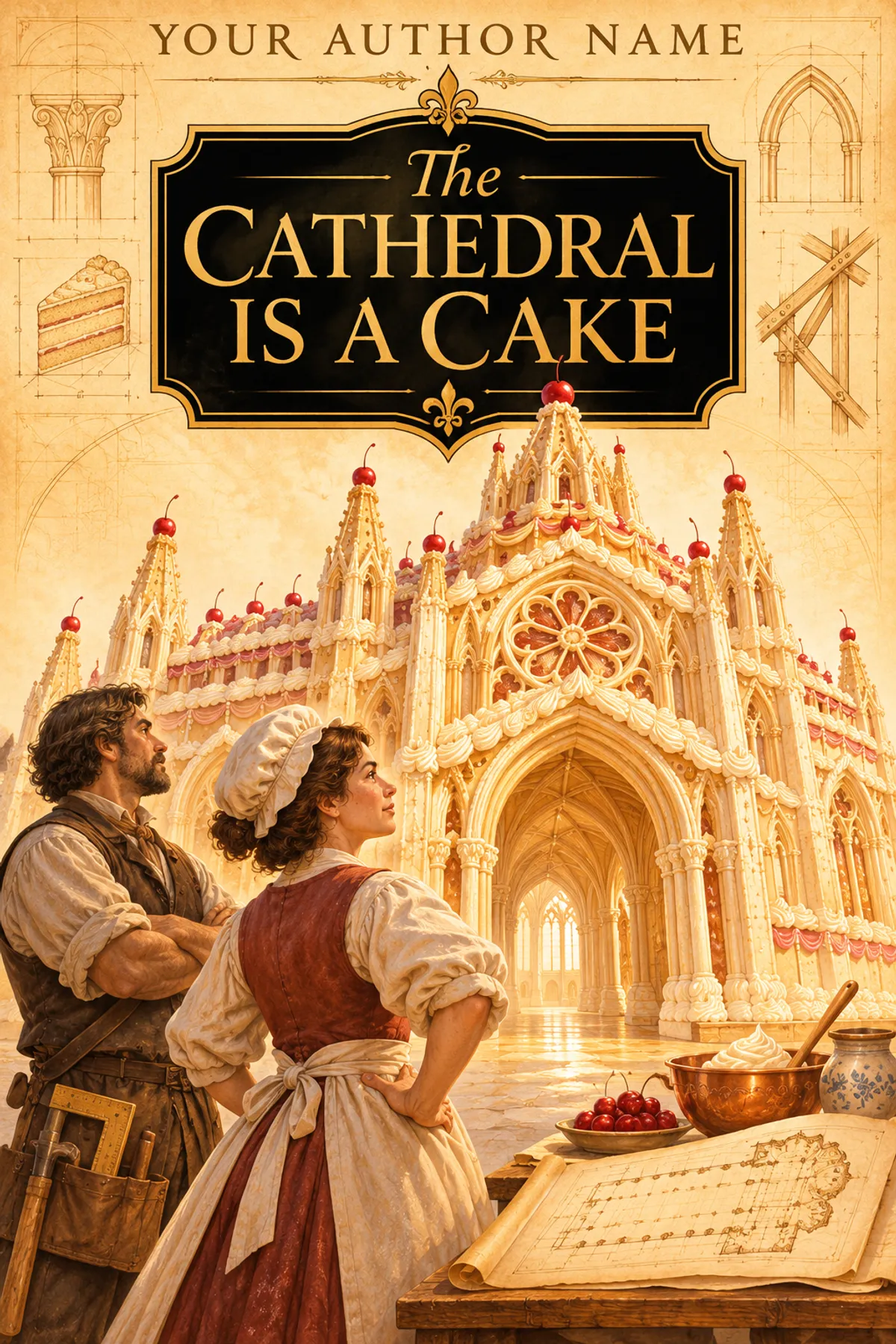
The Cathedral Is a Cake
A pastry cook in 1791 is commissioned to bake a cathedral large enough to walk inside. A carpenter hired to support the sugar walls discovers that the extravagant dessert is concealing a very practical plan to keep the town's poorest residents outside the celebration.
ImagineYourBook writes a fresh draft from this idea.
How it begins
The cathedral required eight hundred eggs and an opinion about God that Marianne Fox did not possess.
She possessed an opinion about eggs. At seven in the morning, standing in the mayor's kitchen while a clerk described the dimensions of the nave, she considered that sufficient qualification.
'People must be able to enter,' the clerk said.
'The cake?'
'The cathedral.'
'It will remain a cake.'
He consulted his instructions. They occupied four sheets. Payment occupied a fifth, which he kept beneath his elbow.
Outside, carts rattled toward the square with timber for the triumphal arch. Marianne had been baking since three. On the cooling rack behind her sat thirty plain loaves intended for the builders, none large enough to contain a person.
The clerk explained that the civic feast would celebrate harmony. There would be sugar windows, almond pillars and a roof of gilded pastry. The invited guests would walk through the finished structure before eating it.
'And the uninvited?' she asked.
He looked relieved to encounter a question with a simple answer. 'Behind the rope.'
Marianne wiped flour from her wrist. She had crossed the square that morning. The rope already existed. It was excellent rope, much better than anything holding her own shop together.
A carpenter appeared at the back door carrying a measuring rod. He removed his hat, examined the clerk and then looked at the drawing.
'That won't stand,' he said.
'The mayor has approved it.'
'The mayor can approve the tide. It won't improve his boots.'
Marianne liked him immediately, which was inconvenient. Liking people usually resulted in lending them things.
The clerk introduced Gabriel Ward as the man responsible for ensuring that the cathedral did not fall on its guests.
Gabriel tapped a row of tiny figures drawn outside the sugar walls.
'Why are these people so small?'
'They aren't guests,' said the clerk.
Marianne reached for the fifth sheet. For the first time that morning, she wanted to know exactly what the mayor thought he was buying.
Your idea. Your book.
Keep the spark. Change anything.
Create my bookCreated with ImagineYourBook. Free to use as inspiration.
Outline and characters
Develop this idea
Keep the cake physically plausible by giving it a timber framework and edible surface rather than pretending sugar alone carries crowds. The conflict belongs in contracts, food allocation and access. Let Marianne enjoy making something beautiful while refusing the assumption that beauty excuses exclusion. Research period baking and civic-feast customs for texture, then build an invented town with its own specific class arrangements and workers who disagree intelligently.
- Marianne accepts only after securing payment for her ordinary workers.
- Gabriel proves the proposed sugar structure requires a concealed timber frame.
- The feast committee refuses admission to the people assembling it.
- Marianne discovers leftover provisions have already been promised to private buyers.
- Gabriel proposes doors wide enough to open toward the public square.
- A rival cook offers Marianne prestige in exchange for abandoning her objections.
- The committee locks the ingredient store after an unauthorized workers' meal.
- Marianne reveals the feast's real accounts to the paying sponsors.
- Workers rebuild the serving plan around public access rather than spectacle.
- The cake is shared while Marianne secures a lasting communal bread contract.
Characters
- Marianne Fox, 38. Pastry cook
- Gabriel Ward, 44. Carpenter
Series possibilities
- Other artisans in the invented town receive extravagant civic commissions that expose ordinary questions of access and pay.