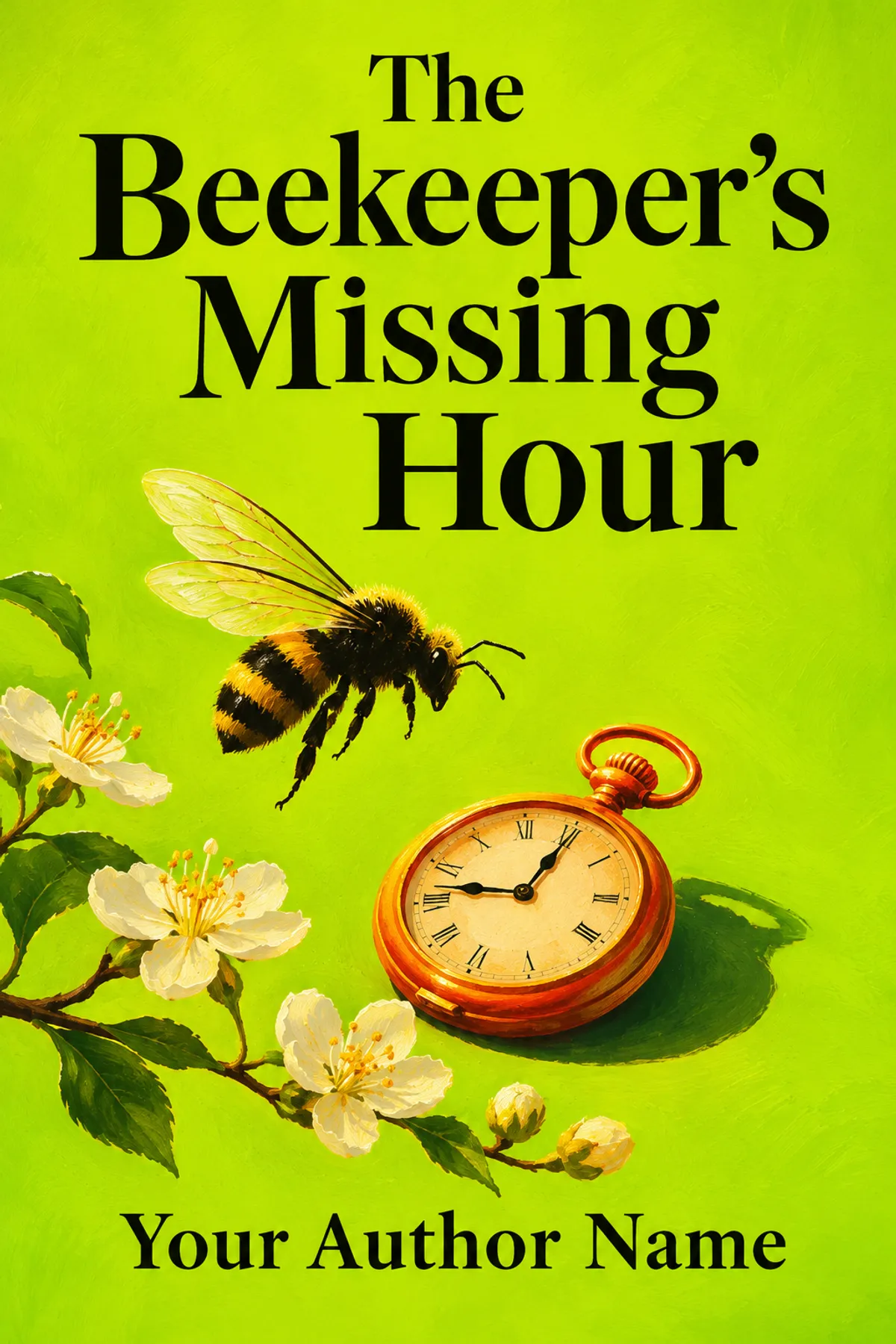
The Beekeeper's Missing Hour
In a fictional 1910 market town, a beekeeper uses the timing of returning foragers to challenge a murder witness, putting her family's profitable honey contract at risk.
ImagineYourBook writes a fresh draft from this idea.
How it begins
Ada did not believe the witness because he remembered the bees flying in the rain.
Not one or two stragglers. He described the orchard alive with them, a golden cloud above the hives, while the accused woman crossed the path at four o'clock.
At four, Ada had been standing under the shed roof, listening to rain hammer the empty honey tins. The bees had been inside. She had written the weather in her work book because she expected the lost afternoon to affect the week's yield.
She said so after the hearing.
The witness, who owned the confectioner's shop that bought most of her honey, smiled patiently.
"You can't expect insects to keep railway time."
"I don't. I expect you to remember whether you were wet."
His smile thinned.
Ada knew what the next contract was worth. It would pay for repairs to the cottage roof and the wages her brother had gone without twice that summer. She also knew the accused woman, a laundress who passed the orchard on her way home. Familiarity was not innocence. A false hour was still a false hour.
William found Ada at the market, staring at cabbages she did not need.
"You were right about the rain."
He unfolded his own weather sheet. Beside the afternoon entry stood the delivery time for a glasshouse frame. The driver had waited out the same storm and signed the receipt.
Ada looked from the sheet to the confectioner's bright window across the square. A new display advertised PURE LOCAL HONEY in letters larger than her name had ever been.
"If he wasn't there at four," she said, "why move the hour?"
William pointed to the market clock. It had stopped during the storm and been restarted without a record of the lost minutes.
For the first time, Ada saw how an honest mistake might have provided room for a deliberate one.
Outline and characters
Develop this idea
Bee behavior should prompt inquiry rather than function as an exact clock or infallible proof. Weather records, delivery receipts and the stopped public clock provide necessary corroboration. Ada's financial dependence makes speaking up consequential. The laundress should have her own account and practical allies. Research the chosen period's beekeeping and market practices when expanding the manuscript, and let the cooperative ending offer a credible beginning rather than immediate prosperity as a reward for virtue.
- Ada challenges a witness's account of bees flying during a recorded storm.
- The witness threatens her honey contract while dismissing her observation.
- William supplies independent weather and delivery records.
- A stopped market clock explains why several witnesses share an inaccurate time.
- The confectioner exploited that confusion to place the laundress near the murder scene later than she was there.
- Ada traces a disputed delivery that connects the victim to adulterated products sold under her name.
- Her own contract exposes the financial pressure behind the false account.
- Independent witnesses establish the confectioner's movement during the missing interval.
- The laundress's alibi is restored and the murder inquiry identifies the confectioner through corroborated evidence.
- Ada loses the old contract but begins a smaller cooperative arrangement without claiming the transition is effortless.
Characters
- Ada Miller, 37. Beekeeper supplying a town confectioner
- William Shaw, 50. Market gardener and weather observer
Series possibilities
- Ada's seasonal records uncover another discrepancy in the town's accepted account of a death.