
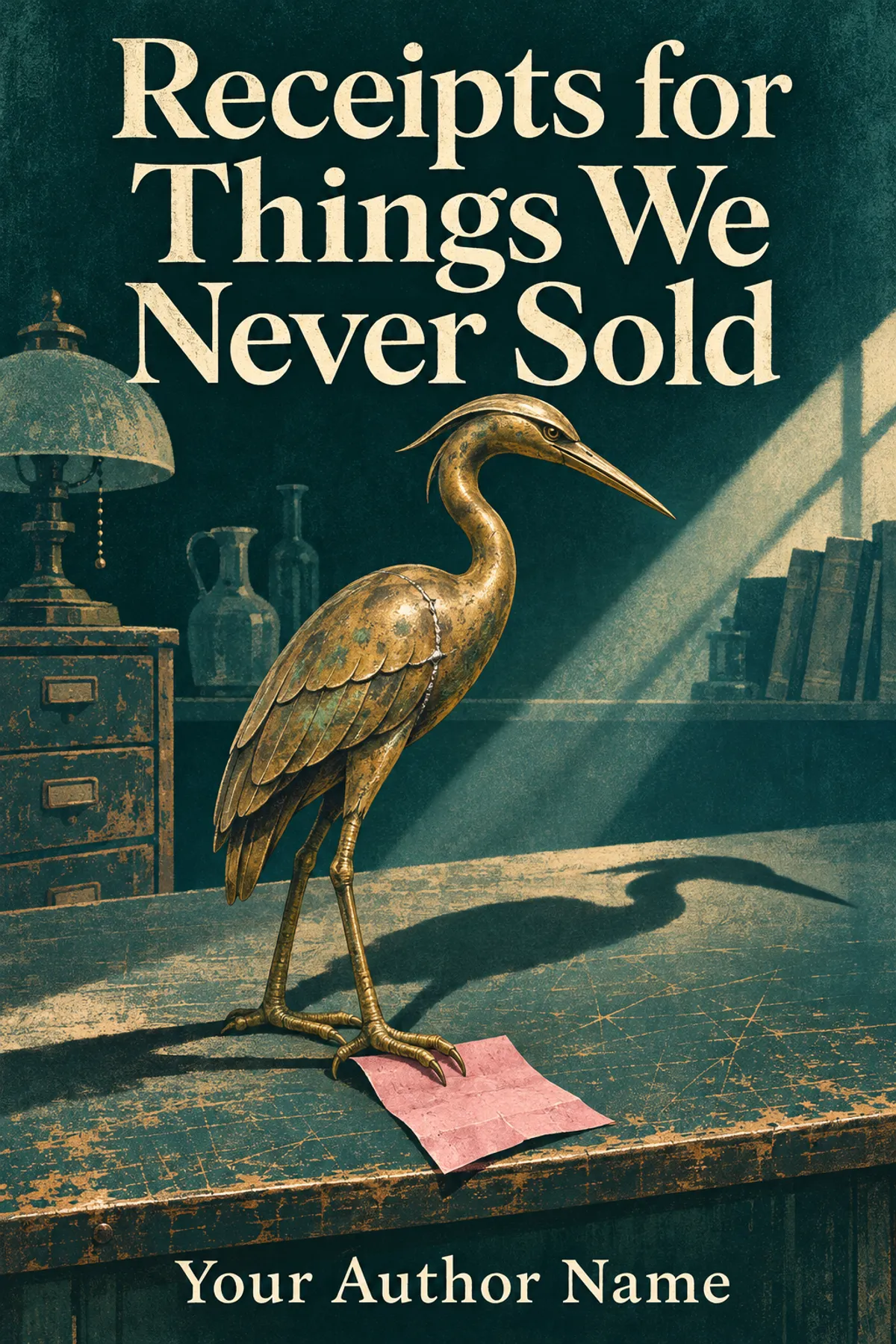
Receipts for Things We Never Sold
A returns clerk recognizes her father's missing brass heron on the counter and follows the courier who brought it back.
ImagineYourBook writes a fresh draft from this idea.
How it begins
The man set a heron on Ruth's counter and asked whether she needed the box.
The bird was brass, ankle high, and ugly in the proud way of things that have stood outdoors for thirty years. Rainwater came out of its beak when he tipped it forward.
"We didn't sell this," Ruth said.
"That's why I brought the slip."
He flattened a rectangle of damp paper beside the till. It was pink, which meant the refund had been paid. Ruth had explained the three colors to new staff so many times she occasionally assigned them to her dreams. White to keep. Yellow to authorize. Pink when the money was gone.
There was her signature at the bottom. The last letter rose too sharply. She had signed a thousand slips with her wrist flat against the counter and could feel, in that small upward stroke, a hand that had learned her name standing up.
"Who asked you to bring it?"
The man shrugged out of a yellow cycling jacket. "The lady on River Street said I had until eleven. I have three more if you want to do them together."
Ruth lifted the bird. At the joint where its left leg met the body she found a seam. The solder ran down in a small teardrop. She remembered making it while her father held a torch and said, with immense patience, that she could take as long as she needed. She had been seventeen and in a hurry to prove him wrong.
"Do you have a list?"
He showed her his phone. There was a sideboard, a leaded window and a child's blue desk. Each line ended with a collection time. The desk was two streets over. She knew its owner. The funeral had been on Friday.
"I'm Ruth," she said. "Who's your next stop?"
"Cal. And the lady with the desk."
"Would you take me there?"
Cal looked at her apron and then at the clock. "Can you get out of work?"
Ruth flipped the shop sign to CLOSED. She put the brass heron in her shopping bag beside her lunch. Its beak poked through the canvas, just above the word REUSABLE.
Outline and characters
Develop this idea
Give each disputed object two believable stories. Someone can love a chair and still have no right to sell it. Let the receipts narrow the possible timeline while the craftsman's marks establish identity. Ruth's strongest scene should be a conversation with a claimant she believes, even when believing them costs her an easy answer. For a longer crime novel, put the delivery route on a map and give the festival a real deadline for clearing the warehouse.
- A paid refund slip arrives with an object absent from the shop's records
- Ruth recognizes her childhood repair and preserves the slip
- Cal gives Ruth the address of his next scheduled return
- The pair find two families with plausible claims to the same object
- A retired volunteer explains why disaster donations were never inventoried
- Ruth checks her father's own account of the day the heron vanished
- Cal discovers that his father warned the shop before dying
- The river festival offers the program its final opportunity to empty the warehouse
- Ruth gets claimants to compare independent records in public
- The town appoints a neutral custodian and Ruth takes the first paid repair commission of her new business
Characters
- Ruth Venn, 51. Returns clerk who used to repair picture frames
- Cal Rowan, 46. Courier keeping his father's route alive
Series possibilities
- Ruth's restoration workshop uncovers new disputes about the objects an old river town passes from hand to hand.