
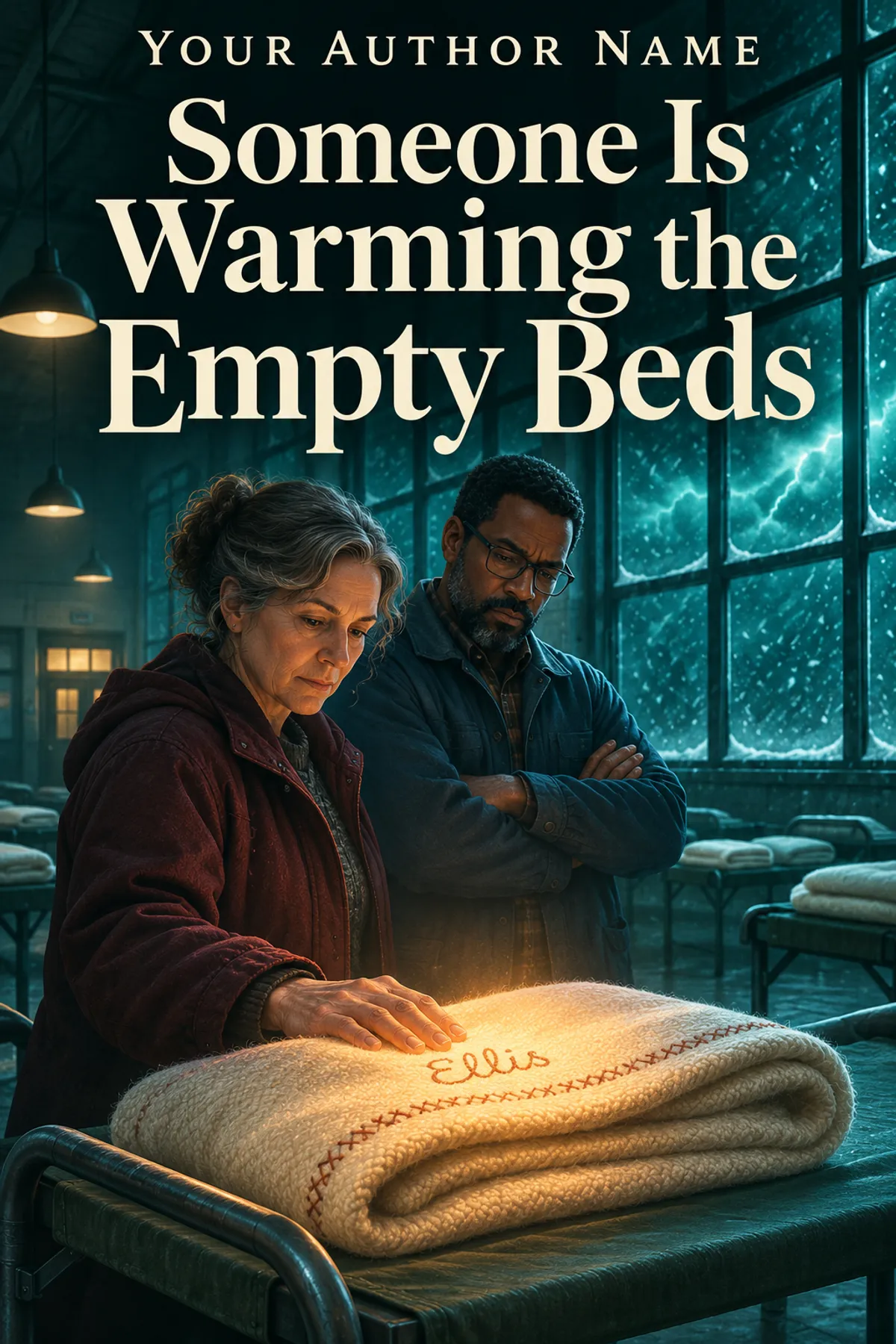
Someone Is Warming the Empty Beds
An emergency shelter's overnight manager finds every empty bed warm before a storm's first evacuees arrive. A laundry supervisor notices names stitched into blankets nobody ordered, and the two must learn whether the shelter is preparing to save its guests or refusing to let former ones go.
ImagineYourBook writes a fresh draft from this idea.
How it begins
Martha Lane counted twenty empty beds and twenty warm pillows.
The shelter's heating had been off since May.
She checked the boiler panel anyway. Good management meant beginning with the ordinary explanation, even when the ordinary explanation had already left a small wet handprint on the window.
No children were booked into this shelter. The evacuees would arrive after dark, adults from the river flats whose own bedrooms were becoming unsafe.
Omar Bennett carried in the first laundry trolley.
'These aren't ours,' he said.
The blankets were cream, folded with a precision no commercial dryer permitted. Along each edge, a name had been stitched in pale blue.
Martha recognized the first one. A resident evacuated during the flood nineteen years earlier. He had died elsewhere, long after going home.
She recognized the second too.
Omar read the names without comment. His laundry records went back only seven years, but he knew how to distinguish old cloth from cloth pretending to be old.
'New thread,' he said.
Martha lifted a blanket. Beneath it, the mattress held the shallow impression of a person who had just stood up.
At the far end of the room, a bed creaked.
She put down the blanket and opened the emergency exit. Cold air entered. The nearest pillow warmed her hand through the sheet.
The council called to ask whether the shelter was ready. Outside, rain thickened against the glass.
'We need an alternative room,' Martha said.
'The beds have been inspected.'
'Not for this.'
Omar held up the last blanket. Its blue name belonged to Martha herself.
She had slept in the shelter for one night during the old flood, beside a woman whose face she could no longer recall.
From the empty bed came a soft, patient sigh. The room seemed ready for people who had not arrived. It also seemed unwilling to admit that anyone who had once been saved here could ever properly leave.
Your idea. Your book.
Keep the spark. Change anything.
Create my bookCreated with ImagineYourBook. Free to use as inspiration.
Outline and characters
Develop this idea
Avoid using displaced people as expendable horror victims. Martha's responsible choice is to find a real alternative before testing a dangerous shelter. The warmth, names and impressions should follow one consistent attachment rule. Research emergency accommodation and laundry logistics for grounding. Omar's textile knowledge matters materially. Keep all active leads adult, and let the old flood history retain unresolved sadness without requiring graphic death or a sentimental universal reunion.
- Martha finds warmth and named blankets before evacuees arrive.
- Omar identifies new stitching bearing former residents' names.
- Beds hold impressions of people absent for years.
- The shelter begins reserving spaces for everyone it once protected.
- Martha's own name links her to an unfinished act of care.
- Officials initially prefer the ready beds to a difficult relocation.
- Martha secures an alternative shelter and refuses to use uncanny warmth.
- Former guests are invited to acknowledge departures without surrendering current lives.
- The room releases its claim when care is defined as temporary help rather than ownership.
- Ordinary heating returns, but one unassigned blanket remains warm until folded away.
Characters
- Martha Lane, 57. Emergency shelter manager
- Omar Bennett, 46. Laundry supervisor
Series possibilities
- Standalone ghost stories explore institutions built for care that have forgotten the difference between protecting people and keeping them.