
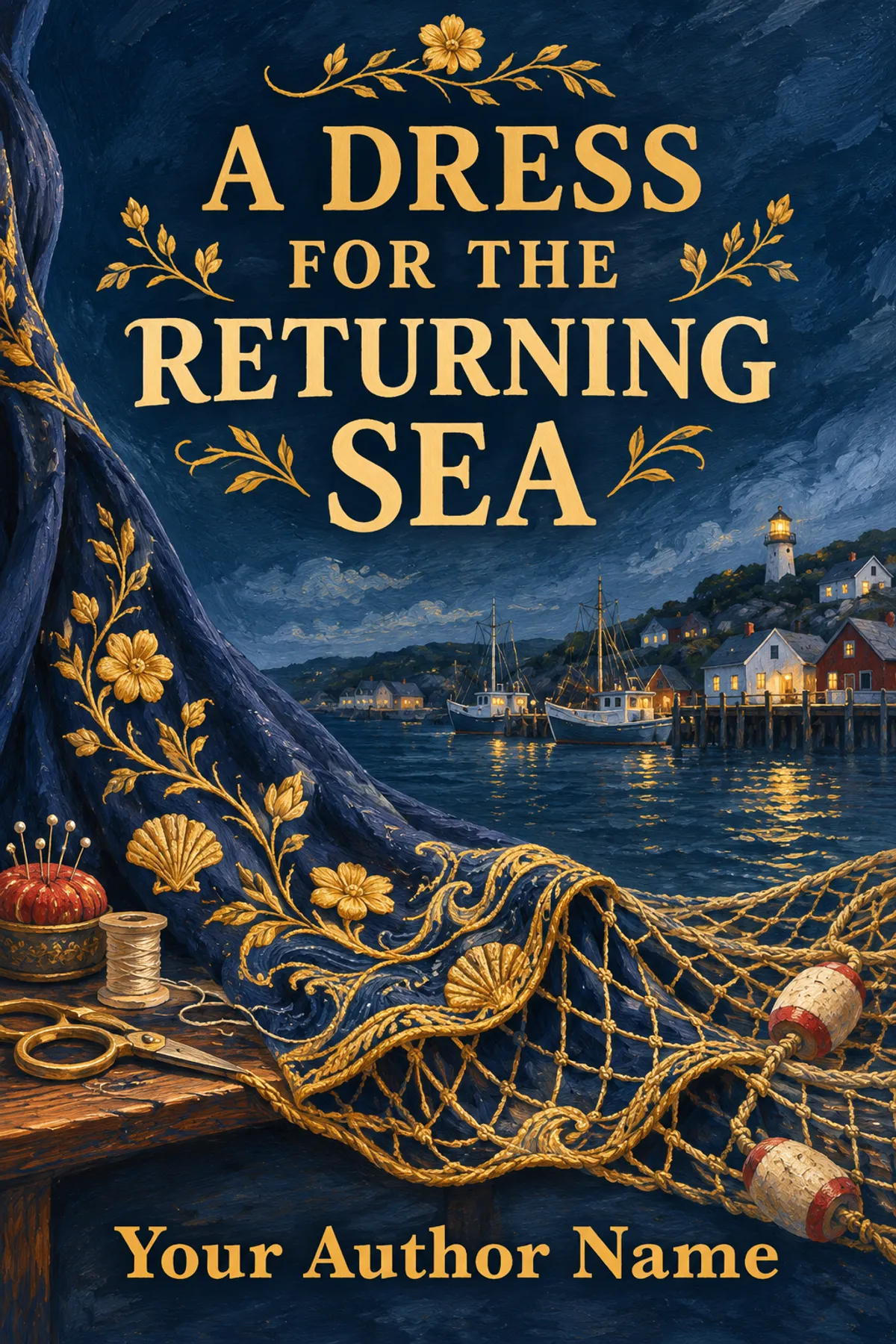
A Dress for the Returning Sea
A dressmaker in a fictional 1930 fishing town stitches formal clothes for women inheriting boats, while her sister campaigns to change the harbor rules excluding them.
ImagineYourBook writes a fresh draft from this idea.
How it begins
Lena measured the widow for a dress she could climb a ladder in.
That was the first requirement. Black cloth, respectable sleeves and a hem that would not catch between the quay and the boat.
"The committee won't like it," Mrs. Bell said.
"The committee isn't wearing it."
Lena knelt to mark the length. Through the open shop door came the smell of tidewater and the steady knock of someone repairing a crate. The harbor had returned to work three days after the funeral. Mrs. Bell had not been permitted to return with it.
Her husband's boat was legally hers under the town's arrangement, but its working berth depended on a committee that accepted only named male operators. The distinction had been explained to her twice by men who called it simple.
Agnes arrived carrying a petition folded inside a chart.
"We need you at the meeting."
Mrs. Bell looked down at the pins along her skirt.
"I don't speak well."
"You know your boat."
"That isn't what they ask about."
Lena stood. She and Agnes had argued all winter about tactics. Agnes wanted public refusal. Lena wanted women to reach the room without being turned into a spectacle. Both were tired of being told the other sister understood the real problem.
She handed Mrs. Bell a strip of cloth.
"Try the step outside. Tell me if it pulls."
The widow climbed onto the shop threshold, lifted her knee and laughed once, surprised by the ease of it.
Agnes watched her.
"Could you make six more?"
Lena looked at the petition, then at the women whose names filled its first page.
She took a fresh length of measuring tape from the drawer.
"Only if you stop promising everyone they'll fit the same pattern."
For the first time that week, her sister smiled before answering.
Outline and characters
Develop this idea
The harbor rule belongs to this fictional town; research comparable inheritance, labor and maritime arrangements before selecting a real jurisdiction. Clothes should enable movement and self-possession, not transform women into acceptable political subjects by appearance alone. Lena and Agnes offer complementary methods with genuine blind spots. Include practical concerns about skill, debt and safety without allowing them to become excuses for exclusion. The final working coat can show that access to daily work matters beyond a victorious meeting.
- Lena designs practical formal clothes for a widow excluded from operating her inherited boat.
- Agnes organizes women challenging the harbor's local operator rule.
- The sisters disagree about public confrontation and quiet preparation.
- Other boat owners reveal different financial needs and levels of willingness to campaign.
- The committee offers a narrow exception that would help one widow but preserve the exclusion.
- Lena's fitting room becomes a place where women compare the practical effects of the rule.
- Agnes revises the petition around shared access and accountable safety standards rather than individual favor.
- The women present specific operating experience and economic consequences at a public meeting.
- The harbor changes its eligibility rule after sustained pressure and negotiation.
- Lena fits a working coat for Mrs. Bell, while the sisters accept that useful solidarity need not look identical.
Characters
- Lena Ward, 39. Dressmaker serving a fishing community
- Agnes Ward, 43. Her sister and an experienced boat owner challenging harbor rules
Series possibilities
- A companion story follows women establishing a repair cooperative as the harbor's new rules meet everyday practice.