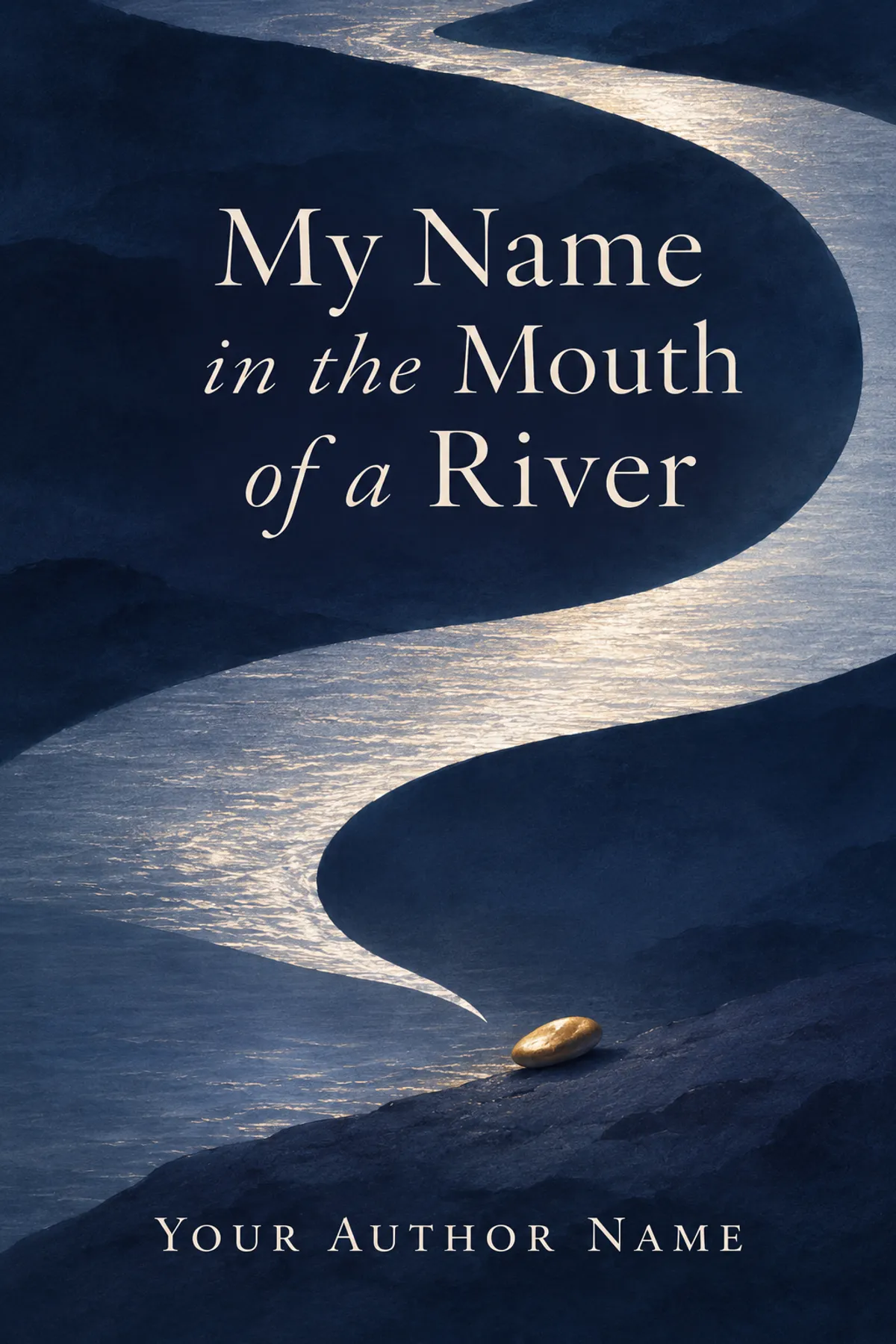
My Name in the Mouth of a River
A linked poetry sequence explores pronunciation, ancestry and belonging through a speaker returning to a river town where everyone remembers her name differently.
ImagineYourBook writes a fresh draft from this idea.
How it begins
Ferry Ticket
The clerk says my name the way my grandmother did, placing the weight in the middle. I almost turn to see who has come behind me. Instead there is a man with a bicycle and a bag of onions, impatient for the boat. I pay. On the ticket, the machine removes the mark above the second letter. The clerk apologizes for the printer. I say it happens. This is true, although it leaves out how often, and where, and which small part of me still lifts its head when someone gets it right.
At the Old School
The caretaker remembers a different girl. She says I was quiet. I remember speaking until a teacher asked me to make the answer shorter. Both of us may be correct. In the playground, a tree has grown around the metal sign we used as a goalpost. Only the word KEEP remains visible. The rest is under bark. I have returned with a notebook, as if anything here has agreed to be preserved by me. A child asks whether I am lost. I tell her where I used to live. She points in the direction of the river, then goes back to her game.
Three Versions
Marta keeps the ferry records in a cupboard above the flood line. My grandfather appears under three spellings. Once he was carrying a goat; twice he was traveling alone. She will not tell me which entry is the mistake. Ask what the river was doing, she says. I thought I had come to recover one clear name. Instead I find crossings, fares, weather, a blot of ink where someone set down a wet cup. I copy them all. Outside, the ferry announces its departure in two languages. The water moves under both, taking neither side, carrying the boat exactly as it is.
Your idea. Your book.
Keep the spark. Change anything.
Create my bookCreated with ImagineYourBook. Free to use as inspiration.
Outline and characters
Develop this idea
Work with distinct settings for each pronunciation: school, family, paperwork, friendship, and self introduction. A name can be cherished in one mouth and intrusive in another. Avoid treating a single restored spelling as a complete solution to belonging. Include sound and rhythm without caricaturing accents. The river should be a changing physical place with work, weather, and pollution, not only a symbol.
- Anika hears an old pronunciation at the ferry.
- Official records misspell three generations.
- Marta produces an annotated passenger book.
- A childhood nickname revives an unwelcome role.
- Anika refuses a flattering mistranslation.
- The river floods an abandoned boundary marker.
- Neighbors disagree over restoring its name.
- Anika records several versions without ranking them.
- A new ferry announcement includes them all.
- The speaker chooses how to introduce herself.
Characters
- Anika, 35. Returning daughter and translator
- Marta, 74. Keeper of the town's ferry records
Series possibilities
- Related poems could follow other names carried through ports, schools, and households.