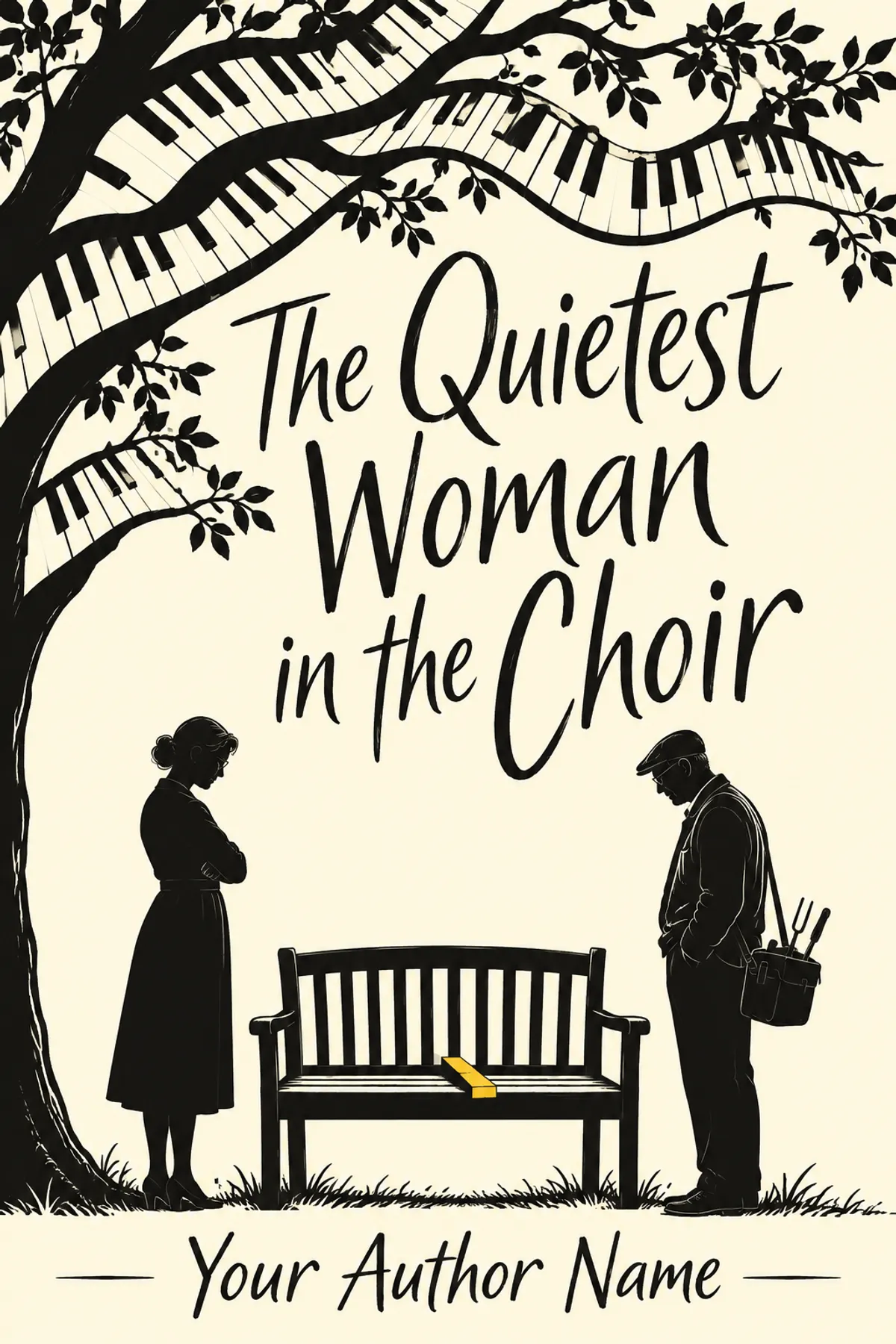
The Quietest Woman in the Choir
A choir's unpaid accompanist in 1958 stops playing one note that appears in every ceremonial anthem. A piano tuner notices the omission, and together they must decide how to make a town hear a grievance it has politely harmonized away for twenty years.
ImagineYourBook writes a fresh draft from this idea.
How it begins
Clara Bennett left out the F sharp, and the town continued singing as though nothing had happened.
She had expected that. She had played the centenary anthem eleven times in rehearsal, and nobody had noticed the accompanist except when she stopped entirely.
The choir rose toward the chorus. Clara moved around the missing note with the care of a person carrying a full cup past a loose floorboard. The melody became thinner, but it stood.
From the back of the hall came a small, involuntary cough.
The piano tuner sat beside his tool case, staring at her hands.
After the rehearsal, the conductor thanked the singers and reminded Clara to arrive early on Thursday. He did not ask whether she could.
Henry Foster waited until the hall emptied.
'That key works,' he said.
'I know.'
'I repaired it yesterday.'
'You did excellent work.'
He put one finger on the F sharp. A clear note sounded in the empty room. Clara found it almost embarrassingly beautiful.
'Is it a musical decision?'
'No.'
Henry sat on the other end of the bench without crowding her. His coat smelled of wool and cold air. She had known him for twelve years, mostly through invoices the choir treasurer expected her to forward.
'Would you like to tell me?'
Clara looked at the framed list of honorary life members beside the stage. Her husband's name appeared halfway down. He had sung for six years before losing interest. She had played for twenty-three.
The missing note seemed smaller than the thing she wanted to say. It was also the only thing she had managed to withhold.
'They asked me to write the centenary arrangement,' she said.
Henry waited.
'The program says traditional.'
He took his finger off the key. For a moment the silence belonged to her, and nobody told her when to end it.
Your idea. Your book.
Keep the spark. Change anything.
Create my bookCreated with ImagineYourBook. Free to use as inspiration.
Outline and characters
Develop this idea
Verify period copyright, commissioning and choir practices for the chosen 1958 setting, while keeping the emotional conflict accessible through the program credit. Clara's quietness is a strategy with costs, not proof of weakness. Henry supports her without becoming the person who explains her grievance better. Give choir members genuine attachment to the event so the dispute requires a workable correction rather than a simple division between good and bad people.
- Clara omits a note from the anthem she arranged without credit.
- Henry notices and asks rather than assuming a musical fault.
- The committee treats attribution as an unnecessary disruption before the concert.
- Clara discovers earlier programs have erased other unpaid contributors.
- Younger singers disagree about risking the event for a correction.
- Henry offers support while Clara defines the action she wants herself.
- A proposed honorary thank-you fails to acknowledge authorship or payment.
- Clara refuses further rehearsal until the program and commission terms are corrected.
- The choir performs the arrangement under her name with transparent future contracts.
- Clara chooses a new musical project whose scope and compensation she controls.
Characters
- Clara Bennett, 52. Choir accompanist
- Henry Foster, 59. Piano tuner
Series possibilities
- Linked historical novels follow overlooked artistic work behind the town's public celebrations.