
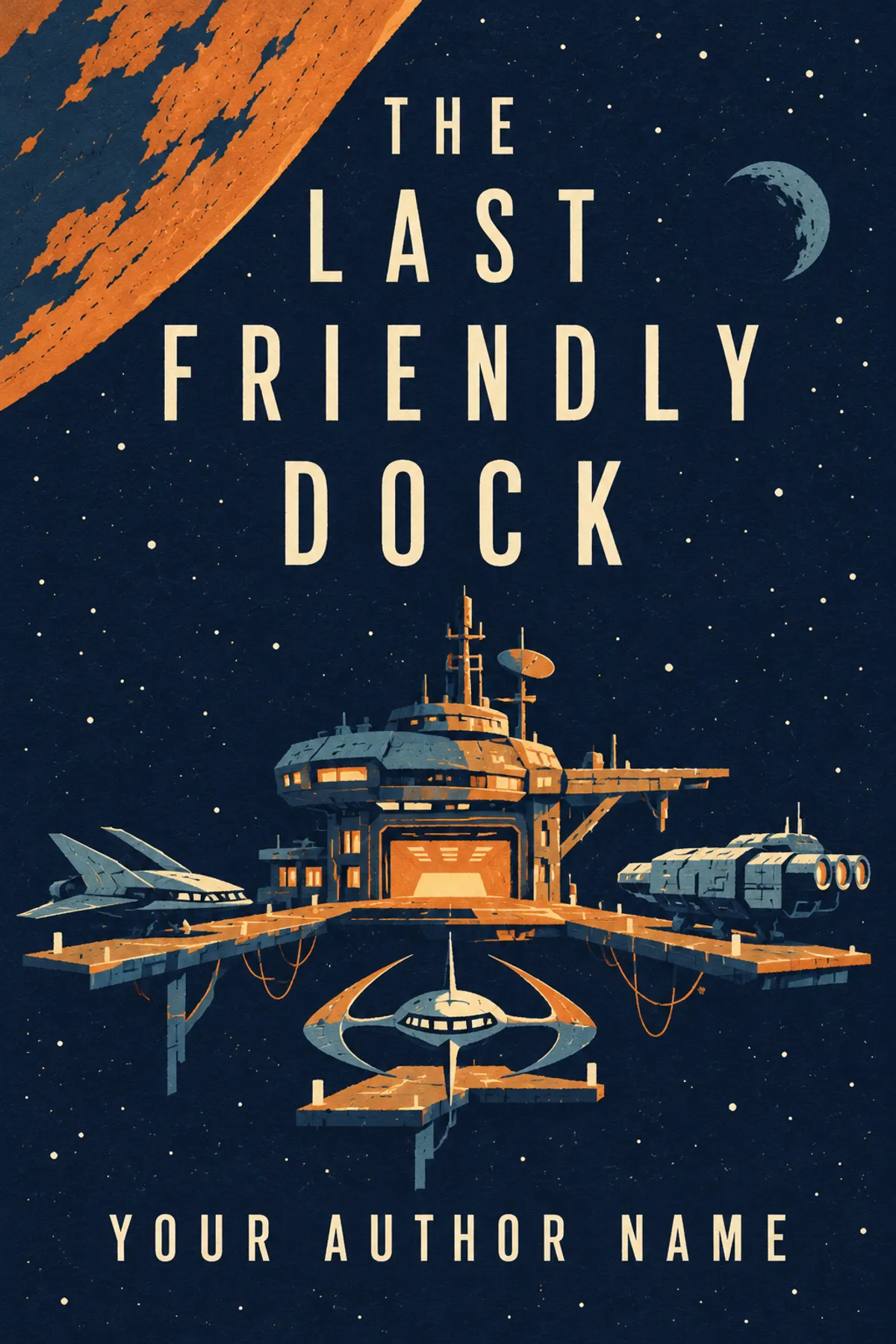
The Last Friendly Dock
A failing repair station becomes neutral ground for crews from two hostile species, until a treaty would preserve the peace by closing the only place they can meet.
ImagineYourBook writes a fresh draft from this idea.
How it begins
The peace treaty required Nora to close the only room where anyone had learned to stop shooting.
She read the clause twice while the station's shared kettle complained behind her. Across the workshop, two engineers from enemy fleets argued over a damaged pump. Their translators rendered the insults politely, which fooled nobody.
They had been repairing things together for three years.
The treaty described the dock as a point of unnecessary interspecies contact near a sensitive border. Its removal would simplify enforcement.
Nora looked at the kettle, the mismatched breathing masks hung by the door and the shelf of tools labeled in two scripts. Simplify was a word people used when they would not be present for the work.
Tarek arrived with a replacement seal held between two careful fingers. His species disliked the station's gravity but preferred its repair rates to the military yards.
"You have the terms."
"Did your delegation read them?"
"They wrote that part. So did yours."
Nora laughed once, without amusement.
The dock was losing money. Peace would reduce emergency repairs, and she had been quietly considering retirement before the treaty made closure sound like a moral duty. That private thought now felt like evidence someone might use against her.
Tarek placed the seal on the counter.
"My crew wants to know where yours will go."
Nobody had asked Nora that at the negotiations. They had asked about fuel storage, approach corridors and the date she could clear the berth.
A pressure alarm sounded in the workshop. Both engineers stopped arguing and moved toward the same valve, one reaching high while the other steadied the housing.
Nora watched them solve the problem in four practiced movements.
Then she opened a reply to the treaty commission and began listing what the dock actually did, starting with the things neither fleet had thought important enough to count.
Outline and characters
Develop this idea
Avoid making peace itself the enemy; the conflict concerns a treaty design that overlooks valuable civilian relationships. Nora's financial doubts should remain real, and the cooperative must solve governance and operating costs as well as symbolism. Tarek needs priorities beyond endorsing human friendship. Shared repair scenes can show trust through practiced coordination. The amended treaty should result from evidence and negotiation, with inspections and limits that make the compromise believable rather than a sentimental exemption.
- Nora learns the peace treaty would close her neutral repair dock.
- Civilian crews reveal that the station sustains relationships unavailable through official channels.
- The dock's weak finances complicate claims that preserving it is automatically practical.
- Tarek and Nora document shared repairs, training and emergency assistance.
- Both governments resist an exception that appears to weaken border control.
- A joint equipment failure demonstrates the value of civilian coordination without reigniting war.
- The crews propose a demilitarized cooperative with transparent inspection and limited docking rights.
- Nora relinquishes sole ownership to make the proposal sustainable and credible.
- The treaty is amended to recognize the dock as monitored civic infrastructure.
- The first peacetime repair shift begins with fewer weapons, tighter accounts and the same shared kettle.
Characters
- Nora Chen, 48. Owner-operator of a failing repair station
- Tarek Venn, 44. Adult nonhuman engineer representing a rival fleet's civilian crews
Series possibilities
- The cooperative faces its first dispute when a third species seeks membership outside the treaty's definitions.