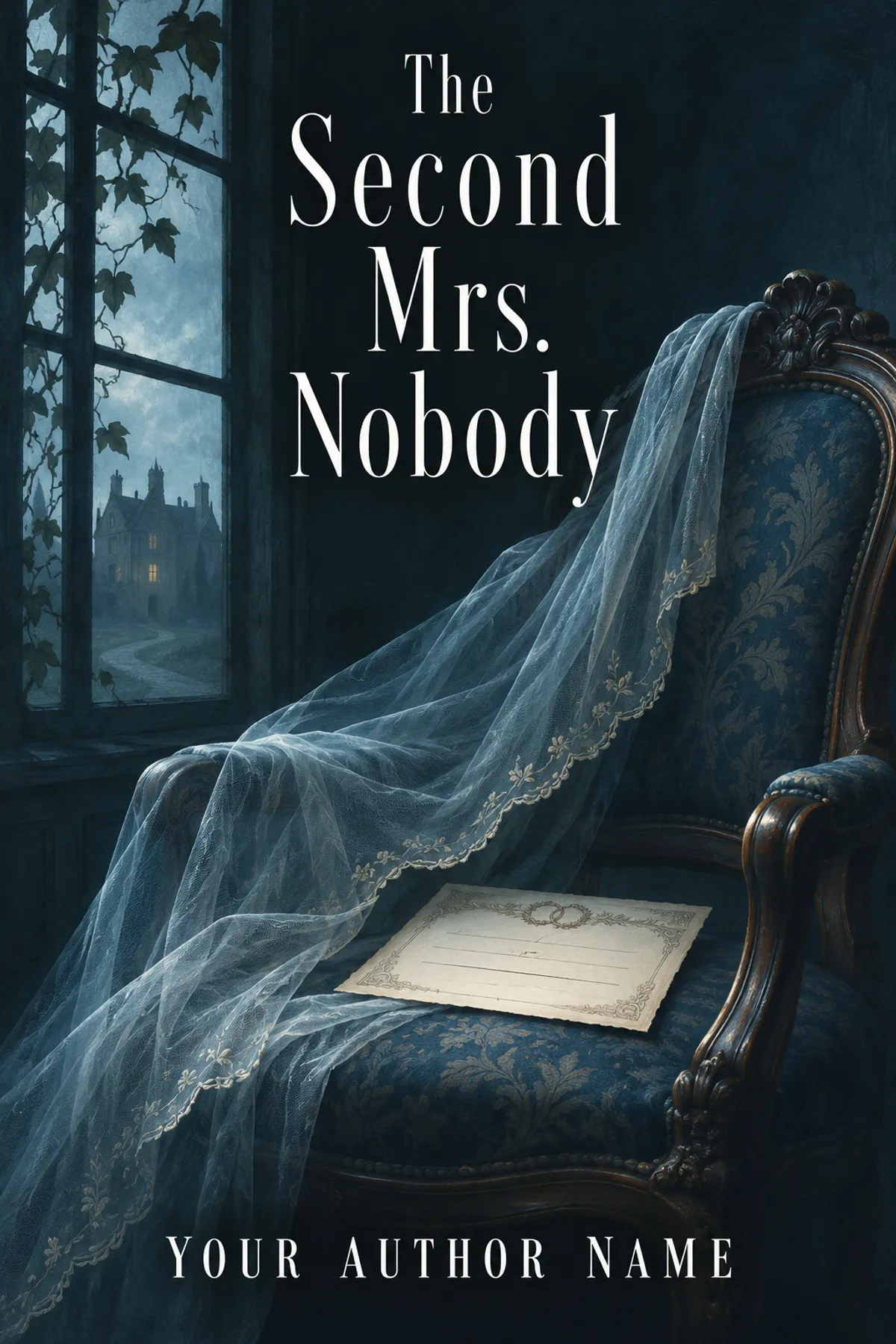
The Second Mrs. Nobody
A wedding registrar finds a long series of marriage certificates leaving the bride's surname blank, then receives an invitation to the estate where every ceremony took place.
ImagineYourBook writes a fresh draft from this idea.
How it begins
The bride's surname was blank on every certificate.
Not faded. Not omitted by a careless clerk. The space remained perfectly clean across nine marriages recorded over seventy years, while the surrounding ink had aged in nine different ways.
Miriam held the newest page toward the window. Beneath the blank, the paper bore the pressure of letters she could not read. Someone had written a name there. Something had removed the result.
Each ceremony took place at the same estate.
An invitation arrived before she finished the comparison.
The household requested her attendance at a private renewal of vows on Friday. The groom's name was printed in black. The bride was identified only as Mrs.
Miriam telephoned the number on the card.
A woman answered.
"Please tell me your full name," Miriam said.
There was a silence long enough for her to hear a clock ticking at the other end.
"Alice."
"And your surname?"
The clock stopped.
Alice began to cry without making a sound Miriam could clearly separate from breathing.
"I had one this morning."
Miriam kept the line open while checking the address against the earliest certificate. The estate had changed owners several times, but the groom's signature remained uncannily similar. The brides' first names differed. Their witnesses were always women whose own surnames had been crossed out.
"Who is with you?" Miriam asked.
"The other wives."
"All of them?"
Alice did not answer directly.
"They say it gets easier when nobody remembers who to ask for."
A door opened on the line. The clock resumed.
Miriam wrote Alice's first name on a fresh sheet, then recorded the time and the exact words she had heard. When she returned to the invitation, a new line had appeared beneath the ceremony details.
Witnesses are welcome to stay.
She placed it in a clear sleeve without accepting.
Outline and characters
Develop this idea
The horror lies in compulsory erasure, not in any particular real-world surname tradition. Give the wives different responses to the household and avoid treating those who adapted as less worthy of recovery. Miriam's professional care should include seeking help and documenting uncertainty. The ritual needs specific words and conditions established before its refusal. Restored names cannot simply restore lost years, so the ending should preserve corrections, difficult memories and each woman's authority over what she calls herself.
- Miriam finds marriage certificates whose brides' surnames have physically vanished.
- Alice reports losing her own name as a renewal ceremony approaches.
- Archived witness names reveal previous wives still connected to the estate.
- Miriam seeks independent assistance and enters only under an explicit records inspection.
- The estate's ritual transfers each wife's independent identity into the household's enduring public name.
- Some former wives defend the arrangement because forgetting has softened the pain of resistance.
- Alice gathers private objects and relationships that preserve fragments of the women's earlier identities.
- Miriam refuses the witness formula that would bind her and records each woman's chosen name separately.
- The women interrupt the renewal together, breaking the household's claim while accepting difficult returning memories.
- Alice leaves under a name she chooses, and the certificates retain visible corrections rather than pretending the erased years never occurred.
Characters
- Miriam Cole, 44. Wedding registrar reviewing archived certificates
- Alice Vale, 39. Current resident of an estate with a blank marital surname
Series possibilities
- A standalone companion follows one former witness whose restored name belongs to a life that continued without her.