The Forest Keeps Its Receipts
A land surveyor discovers a forest recording every extraction in rings that can be read as contracts, forcing a mining town to negotiate repayment in years instead of money.
ImagineYourBook writes a fresh draft from this idea.
How it begins
The fallen tree contained a receipt older than the town.
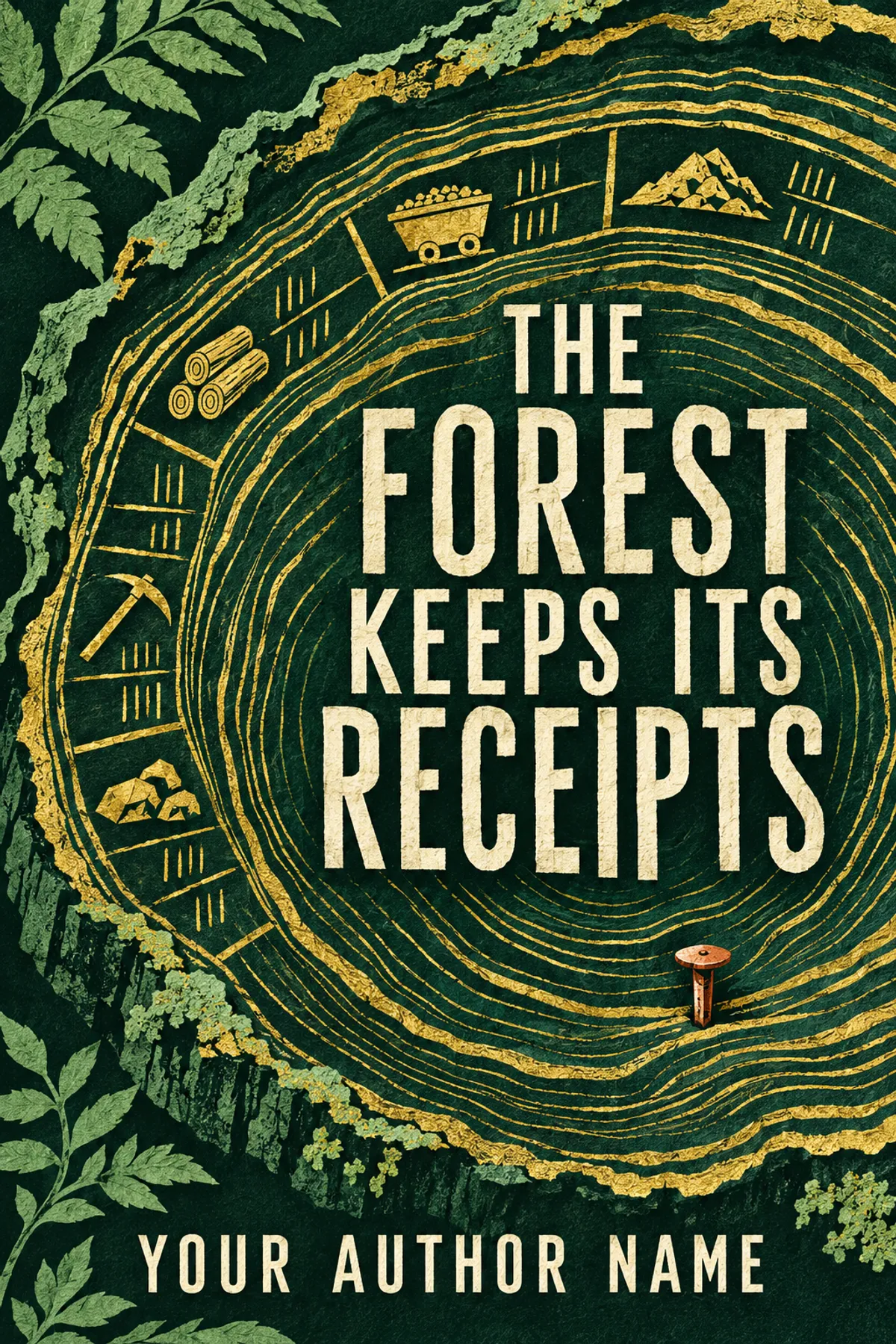
Clara found it while surveying the new access road. The storm had split the trunk cleanly enough to expose rings she could read like clauses: water taken, soil disturbed, shade removed, return deferred.
At the center, where the tree had first begun to grow, a small dark mark resembled a signature.
She traced the pattern on transparent paper without touching the wood.
Morris waited beside the survey vehicle, boots gray with mine dust.
"How long will this delay the road?"
"I don't know yet."
"People are counting on the new seam."
Clara knew. Her brother worked in the processing shed. Half the town's shops extended credit until the monthly wages arrived. The road was not an abstract line through a beautiful forest. It was also food, rent and the possibility of staying.
That did not make the rings unreadable.
She showed Morris the tracing. He recognized the old company's seal immediately.
"They closed thirty years ago."
"The debt didn't."
A breeze moved through the standing trees. For a moment, every leaf turned its pale underside toward the town.
Morris removed his cap.
"What does it want? Money?"
Clara followed the newest ring toward the split edge. The wording was unlike any legal document she had studied, but the meaning grew clearer as the afternoon light changed.
Not money. Time.
Years in which roots could deepen. Years without another cut into the watershed. Years returned to a place that had been promised recovery after every profitable season and received another invoice instead.
Morris looked toward the mine road.
"We don't have spare years."
Clara lowered the tracing.
Around them, the forest stood with the patience of something that had already lent far more than it could afford.
"I don't think it does either," she said.
Outline and characters
Develop this idea
Keep the living contract speculative while grounding the town's dependence in believable work, wages and local relationships. Morris should not be a villain for defending livelihoods, and Clara should not possess a painless replacement economy. Distinguish responsibility among former owners, current investors and workers. The forest's needs require time rather than a symbolic payment. A phased, imperfect agreement offers a stronger ending than immediate closure or miraculous restoration, with evidence of the first fulfilled obligation providing emotional movement.
- Clara reads a record of unpaid ecological obligations in a fallen tree.
- Morris recognizes the defunct company's seal and fears the debt will fall on current workers.
- Other trees corroborate extraction promises omitted from town records.
- The forest begins withholding services the town had treated as free and permanent.
- Residents confront both the mine's livelihood and the cost of continuing unchanged.
- Investors offer money while refusing the recovery time the forest requires.
- Clara and Morris trace responsibility beyond the workers and negotiate support for transition.
- The town develops a phased plan that protects basic livelihoods while granting the watershed years of recovery.
- A public agreement binds future extraction to measurable restoration and shared oversight.
- The first new ring records a promise partly fulfilled, leaving the town committed to work beyond the ending.
Characters
- Clara Nguyen, 39. Land surveyor able to read contractual patterns in tree rings
- Morris Pike, 56. Miners' cooperative chair
Series possibilities
- Clara surveys a river valley whose floodplain holds a different account of what the town owes.