A Coffin on the Customs Form
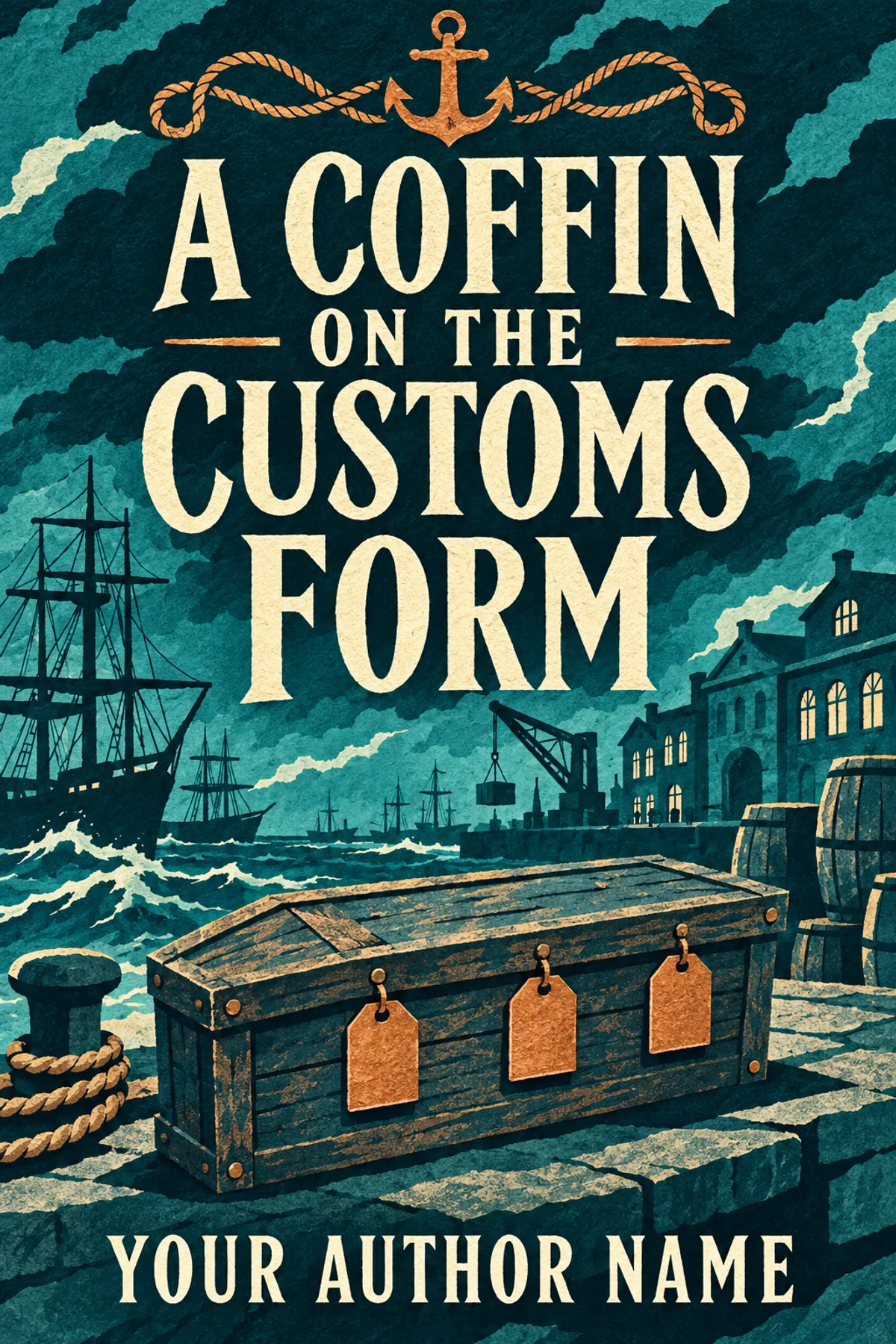
In a fictional nineteenth-century free port, a customs translator discovers a coffin declared in three languages as three different cargoes, none of them human remains.
ImagineYourBook writes a fresh draft from this idea.
How it begins
In one language, the coffin contained machinery. In another, it contained a saint. In the third, it was empty.
Elise read the declarations again while rain tapped against the customs-house shutters.
The merchant beside her examined his gloves.
"A difference of idiom."
"Between a lathe and a saint?"
"Technical language travels badly."
She turned the forms so he could see the three seals. Each had been applied by a different office. Each authorized a different exemption. Together, they permitted a large cedar coffin to cross the port without anyone agreeing what might be inside.
Elise requested an inspection.
The merchant discovered an urgent appointment elsewhere.
At the bonded warehouse, Matteo was repairing a damaged shipping crate. He looked at the coffin, ran one finger along its edge and frowned.
"Not made for burial."
"How can you tell?"
"Too much work where nobody would see it."
He showed her narrow channels beneath the lid, polished smooth. Something had been intended to slide in and out repeatedly.
The warehouse clerk brought the inspection book. Before Elise could sign, a porter hurried in from the quay and whispered to him. The clerk's face emptied.
A customs officer had been found dead near the water. He was the man who had stamped the declaration calling the coffin empty.
Elise looked at the seals again. Three offices, three explanations, one object designed to pass between them.
Matteo stepped away from the lid.
"Shall I leave it closed?"
"Until the responsible officer arrives."
She copied the visible marks and asked the clerk to record who had entered the warehouse. Outside, the merchant's carriage was no longer waiting. In its place stood a boy holding an umbrella and an envelope addressed to the translator who had asked too many questions.
Elise did not touch the envelope until the clerk had witnessed its arrival.
Outline and characters
Develop this idea
Keep the fictional port's customs rules consistent and research comparable period trade practices during development. Translation should reveal deliberate ambiguity rather than magical knowledge of every language. Matteo's craft expertise supplies the physical counterpart to Elise's textual clue. The stolen plates need a clear commercial value, and the officer's death should be linked through more than proximity to the shipment. Let the final aligned declarations provide a satisfying image of shared accountability.
- Elise discovers incompatible declarations securing exemptions for the same coffin.
- Matteo identifies a reusable concealed fitting rather than ordinary burial construction.
- The officer who certified it empty is found dead.
- Inspection reveals stolen printing plates hidden inside the sliding framework.
- The plates belong to a business producing valuable commercial certificates.
- Each declaration was designed to exploit a different office's assumptions and avoid inspection.
- Elise traces a repeated translation error to the merchant's private clerk.
- Matteo recognizes the fitting as work ordered by a respected shipping broker.
- Witnesses and shipping records connect the broker to the theft and officer's death.
- Elise establishes a shared description for the cargo, ending the case with three languages finally recording the same facts.
Characters
- Elise Ward, 35. Customs translator
- Matteo Bellini, 43. Dockside cabinetmaker
Series possibilities
- Elise encounters another commercial dispute where a deliberate mistranslation has become profitable fact.