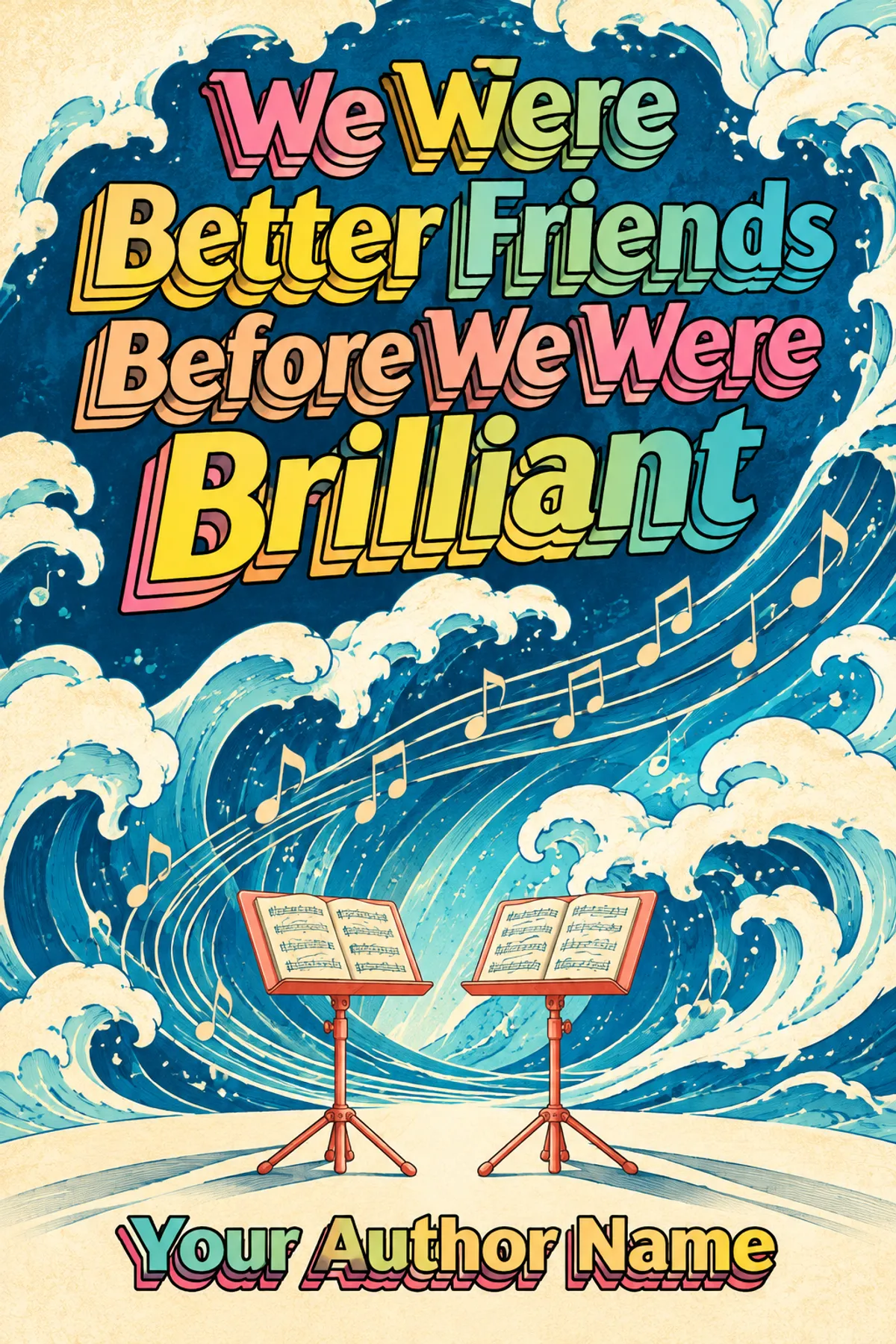
We Were Better Friends Before We Were Brilliant
Two adult composers reunite to finish the work that made one famous and the other leave music. A young orchestra has its own ideas about what the piece should become, including who deserves to be heard.
ImagineYourBook writes a fresh draft from this idea.
How it begins
The orchestra stopped playing before Rhea Nasser recognized the mistake.
The rehearsal notice used both their names in equal type. Rhea had approved it without noticing how unusual that had become.
It wasn't a wrong note. It was the right note belonging to someone else.
Across the rehearsal room, Gus Moss lowered his score.
"You kept it."
Rhea looked at the cellos, where the phrase had begun. Twelve years earlier, he'd played it on an out-of-tune piano while she sat on the floor eating an orange. They had argued about the ending until dawn.
In the published program, the passage appeared under her name.
"We agreed," she said.
"We agreed you could use it. Those aren't always the same sentence."
Around them, the musicians became very interested in their instruments. The conductor set down her baton.
The regional orchestra had invited them to complete the piece that made Rhea famous and Gus stop answering questions about music. The announcement described a joyful reunion. Neither composer had approved the adjective, but both had allowed it.
Now a young violist raised her hand.
"Before we decide who owns that section," she said, "could we discuss whether it should still sound like this?"
Rhea turned.
The violist looked nervous but continued. "It keeps asking us to wait for a resolution that never comes."
Gus laughed once, without amusement.
"Yes," he said. "It does."
Rhea looked down at the score. Familiar markings crowded the page: instructions, corrections, her handwriting placed over his in a passage she'd stopped seeing clearly years ago.
Outside, a delivery truck reversed beneath the rehearsal window. The mundane warning beep cut through the room's careful silence.
She closed the score.
"All right," she said. "Let's hear what you think it needs."
For the first time since the reunion photograph, nobody asked her to smile.
Gus sat down beside the piano, leaving the bench's other half empty.
Your idea. Your book.
Keep the spark. Change anything.
Create my bookCreated with ImagineYourBook. Free to use as inspiration.
Outline and characters
Develop this idea
Give the disputed composition a specific history and distinguish legal credit, artistic contribution, and emotional recognition. Rhea and Gus should each possess talent and blind spots. The orchestra needs collective agency rather than serving as a moral chorus for famous adults. Use original musical descriptions instead of borrowed lyrics. A nuanced ending can correct credit without restoring the exact old friendship, allowing collaboration to change shape rather than become pure again.
- Rhea reunites with Gus for an unfinished score
- Their accounts of its authorship conflict
- The orchestra refuses their preferred version
- Old recordings expose both generosity and theft
- Rhea admits what fame let her ignore
- Gus confronts how grievance narrowed his work
- They separate credit from reconciliation
- Young performers shape the final movement
- The premiere names the work's actual contributors
- Their friendship resumes without returning to its old hierarchy
Characters
- Rhea Nasser, 33. Composer
- Gus Moss, 40. Former collaborator
Series possibilities
- Literary novels examine creative friendships whose public success hides unequal private bargains.