
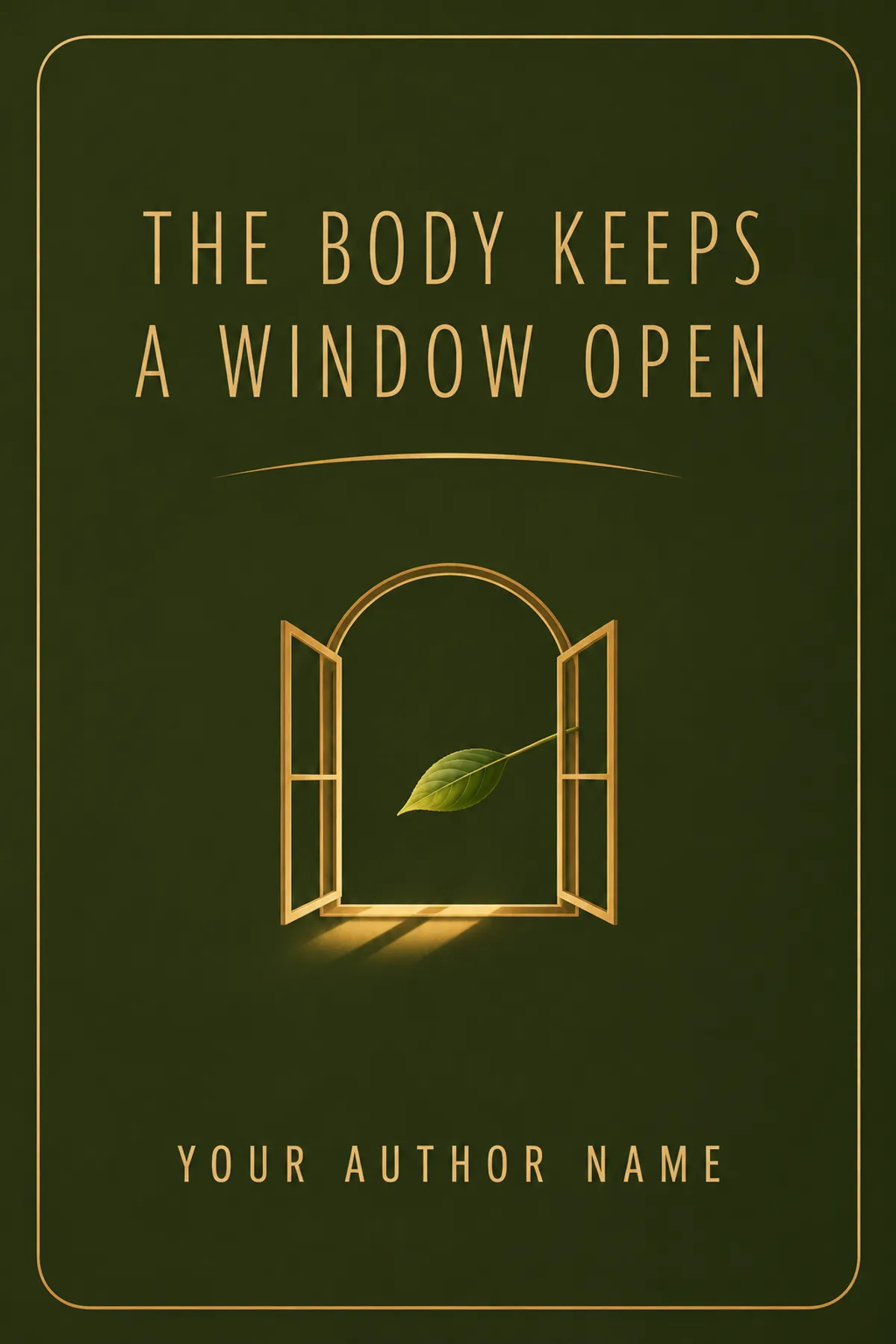
The Body Keeps a Window Open
A grounded poetry collection explores bodily memory through breath, posture and ordinary sensation, with no clinical claims and a recurring image of choosing how much world to let in.
ImagineYourBook writes a fresh draft from this idea.
How it begins
1. Window
My shoulder rises before the key turns. I notice it while holding groceries, a small roof built by habit above a weather that is not here today.
The door opens. Only the hallway, the mat, the plant leaning toward its ordinary hunger.
I set down the bags. One orange rolls beneath the chair. I let it wait while I open the window by the width of two fingers.
Air enters without asking for the history of the room. I do not owe it every corner. I can choose a narrow opening and still call that open.
2. Bus
The body remembers the stop before I read its name. My hand closes around the rail. My feet prepare to leave a journey I no longer take.
For six years this was work, a bakery smell, a broken crossing light, ten minutes of walking quickly toward someone else's clock.
Today I stay seated. The old street moves behind the glass without requiring a farewell.
A woman beside me shifts her shopping to make room for my knee. I thank her. The next stop has no meaning yet. That is not emptiness. It is a place my feet have not been asked to know.
3. Pace
You walk more slowly than I expect, not because you need rescuing but because you are looking at the tree behind the bus shelter.
I have passed it every day and could describe the advertisement better than its leaves.
We stop. My breath catches up with the rest of me. No revelation follows. A delivery van blocks the light. You complain about the pavement. I notice one leaf turning without the others moving.
On the way home, I close the window when the street grows loud. Later, I open it again.
The frame holds both decisions. So do my hands, which are learning that a handle can be used more than once without either movement being a promise to the whole world.
Outline and characters
Develop this idea
Keep the poems grounded in observed sensation without diagnosing the speaker or promising therapeutic results. A raised shoulder or familiar route can hold multiple meanings; resist explaining every image. The companion's slower pace should belong to their own attention rather than exist solely to improve the speaker. Vary the window motif so closing can be as considered as opening. The collection's movement should remain revisable and ordinary, with no final state of permanent openness or perfect bodily understanding.
- Begin with an ordinary bodily habit noticed in a changed present.
- Explore the difference between remembered movement and current choice.
- Move through public transport and routes the body knows before conscious thought.
- Introduce another person's pace without treating it as a lesson or deficit.
- Include sensory pleasure, annoyance and fatigue alongside vigilance.
- Let the window motif vary between opening, closing and adjusting.
- Examine moments when attention is useful and moments when it becomes another demand.
- Return to familiar places with small differences in posture or movement.
- Allow conflicting sensations without forcing a single interpretation.
- End with repeated, revisable choices about how much of the world to admit.
Characters
- The resident speaker, 39. Adult lyric voice noticing breath, posture and ordinary bodily habits
- The walking companion, 62. Adult recurring figure whose pace offers another relation to the world
Series possibilities
- A companion collection follows sensory habits through a move to a different home and neighborhood.