
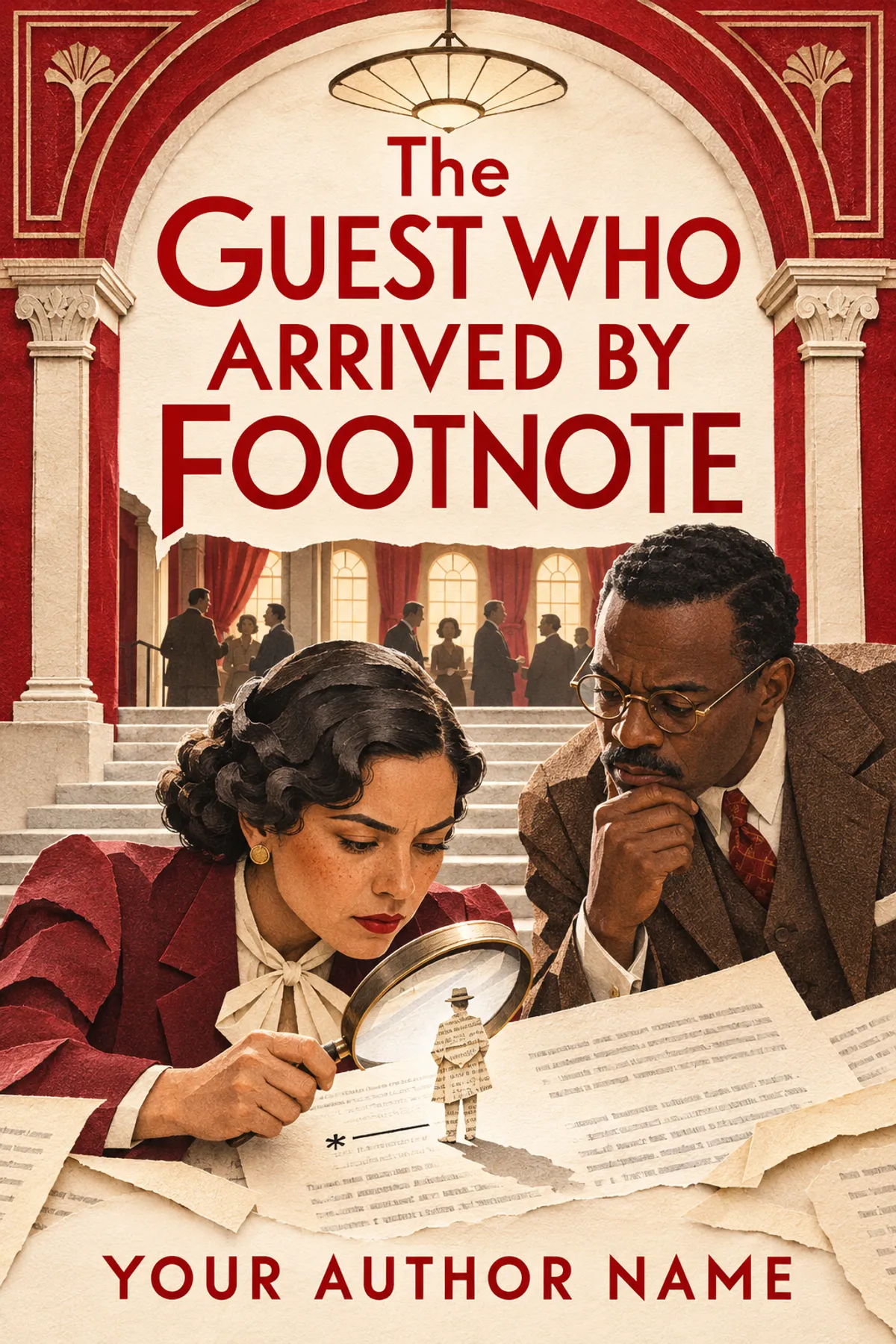
The Guest Who Arrived by Footnote
A 1930s academic conference secretary finds an extra guest listed only in the footnotes of every speaker's paper, then discovers the invited scholars share an unpublished crime.
ImagineYourBook writes a fresh draft from this idea.
How it begins
The extra guest appeared in footnote seven.
Margaret noticed because the name was missing from the accommodation list, and missing beds became her problem long before missing scholarship troubled anyone else.
Dr. Adrian Vale, present at the conference, had supplied an observation about a lost expedition.
The next paper cited him too. So did the third.
Margaret checked the registration book. No Adrian Vale. No unpaid fee. No request for a room away from the stairs, which distinguished him from nearly every other scholar expected that week.
She took the papers to Elias Hart, who was examining the dining-room seating plan with more concern than he had shown the program.
"A late addition?" she asked.
He read the footnote and sat down.
"Where did you get this?"
"From your paper."
"It wasn't in my copy."
Margaret believed him about the copy. She was less certain about the fear.
The papers had arrived separately and passed through the same small printing office. Each new footnote attributed a different observation to Vale. Together, they described the final day of an expedition the conference intended to commemorate as a triumph.
Outside, students carried flowers into the lecture hall. A portrait of the expedition's leader waited on an easel, its brass plaque freshly polished.
Margaret asked Elias whether Vale had traveled with them.
He looked toward the portrait.
"He wasn't on the official list."
"Was he on the journey?"
Before Elias answered, the porter brought a key back from the guest rooms. Someone had placed it on the desk with a note requesting that Room Twelve be prepared for the man everybody had cited.
Margaret recognized the room number. It had been kept empty at the organizer's insistence.
She put the key beside the papers and asked Elias the question again, this time without offering him the shelter of the word official.
Outline and characters
Develop this idea
The inserted footnotes should form a progressively legible account, not simply repeat a spooky name. Give the relative a plausible route into the printing process and distinguish evidence from theatrical accusation. Avoid reducing an uncredited expedition worker to a device for European scholars' guilt; develop his skills, relationships and surviving community. Margaret's administrative knowledge connects the papers, rooms and proofs. Research period printing and conference practice before expanding the fictional university setting.
- Margaret finds an unregistered guest cited in every conference paper.
- Elias denies adding the footnote but recognizes the name.
- The printing office confirms identical corrections delivered under the organizer's authority.
- The notes reconstruct an expedition's suppressed final day.
- Vale was an uncredited local assistant whose disappearance protected the leader's reputation.
- A relative arranged the additions using documents acquired from a former expedition member.
- One scholar tries to destroy the supporting correspondence before the commemorative lecture.
- Margaret matches the altered proofs to original letters and secures independent witnesses.
- The conference confronts evidence of the assistant's deliberate abandonment and the later cover-up.
- The published proceedings correct the record, and Room Twelve hosts Vale's relative rather than the imagined return of the dead.
Characters
- Margaret Shaw, 34. Academic conference secretary
- Elias Hart, 57. Visiting scholar and former expedition member
Series possibilities
- Margaret organizes another scholarly gathering where administrative details expose a suppressed contributor.