The Sea Has Sent an Invoice
A coastal town receives a bill from the sea for everything it has taken without asking. A bookkeeper and a retired salvage diver dispute the charges, then discover that returning one ordinary object could cost them their most profitable local tradition.
ImagineYourBook writes a fresh draft from this idea.
How it begins
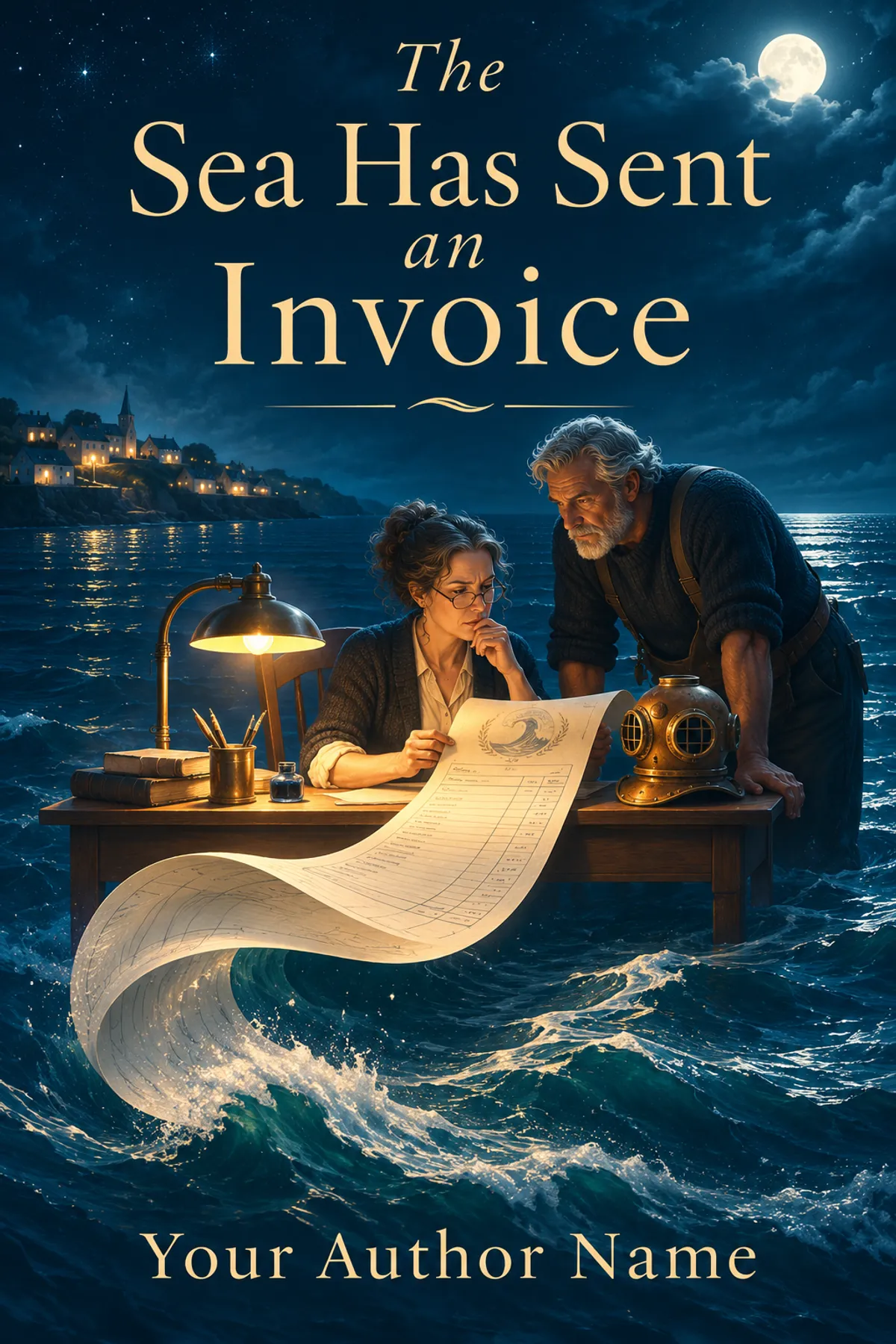
The sea's invoice arrived damp, but the arithmetic was excellent.
Vera Collins spread it across the town hall radiator. Forty-eight years old, twenty-three of them spent balancing other people's optimism against actual receipts, she could recognize a serious creditor. This one had itemized everything.
Three thousand buckets of bait. Fourteen lost anchors. Seven hundred and sixty-two sunsets used in advertising. One ship's bell.
The total was blank.
Payment, said the final line, would be discussed after the bell's return.
Vera rang the harbor office. They asked whether it was a joke for the tourist festival. She rang the festival committee. They asked whether it could become one.
By ten, someone had suggested souvenir invoices.
At eleven, Paul Bennett appeared carrying the municipal photograph of the bell. He was fifty-seven, retired from salvage diving, and had stopped attending committee meetings when somebody proposed decorating his old air tank with artificial flowers.
'That isn't ours,' he said.
'It is on the asset register.'
'So was my air tank.'
Vera examined the photograph. The bell hung above the festival arch. Every opening night, visitors paid to ring it while the mayor announced the sea's generosity.
'Whose is it?'
Paul looked toward the window. Beyond the harbor wall the water lay unusually flat.
'I don't know. That's what I said when we brought it up.'
The invoice gave a small, deliberate shiver on the radiator. Another line appeared beneath the bell.
Thirty-one years of saying otherwise.
Vera fetched a fresh notebook.
'Before we discuss payment, I want to dispute the sunsets.'
Paul almost smiled.
Outside, the festival's floating platform moved three feet toward the shore without assistance from the tide. A man testing the public-address system asked everybody to remain calm about the cables.
Vera looked back at the invoice. It had developed a second page.
At the top, in handwriting as tidy as her own, the sea had written: REASONABLE QUESTIONS WELCOME. PLEASE BRING THE BELL.
Your idea. Your book.
Keep the spark. Change anything.
Create my bookCreated with ImagineYourBook. Free to use as inspiration.
Outline and characters
Develop this idea
Keep the sea's demands specific enough to negotiate and strange enough to resist a simple allegory. Vera's bookkeeping is a genuine intellectual skill, while Paul's uncertainty about the bell should matter more than a secret heroic history. The festival supports livelihoods, so giving it up cannot be costless moral decoration. Let restitution require collaborative practical changes, with room for comic argument about sunsets that nobody can sensibly put in a cupboard.
- Vera verifies the sea's invoice while officials attempt to turn it into festival publicity.
- Paul identifies the displayed bell as an object recovered without a known owner.
- They dispute metaphorical charges and discover that the sea distinguishes use from entitlement.
- Local businesses reveal how much income depends on ringing the bell.
- A proposed replica fails because returning appearances is not returning the object.
- Paul admits he allowed an uncertain salvage account to become a confident civic legend.
- Vera calculates practical losses and invites those affected to help choose an alternative festival.
- An official tries to settle privately with money the sea has never requested.
- The town publicly corrects the bell's history and arranges its return without a dangerous spectacle.
- The sea cancels some charges, retains others for discussion, and accepts a festival built around listening rather than possession.
Characters
- Vera Collins, 48. Town bookkeeper
- Paul Bennett, 57. Retired salvage diver
Series possibilities
- Other landscapes submit precise, inconvenient accounts to communities accustomed to treating them as free scenery.