The Mountain Is Moving to Town
A mountain begins inching toward a town that voted to rename it after a developer. A surveyor and a café owner must negotiate with an inconvenient landscape while deciding whether the town's growth was ever worth the people and places it made invisible.
ImagineYourBook writes a fresh draft from this idea.
How it begins
Helen Gray discovered the mountain had moved because her most reliable boundary stone was standing in somebody's tomatoes.
She checked the instrument. She checked the stone. Then she checked whether Mark Ellis had extended his café garden without telling anybody.
'I have enough trouble watering what I've got,' he said.
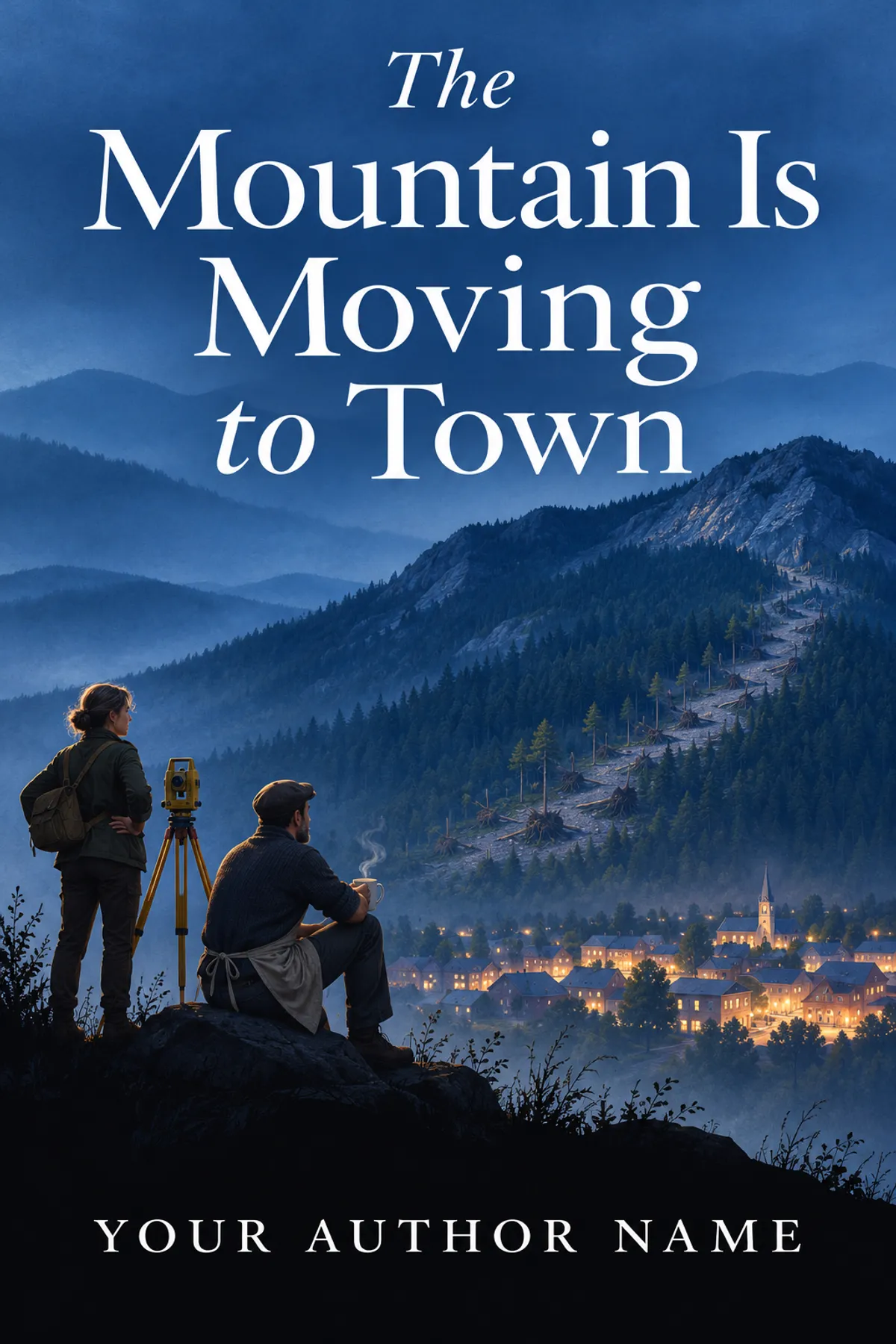
Mark was fifty, owned three outdoor tables, and had declined the developer's offer to rename his café after the new resort. Helen, forty-seven and a land surveyor, had measured the proposed access route six times. None of those measurements included the mountain leaning toward town.
Above them, a line of pines tilted politely around a fresh fold in the slope.
Helen set a new reference point on stable ground well away from the movement. Mark moved his customers indoors. They watched a dry-stone wall advance across the abandoned road with the slow confidence of a queue that had finally started going somewhere.
'Perhaps it's erosion,' he said.
'Erosion doesn't normally bring its wall.'
On the café noticeboard, the council's announcement fluttered beneath a drawing of the future resort. The mountain's old name had been replaced by the developer's surname. Beneath it appeared the words A LANDSCAPE REIMAGINED FOR EVERYONE.
The wall advanced another inch.
Helen called the council. The officer asked whether the movement could wait until after the unveiling.
'I'll ask,' she said, and ended the call before he could take her seriously.
Mark brought two coffees to the window.
'Do we know what it wants?'
'No. We barely know what we want. There's been a consultation document for nine months.'
Outside, something scraped against the front step. Not a boulder. A wooden sign, carried downhill on a neat cushion of moss.
It bore the mountain's old name.
Below it, in fresh pale lettering, someone or something had added: PLEASE CONFIRM FORWARDING ADDRESS.
Helen looked up at the peak. The summit had acquired a small warm light, exactly level with the empty window of the council chamber.
Your idea. Your book.
Keep the spark. Change anything.
Create my bookCreated with ImagineYourBook. Free to use as inspiration.
Outline and characters
Develop this idea
The moving mountain is funny because its demands collide with ordinary planning habits, but the residents' needs should remain real. Avoid a simple choice between untouched scenery and villainous development. Helen has contributed to the omission she now sees, and Mark's café depends on visitors too. Clear physical boundaries keep the spectacle coherent. The resolution needs a usable agreement about access and responsibility, not merely a new plaque with the old name.
- Helen documents the mountain's impossible movement after its renaming vote.
- Mark helps relocate vulnerable neighbors while resisting the urge to turn the event into café publicity.
- The mountain sends requests that expose contradictory promises in the redevelopment plan.
- Residents disagree about jobs, housing, access, and what the old landscape actually offered them.
- A publicity consultant proposes welcoming the mountain as a branded attraction.
- Helen discovers her earlier survey treated a displaced community's route as unused land.
- She corrects her own record before asking others to reconsider theirs.
- The town negotiates a practical pause in development while independent residents define their needs.
- A ceremonial renaming proves insufficient; the mountain moves again until the access decisions change.
- The peak settles at an unexpected new boundary, leaving the town responsible for an agreement it must keep without constant spectacle.
Characters
- Helen Gray, 47. Land surveyor
- Mark Ellis, 50. Café owner
Series possibilities
- Other places in the district develop inconvenient opinions about the futures people have planned for them.