The Weaver of Unwanted Prophecies
An adult weaver turns rejected prophecies into blankets for travelers and discovers the people who sleep beneath them can choose which parts of their futures to refuse.
ImagineYourBook writes a fresh draft from this idea.
How it begins
The first traveler dreamed he would become a king and woke asking for directions to the coast.
Mina found him folding the blanket with unusual care.
"Was it warm enough?"
"Very."
"Then why are you leaving before breakfast?"
"I have apparently been wasting time wanting a throne."
She watched him walk away, carrying a bag that looked too small for a royal future.
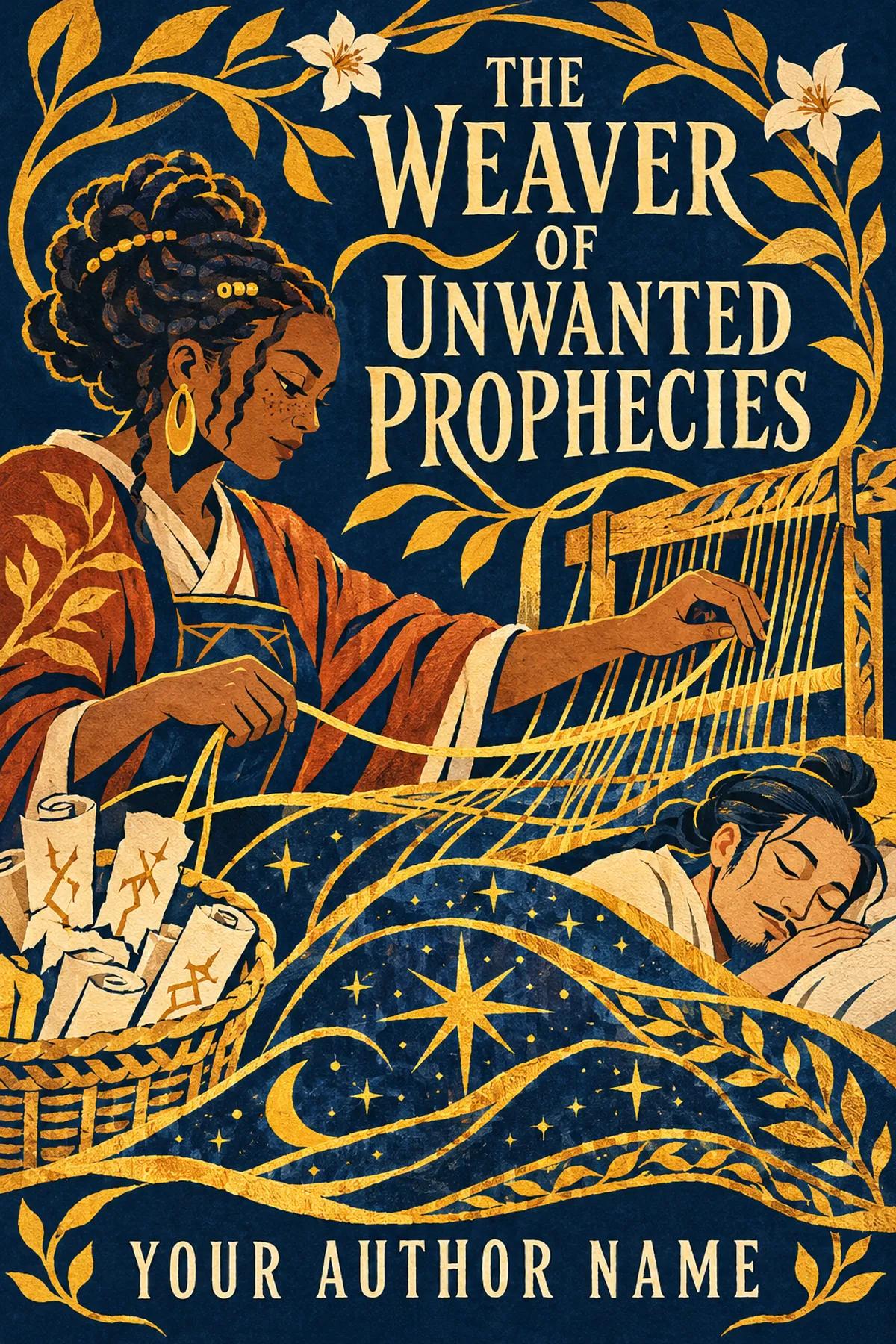
The blanket was made from rejected prophecies. Mina bought the thread cheaply from the oracle's workshop: predictions too contradictory, unpopular or commercially inconvenient to deliver. Usually, she washed the colors together until they became ordinary cloth.
This time, one silver line remained.
By evening, three guests reported dreams of lives they had been told to expect. A woman refused a profitable betrayal. A merchant accepted a lonely voyage. Elias, who carried messages between the northern towns, said nothing until everyone else had gone to bed.
"Mine showed me dying for someone important."
Mina sat beside the loom.
"What did you choose?"
"To ask whether there was another way to help."
Outside, bells sounded from the oracle's hill. They rang only when a delivered prophecy had failed. Tonight, they did not stop.
Mina examined the blanket's edge. The silver thread had loosened around one knot, leaving a small space where another color might pass.
She had not changed anyone's future by giving them cloth. She had given them somewhere to see the expectation clearly enough to answer it.
A messenger from the oracle arrived before dawn, carrying an order to surrender every blanket.
Mina asked what would happen to the travelers.
"Their proper paths will be restored."
Behind her, Elias lifted his bag.
"Proper for whom?"
The messenger looked offended by the question, which told Mina more about the prophecy business than any dream had done. She set her shuttle across the unfinished cloth and left the door open for the answer.
Outline and characters
Develop this idea
The blankets should reveal alternatives and assumptions rather than grant unlimited control of events. Include choices that bring difficulty or regret so refusal is not automatically rewarded. Mina's craft can embody the distinction through loose knots and spaces without becoming a technical magic manual. Elias's crisis should be solved by changed participation, not a loophole that secretly fulfills the same sacrifice. The ending preserves uncertainty and practical warmth after the oracle's certainty loses its monopoly.
- Mina's scrap-thread blankets let travelers confront expected futures in dreams.
- Their choices cause official prophecies to fail without guaranteeing easier lives.
- Elias questions a predicted heroic death and seeks another way to help.
- The oracle demands the blankets to preserve its authority and commercial certainty.
- Mina learns that rejected prophecies often contained alternatives inconvenient to powerful clients.
- Some travelers regret their refusals, proving that freedom does not ensure happiness.
- The weaver and travelers expose the suppressed alternatives without claiming every future can be avoided.
- Elias faces the predicted crisis and organizes help that does not require his solitary sacrifice.
- The oracle loses exclusive control as people learn to treat prophecy as a possible path rather than a command.
- Mina continues weaving blankets with visible loose spaces, selling warmth without promising a perfect destiny.
Characters
- Mina Torres, 36. Weaver using discarded prophetic cloth
- Elias Reed, 54. Traveling messenger who refuses the future assigned to him
Series possibilities
- A traveler returns to Mina with a future they freely chose and now wish to reconsider.