The Saint Has Lost His Receipt
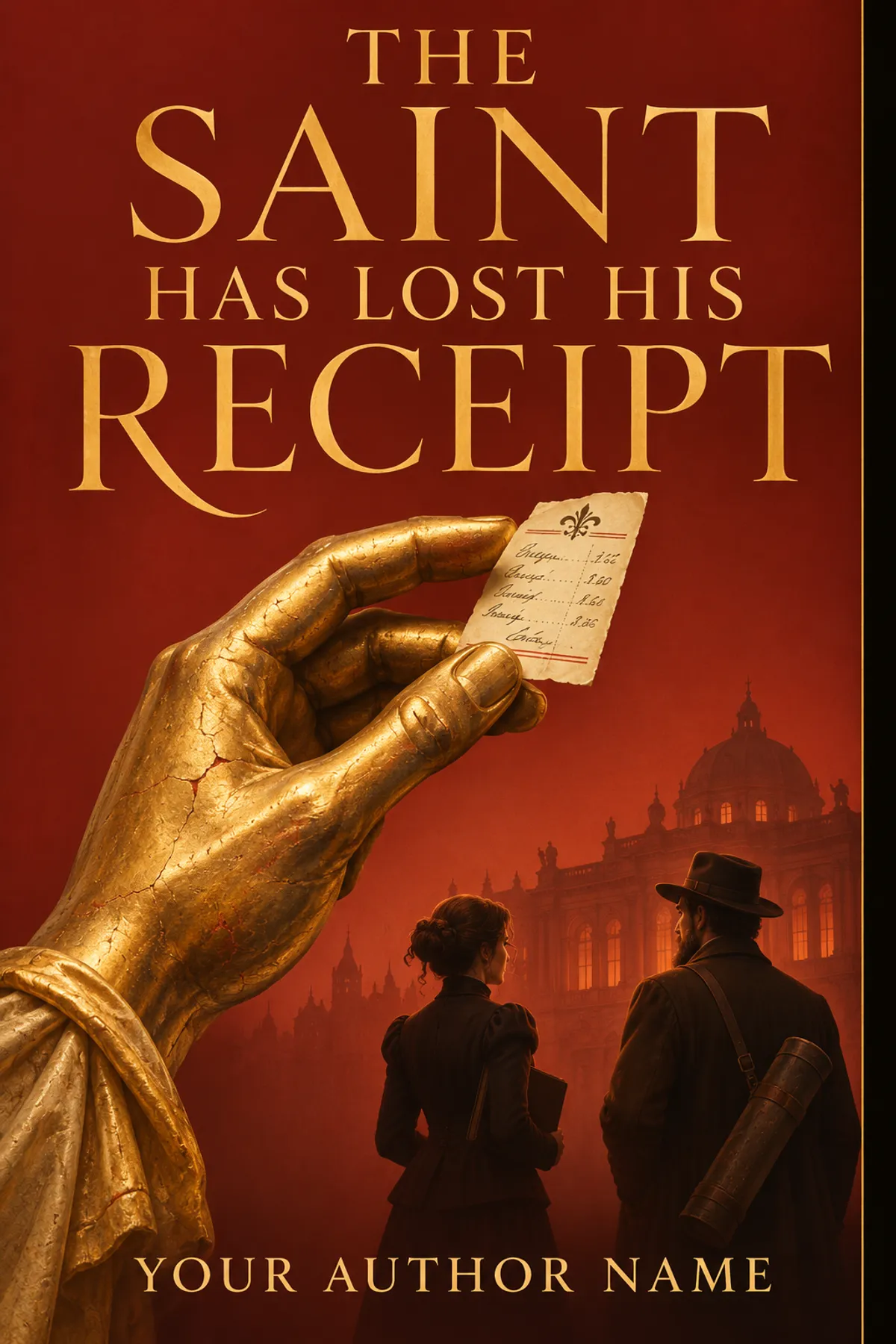
In 1893, a museum receives a receipt for a statue it has supposedly owned for centuries. A skeptical provenance clerk and a traveling plaster caster trace the purchase through a city's workshops, discovering a fraud whose most dangerous ingredient is everyone's desire for a beautiful origin.
ImagineYourBook writes a fresh draft from this idea.
How it begins
The saint had been paid for in installments.
Louise Bell read the receipt beneath the museum lamp and felt an unprofessional desire to laugh. Three payments, two overdue notices and a final discount for collection by the purchaser.
The statue upstairs was described as a gift from the city's founder. Schoolchildren had been told this every Thursday for twenty years. Louise had typed the label herself.
She checked the paper again. The date was recent enough to be embarrassing and old enough to require care.
Anton Gray waited on the other side of the desk with his hat between his hands. White plaster dust marked his cuffs.
'Where did you find it?' she asked.
'In my father's order book.'
'Your father made saints?'
'He made whatever people ordered.'
Louise looked toward the gallery. From her office she could see one pale hand raised in permanent blessing. The saint had survived fires, political changes and a roof replacement funded by public subscription. He appeared untroubled by the possibility of being a comparatively modern purchase.
'There may be another statue,' she said.
Anton opened a small parcel. Inside lay a plaster thumb with a tiny notch at the nail.
'I hoped you would say that.'
The gallery thumb had the same notch. Louise could see it without standing.
She fetched the accession ledger. The entry recorded a donation, a ceremony and three distinguished witnesses. None was the person named on the receipt.
Anton watched her turn the pages.
'I'm not asking you to call it a forgery.'
'What are you asking?'
'To say who made it.'
Outside, the museum bell announced closing time. Louise shut the ledger, but left the receipt beneath the lamp. By morning, the saint would still be beautiful. The city might find that insufficient consolation.
On the desk, the little plaster thumb cast a sharp shadow toward her own typewriter.
Your idea. Your book.
Keep the spark. Change anything.
Create my bookCreated with ImagineYourBook. Free to use as inspiration.
Outline and characters
Develop this idea
Separate questions of age, authorship, ownership and artistic value; changing one does not automatically erase the others. Research plaster casting and museum accession practices in 1893. Give the receipt and workshop fragment independently testable details so the answer feels earned. Anton's family should have a mixed stake rather than pure innocence. The statue's continued beauty allows the ending to challenge a false origin without demanding that everyone stop loving the object.
- Louise receives an installment receipt for the museum's ancient statue.
- Anton's workshop fragment matches a distinctive flaw.
- Accession records contradict the public donation story.
- A second statue offers an attractive but misleading explanation.
- Workshop accounts reveal an original artisan and an altered commission.
- The museum director fears losing donations if the date changes.
- Louise distinguishes a later artwork from a deliberate recent fraud.
- Anton discovers his family also benefited from the convenient legend.
- They authenticate the object and correct its provenance publicly.
- The statue remains displayed with accurate credit and a richer material history.
Characters
- Louise Bell, 38. Museum provenance clerk
- Anton Gray, 45. Traveling plaster caster
Series possibilities
- Louise's provenance work uncovers other celebrated objects whose real makers complicate official origins.