The Last Job Was a Picnic
A factory's two longest-serving employees are asked to arrange a cheerful farewell picnic for a closure neither supports. Instead of speeches, they invite every former worker to bring something they made with their wages, creating an exhibition that is harder to dismiss than nostalgia.
ImagineYourBook writes a fresh draft from this idea.
How it begins
The farewell picnic budget was forty-eight pounds and a box of paper flags left over from the company's most successful year.
Miriam Ward entered the figures in a fresh column. The spreadsheet made no distinction between celebration and closure. Both fitted neatly beneath Events.
Leonard Fox stood in her doorway holding a folding table.
'Where do you want this?'
She looked up. 'We haven't booked the field.'
'No one else has either.'
Behind him, the production floor was quiet. A conveyor belt rested beneath the lights, clean enough to suggest that work had never happened there. Miriam could remember the sound of it from her kitchen half a mile away.
The director's instructions lay beside her keyboard. Keep it positive. Acknowledge the family. Avoid discussing individual circumstances.
Miriam had processed those circumstances for thirty-six years: overtime, parental leave, sick pay, the small advances people requested quietly near the end of winter.
Leonard set down the table without unfolding it.
'They want speeches?'
'Three.'
'Who by?'
'People leaving first.'
He looked toward the empty belt.
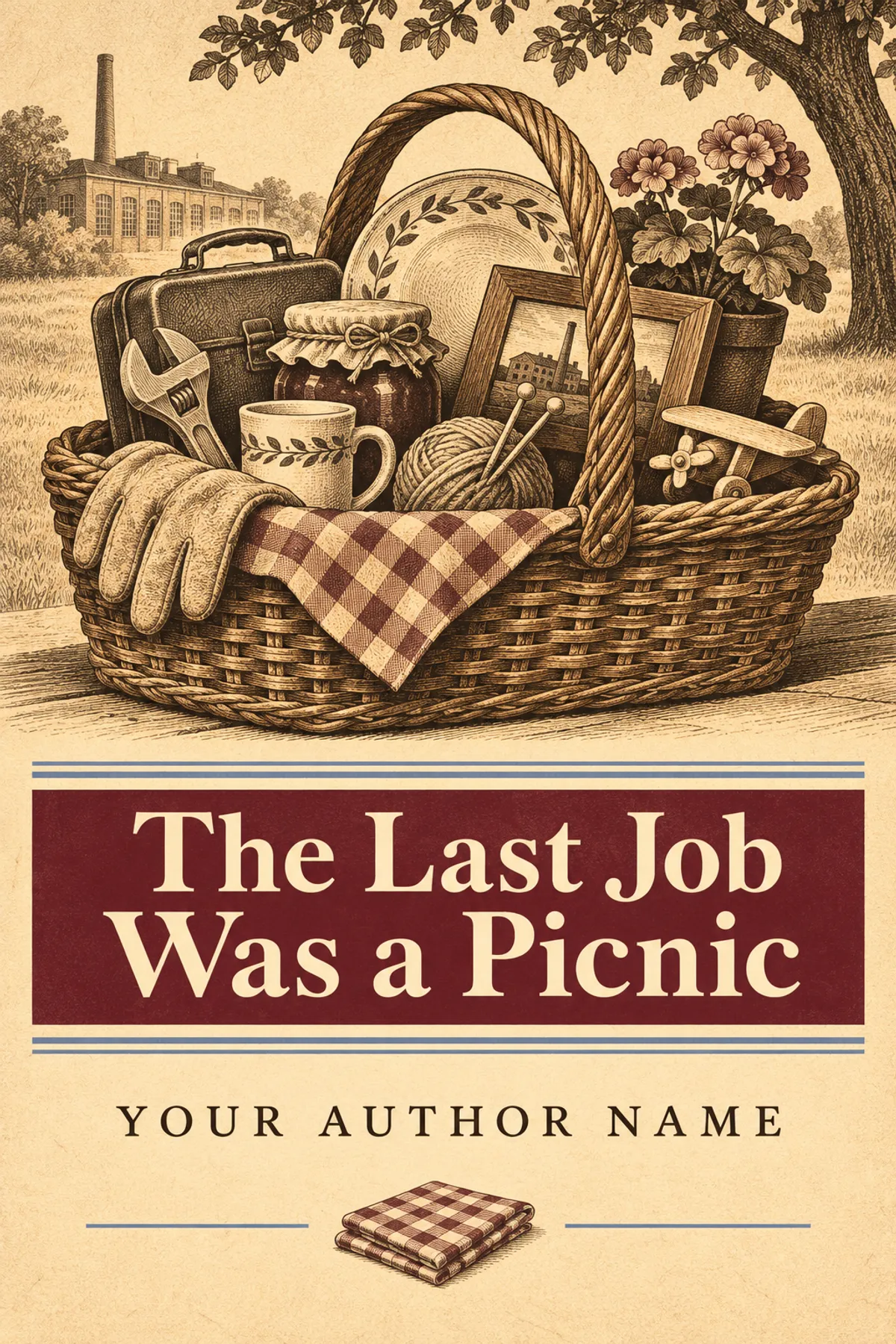
'I've still got the bicycle I bought with my first wages.'
'Good bicycle?'
'Terrible. I loved it.'
Miriam thought of the washing machine her first promotion had paid for, and the piano she had rented when her daughter wanted lessons. None had come through the factory doors, but all of them had been made possible by what happened inside.
'Bring it,' she said.
'To the picnic?'
'Ask the others to bring something too.'
He grinned, then stopped. 'You mean trophies?'
'No. Things we bought. Things we built. Anything the wages became.'
Miriam opened a new document. The director had asked for a celebration of the company. She began writing an invitation to the people whose lives it had helped to pay for, which was a different accounting entirely.
Your idea. Your book.
Keep the spark. Change anything.
Create my bookCreated with ImagineYourBook. Free to use as inspiration.
Outline and characters
Develop this idea
Avoid reducing the factory to either beloved family or pure villain. Different workers should remember opportunity, injury, boredom and pride in different proportions. Research realistic redundancy support and privacy obligations before choosing the financial conflict. The objects provide scenes and disagreement, not a catalogue of sentimental symbols. Miriam and Leonard need futures beyond preserving the past, and the exhibition should help people act rather than merely feel seen.
- Miriam and Leonard receive instructions for a cheerful closure picnic.
- They invite former workers to bring objects their wages made possible.
- Contributions expose differences in what the factory meant to families.
- Management objects to items that suggest hardship rather than pride.
- A promised support fund proves smaller than the public announcement.
- Miriam refuses to display private payroll information as campaign evidence.
- Leonard confronts resentment from workers excluded by earlier redundancies.
- The exhibition expands to include those who left without farewell events.
- Workers use documented promises to secure clearer transition support.
- The picnic becomes a truthful gathering and a beginning for new mutual aid.
Characters
- Miriam Ward, 61. Factory payroll clerk
- Leonard Fox, 63. Machine operator
Series possibilities
- Linked contemporary novels follow former factory workers building new adult lives after a shared institution closes.