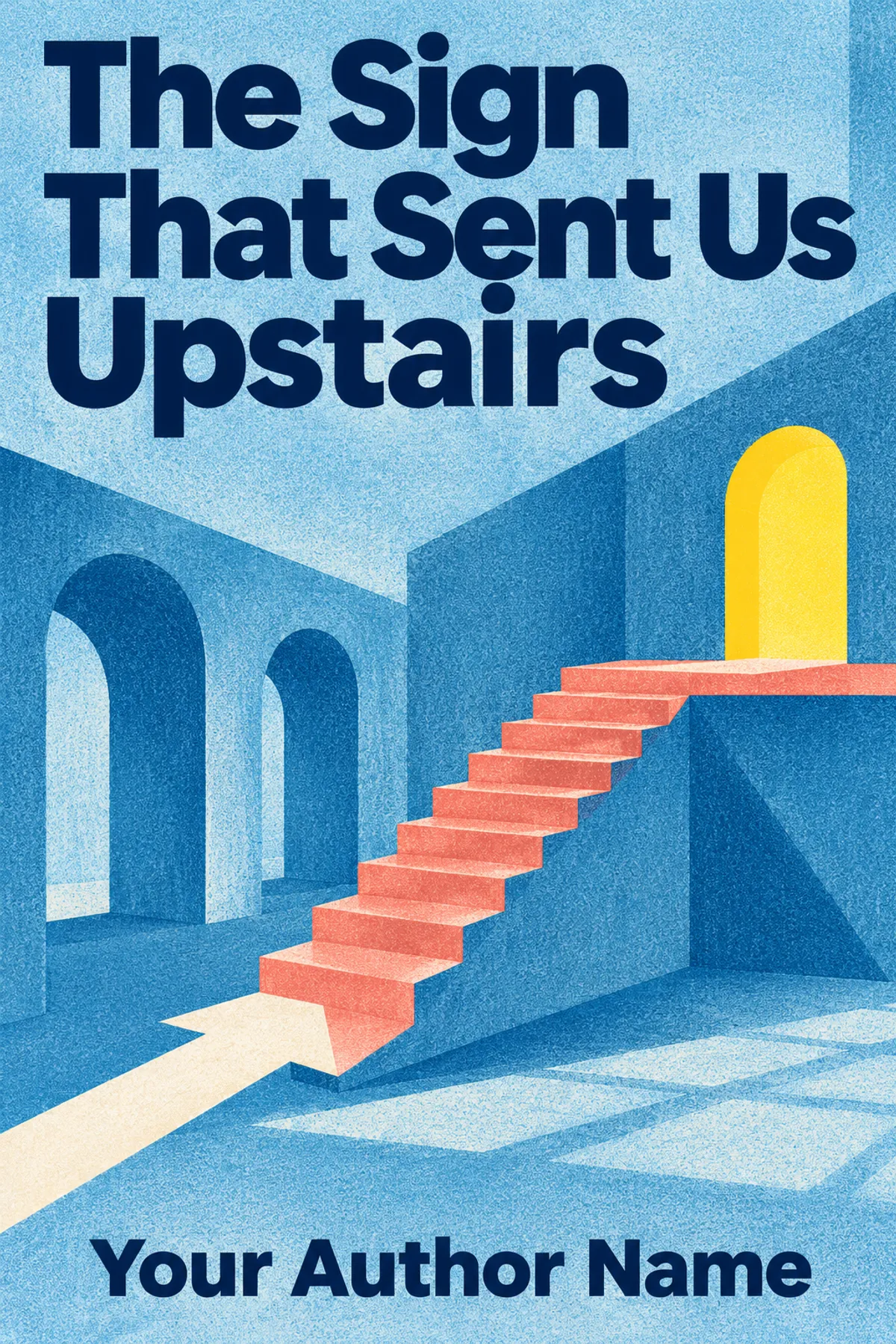
The Sign That Sent Us Upstairs
Test a sign from where a first-time visitor has to make a decision.
ImagineYourBook writes a fresh draft from this idea.
Introduction
The arrow pointed up. The room was straight ahead.
Cora had made the sign at the library desk. She put the arrow at the top because that left enough space for the word exhibition. From the desk it seemed clear that up meant keep going. From the front door there was a staircase under the sign, and a person could follow the arrow quite literally.
Adil arrived with enough time to see the photographs before picking up his bus. He went upstairs, found a water fountain and came down to ask whether he had missed the exhibition. The room was past the fountain's drainpipe, on the floor where he had started.
You can draw a direction on a sheet of paper, but a visitor reads it in a place. Stand where the person first has to choose. Look at the doors, stairs and corners in front of them. Ask what the arrow could reasonably mean there. If two interpretations are possible, a short phrase or a different placement may do more than a larger arrow.
Start with one destination. Write what a person should do at the first decision point and what they should see when they arrive. Check access routes separately. A sign that sends someone to stairs without explaining a verified alternative can give them a longer and less useful trip. Test the words and location on temporary paper before paying for a permanent sign.
Cora moved the sign beside the corridor and wrote "Photographs, through the blue doors." She stood outside the entrance with a new volunteer and watched where his eyes went. He saw the sign, then the doors. He wanted to know if he could leave his wet umbrella somewhere. Cora found him a place.
Adil came back the next week with his sister. He knew the route. She walked past him to the blue doors before he could tell her.
Chapter plan
Develop this idea
Build each chapter around a choice a visitor has to make. A reader should be able to imagine the sign from the corridor, through glare or while moving. Verify access routes and invite people with different needs to test them. Show the first failed sign, one small change and what the next visitor actually did. Include a routine for removing temporary signs once the exhibition ends.
- Open on the ambiguous arrow.
- Walk the route from each public entrance.
- Mark decision points and visible landmarks.
- Name the destination in the words people expect.
- Test contrast and placement under ordinary conditions.
- Verify accessible routes before describing them.
- Use temporary signs before ordering permanent ones.
- Observe a willing first-time visitor without coaching.
- Fix one consequential wrong turn and retest.
- Build a short maintenance check for future changes.
Series possibilities
- A companion guide to writing useful arrival instructions.