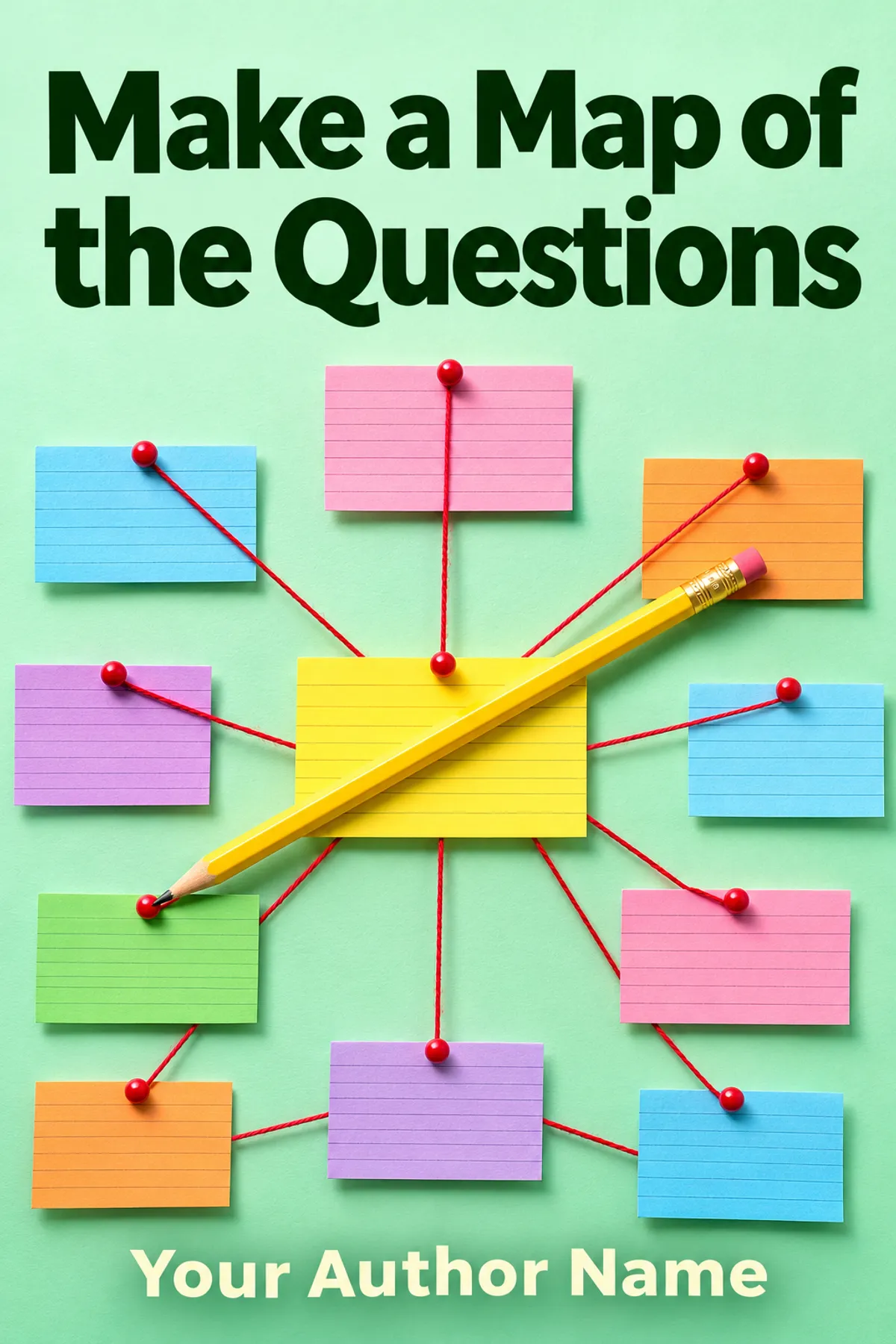
Make a Map of the Questions
Build a workshop around the questions people can answer by trying something.
ImagineYourBook writes a fresh draft from this idea.
Introduction
The lesson plan was full. The questions were waiting in the hallway.
Mara had brought slides about how to repair ordinary objects, a table of tools and two examples of things that had broken in interesting ways. She planned to introduce the tools, explain the difference between several kinds of glue and then give people something to practice on.
Seth came in holding a wooden picture frame with one loose corner. He asked if the frame was something he should try to fix. Mara had planned to answer that question near the end, after talking about all the different materials. Seth needed an answer before he knew which part of the class to pay attention to.
Start with the task people came to try. Ask what they would need to know to make the first small decision. It could be how to tell two materials apart, how to know whether a repair is appropriate or when to stop and get help. A workshop becomes easier to follow when a new word arrives at the moment it lets someone do something.
Before the class, collect one ordinary question from anyone who wants to send one. Group the questions by decisions. Three people may ask about different objects and still need the same first move. Put those examples on a table or in a picture. Give participants a way to try a simple, safe version before asking them to perform anything in front of the room.
Mara began by asking people to look at the places where their objects had come apart. She showed them how she would decide whether a first attempt was reasonable. Seth put his frame beside a similar one on the table. He had a useful question about the corner before he heard the names of any tools.
At the end Mara asked everyone to write the next thing they could do safely. Some people had a small repair. Seth had a decision to make after checking one more thing. He knew what the thing was.
Chapter plan
Develop this idea
Let readers see where a participant's question exposes a missing first step. The workshop should have a concrete outcome and several ways to participate. Use a low-stakes exercise, protect anyone who does not want to perform publicly and model what to do when a question belongs in another session. Give the reader a one-page plan and an honest check of what people can do afterward.
- Open with a long lesson plan and a participant's immediate question.
- Name a concrete result people can try during the session.
- Invite a short question before the event.
- Cluster questions by decisions rather than experience labels.
- Start with a low-stakes attempt and visible example.
- Teach the next move when its purpose is clear.
- Offer easier and harder versions of the task.
- Keep unanswered questions visible without promising every answer.
- Collect a brief exit demonstration or note.
- Use the questions to revise the next workshop.
Series possibilities
- A guide to designing follow-up practice for a short community class.