A Shop for One Saturday
Test one small market stall with a limited table, a clear offer and questions you can learn from.
ImagineYourBook writes a fresh draft from this idea.
Introduction
Tom had thirty-six kinds of bookmarks and one folding table.
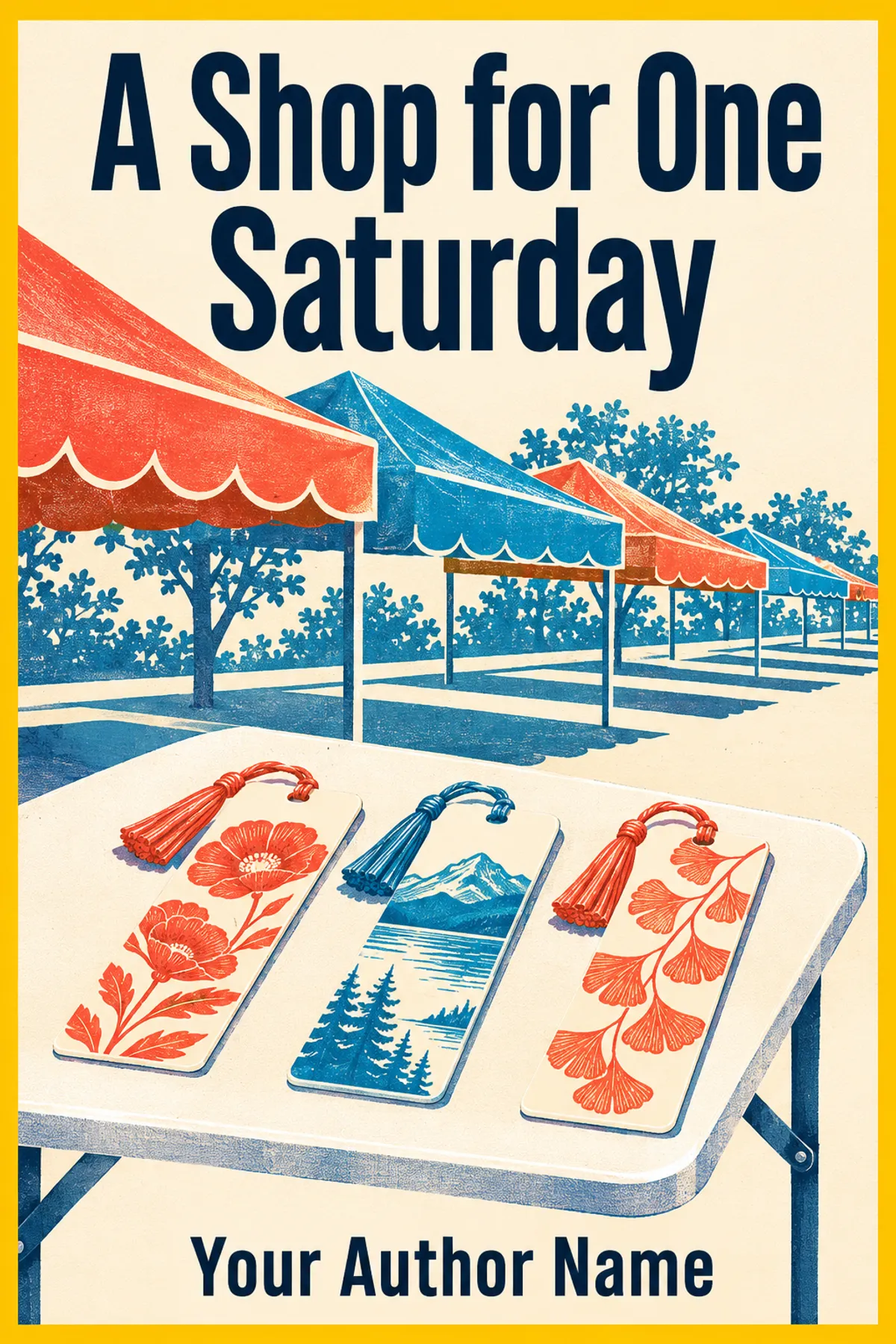
He arranged the bookmarks in six rows of six. They looked handsome from directly above, which was where Tom stood after carrying the table out of the hall. From the path, the rows looked like a packet of playing cards somebody had dropped and then arranged very carefully.
Ines arrived with a stool and asked what he was selling.
"Bookmarks," he said.
She walked a little way down the path and came back.
"How would I know?"
A market table has a short distance in which to explain itself. Someone should be able to see one object, understand what it does and decide whether to come closer. The job is easier if you can show a few examples at their actual scale. Tom put a bookmark into a book. The shape that had looked like an abstract red rectangle became a red rectangle with a useful place to go.
Before a first stall, choose a question you can answer by watching. Do people understand which object is for sale? Which designs do they pick up? Do they ask for a size you did not bring? Count the work of packing and standing there as part of the experiment. One Saturday can teach you more about a display than a month of rearranging it at home. It has less to say about how every future Saturday will go.
Tom kept three designs on the table and put the rest in a flat box. A man picked up the book, opened it and asked whether the bookmark would fit a paperback. Tom fetched one from his bag to show him. Later he wrote "bring a small book" in the margin of his packing list.
It was the only new item he added for the next market. The box went home with most of the bookmarks still inside. He had a smaller table in his head.
Chapter plan
Develop this idea
Center the narrative on one beginner's table and write practical choices about quantity, display and packing. Keep financial results specific to clearly invented examples. Include a way to learn from questions and observations even if nobody buys anything. Readers should leave with a small event checklist, a rough tabletop sketch and a decision about which part of the idea to test first.
- Open with thirty-six designs and one folding table.
- Name what a first market can and cannot tell you.
- Select a small offer around how someone will use it.
- Check event permissions, accessibility and timing.
- Sketch a table layout someone can understand while walking.
- Make simple labels and a packing list.
- Invite questions without pressuring visitors.
- Track requests and the work of setup and cleanup.
- Review observed time and materials before deciding what's next.
- Plan a second test with one intentional change.
Series possibilities
- A follow-up on making repeatable batches for small creative projects.