The King Who Went Missing Inside His Own Statue
An adult stone-carver hears the missing king speaking from the monument commissioned to glorify him. Releasing him will also free the suppressed voices that the kingdom built into its public history.
ImagineYourBook writes a fresh draft from this idea.
How it begins
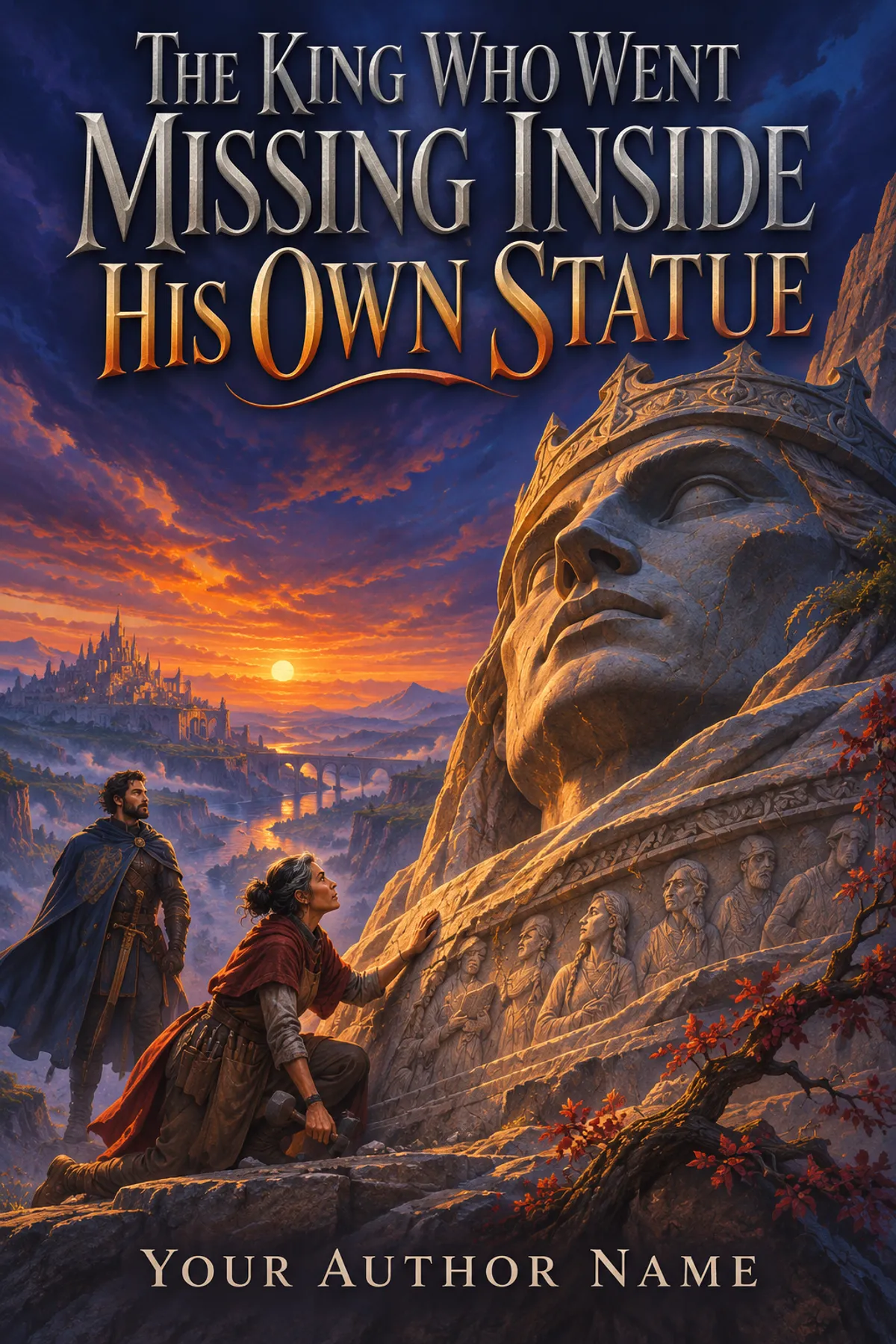
The king asked Rhea Nasser to stop chiseling his nose.
Fine white dust covered her sleeves. She had spent the morning removing imperfections from a man whose official biography admitted none.
Rhea lowered the hammer.
The enormous stone face above her remained fixed in the expression of benevolent certainty selected by the royal portrait committee. Beneath it, the scaffolding creaked in the morning wind.
"What?" she said.
"The nose. It hurts."
Rhea looked down. Forty feet below, workers were sweeping the square around the monument. A guard leaned against the fountain, eating something wrapped in paper. Nobody appeared to have noticed the constitutional complication occurring overhead.
"Your Majesty?"
"Who else would be inside my statue?"
It was a fair question, but she disliked its tone.
The king had been missing for nine days. The official account involved a private retreat. The less official accounts involved an assassin, a foreign princess, or a disagreement with a horse.
Rhea had been hired to finish the monument before his expected return.
"How did you get in there?"
"I was inspecting the workmanship."
"From inside?"
The stone face said nothing.
Below, the guard looked up. Gus Moss had been assigned to watch the scaffolding after someone painted a moustache on the royal knee. He narrowed his eyes.
"Who are you talking to?"
Rhea considered several career-preserving answers.
Before she chose one, a second voice sounded from the statue's chest. Older. Female. Unimpressed.
"Tell him we've been asking that for sixty years."
Rhea set the hammer down with great care.
The king made a small, unhappy noise.
Under her boots, the monument vibrated. Not a crack. A crowd shifting in a room that had been too small for too long.
She looked over the edge of the scaffold.
"Gus," she called, "I think we're going to need more than a ladder."
Your idea. Your book.
Keep the spark. Change anything.
Create my bookCreated with ImagineYourBook. Free to use as inspiration.
Outline and characters
Develop this idea
Decide whether the statue holds souls, memories, or living people, then keep the distinction consistent. Rhea's craft knowledge should drive discoveries that official authority misses. Gus needs a loyalty that can change through evidence rather than instant admiration. The king's predicament may be funny, but the suppressed voices need individual dignity. A thoughtful ending can preserve historical memory while rejecting a monument's original claim to unquestioned glory.
- Rhea hears the missing king inside his statue
- Gus investigates her apparently impossible claim
- The monument reveals other trapped voices
- A repair attempt releases an inconvenient memory
- They trace who designed the living stone
- The crown demands a private rescue
- Rhea refuses to free one powerful voice alone
- Residents confront the monument's unequal history
- A controlled dismantling releases the suppressed people
- The city builds a memorial that leaves room for dissent
Characters
- Rhea Nasser, 49. Stone-carver
- Gus Moss, 32. Royal guard investigating a disappearance
Series possibilities
- Craftspeople uncover the voices concealed inside a capital's most admired public works.