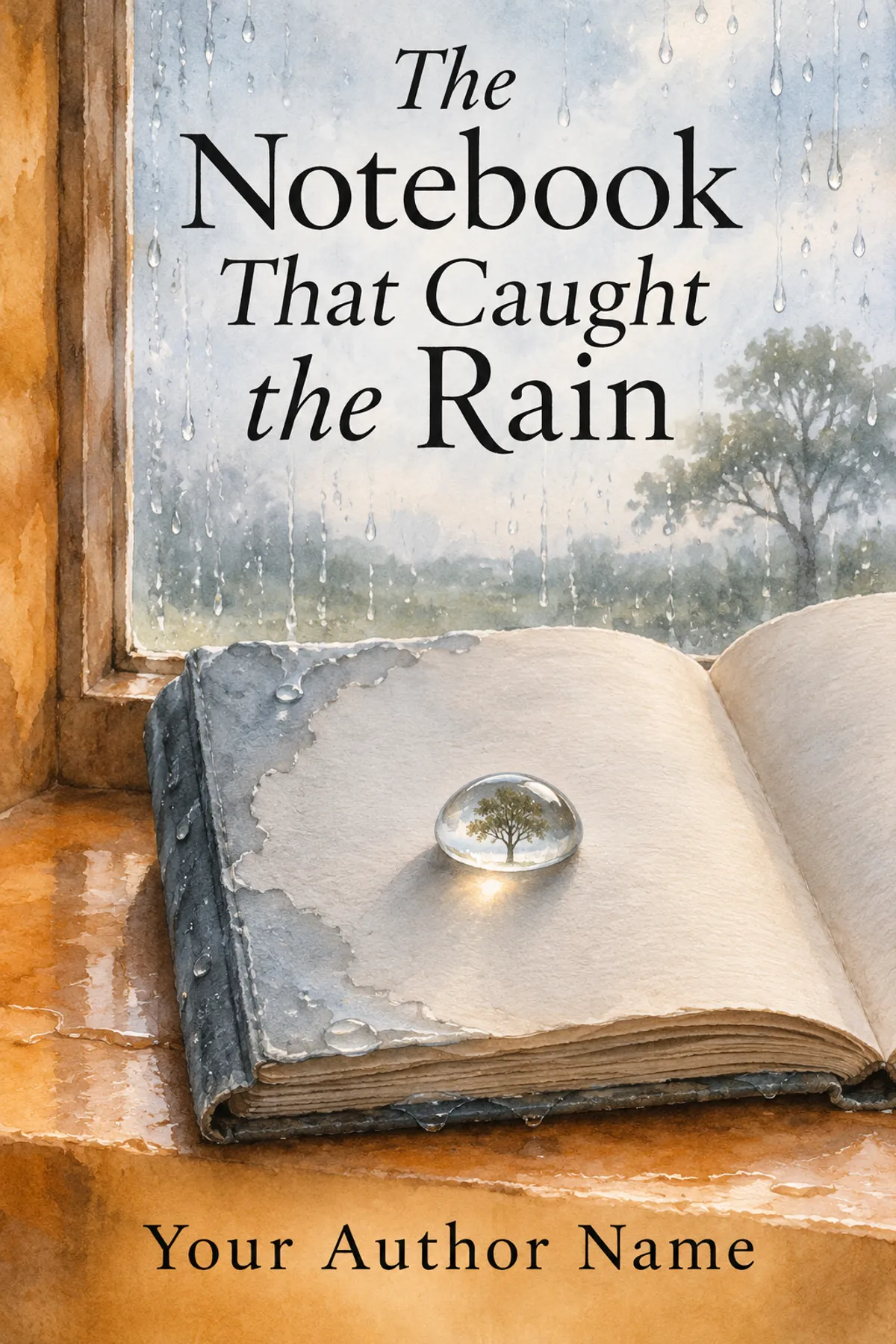
The Notebook That Caught the Rain
Learn one familiar spot by returning to the same detail in different weather.
ImagineYourBook writes a fresh draft from this idea.
Introduction
The first entry in the notebook was a puddle that dried before Jules could draw it.
It had collected where the pavement dipped near a street tree. From the doorway it looked like a small continent, with a dark peninsula toward the curb. Jules went inside for a pencil. When they came out, the peninsula had disappeared and a leaf lay on dry concrete.
Amina suggested writing down what the puddle had done. Jules wrote "Tuesday, after lunch. Water reached the line in the pavement, then pulled away from it." The drawing could still show the shape they remembered. The note made it clear that they were recording a change, not a place to find a permanent puddle.
A field notebook can begin with one small return. Choose a familiar spot you can observe safely and easily. Notice one detail and record the conditions around it. A simple date, time and sentence are enough. Make a quick mark before starting a careful picture. If the detail goes away, the mark can tell you where to look next time.
Keep guesses in their own sentence. "Water stayed by the tree" describes what you saw. "The roots changed the shape of the pavement" is an idea you could investigate. You can leave the question unanswered. A notebook stays useful when it gives later observations somewhere to go.
On Wednesday it rained hard and water filled the whole dip. On Saturday the pavement stayed dry, but a small dark shape remained in the shade of the tree. Jules made a new note each day from the same doorway. They wrote down when they were looking, so another person could compare the entries without assuming the hours were the same.
By the end of the week the page held four little maps. None of them described the whole street. Amina liked the one with the missing peninsula. She could still see where the water had been.
Chapter plan
Develop this idea
Build the book around repeat visits so readers can see variation without going far. Model a rough sketch and a brief note that remain useful after a detail changes. Show a distinction between what somebody saw and what they inferred. Give readers options to observe from a window or shelter and encourage respect for people and wildlife in the place.
- Open on a puddle that disappears before a sketch is finished.
- Choose a familiar place you can revisit safely.
- Record date, time and visible conditions.
- Make a quick note before a detailed drawing.
- Compare one detail across different days.
- Distinguish observations from guesses.
- Use accessible indoor or seated variants.
- Look up a question with a reliable local source.
- Compare entries without forcing a pattern.
- Design a month of small prompts for the same place.
Series possibilities
- A companion guide to collecting short sketches and sound observations in a neighborhood.