My Resignation Has Been Shortlisted
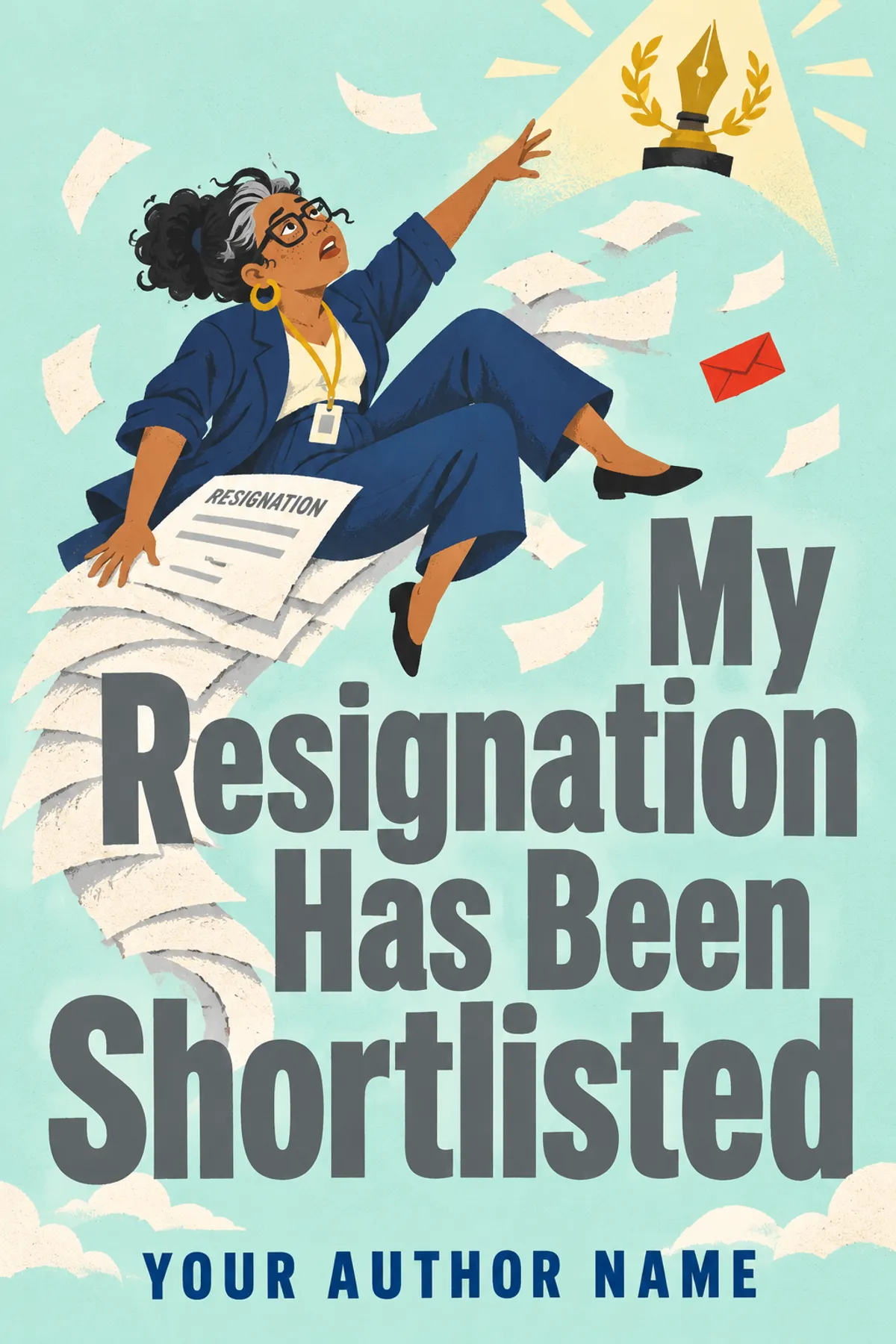
An exhausted arts administrator submits her resignation to the wrong portal and becomes the favorite for a prestigious writing prize she cannot withdraw from without admitting the truth.
ImagineYourBook writes a fresh draft from this idea.
How it begins
Helen's resignation reached the shortlist before it reached her manager.
The email praised its controlled anger, formal innovation and devastating use of the phrase as previously discussed.
She read the message in the office kitchen while waiting for a kettle the organization had purchased through a six-month consultation. The kettle did not switch off automatically. Neither, apparently, did Helen.
She opened the submission portal.
There were two blue buttons. One sent documents to Human Resources. The other entered the annual prose prize, which the organization administered for a charitable foundation. Both required a statement of intent.
Helen had been unusually clear about hers.
At eleven, her manager called her in.
"Wonderful news. We always knew you had a voice."
"You haven't read it."
"I'm saving it for the weekend."
The prize coordinator, David, was less cheerful. He had read the submission and recognized the unnamed institution, the budget meetings and the passage about being thanked for resilience by people who controlled the reason it was needed.
"You can withdraw," he said.
"Good."
"But the judges have asked to publish an extract in the shortlist announcement. It's already scheduled."
Helen looked at the calendar. The announcement would appear during the donor breakfast she was currently organizing. Her manager would introduce her as an example of the organization's commitment to creative flourishing.
For several seconds, the prospect felt so satisfying that she distrusted it.
Then David showed her the judges' comments. One had called the work a fearless exposure of systems that silence workers. Another wanted the ending to be more hopeful.
Helen opened her original document. The final sentence requested acknowledgment of receipt and confirmation of her last working day.
It was, she thought, the most hopeful thing she had written.
She asked David to stop the extract until she could tell the truth about what the piece was and who would be affected by publishing it.
Outline and characters
Develop this idea
The portal mistake starts the comedy, but the deeper conflict concerns praise for a voice that nobody heeds at work. Helen's anger can be justified while publication still raises responsibilities to colleagues. David should have institutional pressures of his own rather than exist only as a helpful explainer. Avoid awarding the prize as automatic compensation for mistreatment. A transparent eligibility decision and a real exit let the ending separate creative recognition from practical employment rights.
- Helen discovers her resignation was accidentally entered for a prose prize.
- The judges praise the institutional critique without recognizing its practical purpose.
- Her manager celebrates the nomination while ignoring the resignation itself.
- David warns that a scheduled extract could expose colleagues as well as management.
- Helen is tempted to let public acclaim deliver a revenge she could not obtain privately.
- She consults people identifiable in the text and removes their involuntary exposure.
- Helen discloses the submission error before the announcement and insists her employment notice be processed separately.
- The prize debates eligibility while donors confront the workplace conditions behind the celebrated writing.
- Helen leaves her job with documented terms; the revised piece remains eligible on transparent grounds without a guaranteed win.
- She writes something unrelated to work and discovers that having a voice includes choosing when not to make an institution the subject.
Characters
- Helen Brooks, 38. Exhausted arts administrator
- David Nair, 45. Literary-prize coordinator who recognizes her submission
Series possibilities
- Helen accepts a temporary role at another cultural institution and tries to recognize the warning signs before they become literature.